
Mapping Windy Vineyards with the Mavic 3M
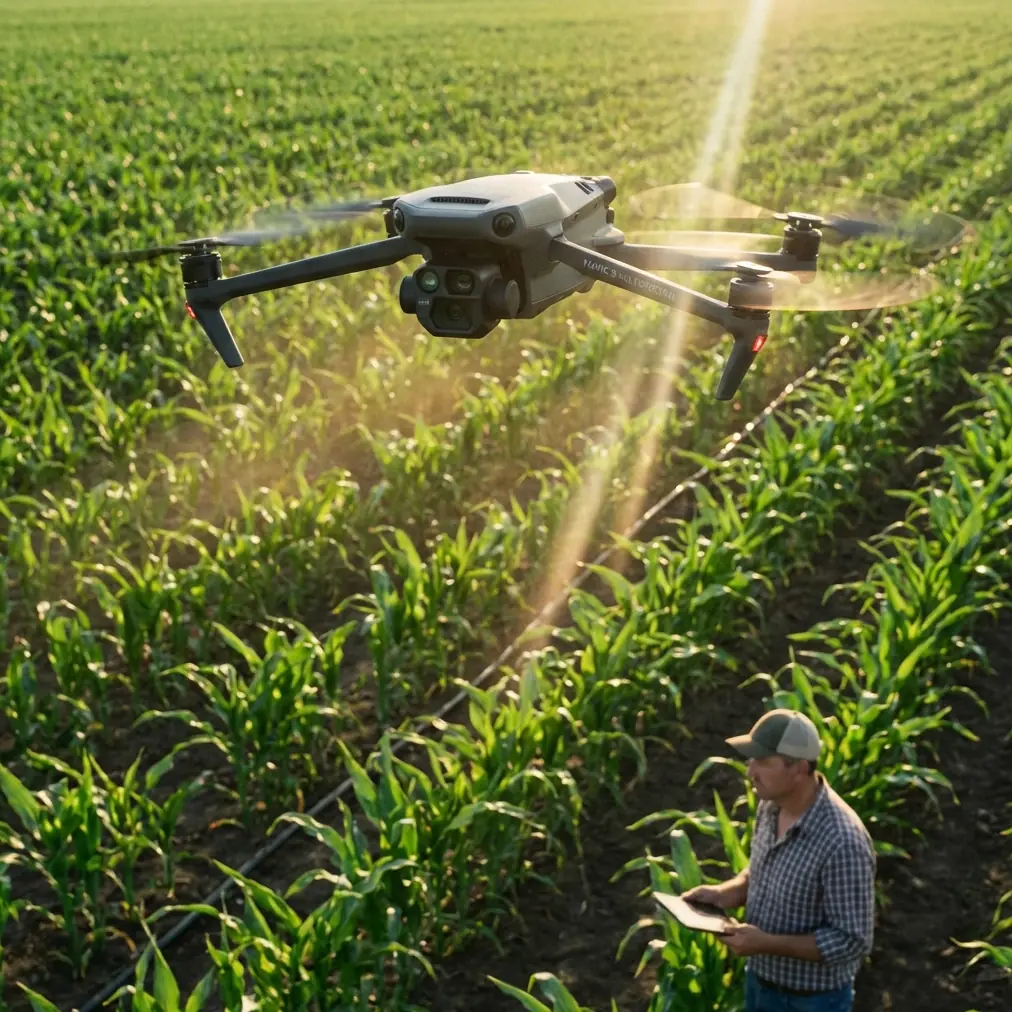
Mapping Windy Vineyards with the Mavic 3M: A Technical Review from the Field
META: An expert technical review of using the DJI Mavic 3M for vineyard mapping in windy conditions, with practical insights on multispectral capture, RTK precision, flight stability, and workflow choices that matter.
Wind changes everything in a vineyard survey.
Not in an abstract way. In a very practical one. It changes the angle of the canopy, the consistency of overlap, the confidence of an RTK fix, and sometimes the difference between a clean vegetation map and a dataset that needs to be flown again. That is why the Mavic 3M deserves to be judged less by brochure claims and more by how it behaves when rows are tight, terrain is uneven, and the afternoon gusts arrive exactly when the light is starting to flatten.
I have spent a good part of my academic and field work thinking about how remote sensing systems perform when the environment refuses to cooperate. For vineyard operators, agronomists, and mapping teams, the Mavic 3M sits in an interesting place. It is compact enough to deploy quickly, yet specialized enough to generate multispectral outputs that can support real management decisions. In windy vineyard conditions, that balance matters more than many buyers expect.
This review is not a generic overview of the aircraft. It is a technical look at how the Mavic 3M fits a very specific civilian job: mapping vineyards where wind is part of the operating reality, not an occasional inconvenience.
Why vineyard wind is harder than open-field wind
A vineyard creates its own turbulence.
Rows channel airflow. Slopes amplify gust behavior. Trellis systems produce irregular shear. If you are surveying broadacre farmland, the aircraft often sees a simpler aerodynamic environment. In a vineyard, especially one with elevation changes or mixed row orientations, the drone is constantly making small corrections. Those corrections affect image geometry, overlap consistency, and battery planning.
For a multispectral platform, this matters because the value of the mission depends on repeatability. Vineyard managers are rarely flying once. They are looking for change over time—water stress, canopy uniformity, vigor shifts between blocks, drainage issues, and disease pressure signals. If a windy mission compromises consistency, the problem is not just one imperfect map. It is a weaker time series.
The Mavic 3M’s strength in this context is not simply that it can capture multispectral data. It is that it can do so with a deployment speed and operational simplicity that suits short weather windows. In many vineyard regions, the best flights happen in narrow morning slots before gusts build. A system that can be unpacked, planned, and airborne quickly has practical value beyond its sensor stack.
The real significance of multispectral capture in vineyards
The multispectral aspect of the Mavic 3M is often discussed as if it were self-explanatory. It is not. Plenty of users collect spectral data without a clear agronomic question behind it.
In vineyards, multispectral imagery becomes useful when it is tied to canopy structure, irrigation behavior, and block-level variability. A well-flown mission can reveal differences that the eye misses at row scale, especially in large estates where walking every section is unrealistic. That is where this aircraft earns its place. It gives growers a way to move from impressionistic scouting to measured comparison.
Wind complicates that process because vines are not static targets. Leaves move. Shadows flicker through gaps in the canopy. Edge effects become more pronounced. When people talk about “centimeter precision,” they often reduce it to location accuracy alone. In vineyard operations, centimeter precision also supports confidence that the stressed patch identified this week is the same patch you inspect on the ground tomorrow.
That is why RTK fix rate deserves more attention than it usually gets in casual discussions. A high and stable RTK fix rate is not just a specification box item. It supports cleaner georeferencing, more reliable row-to-row analysis, and less friction when comparing datasets across different dates. In vineyards with narrow management zones, poor positional consistency can blur exactly the distinctions the survey was supposed to reveal.
Wind, overlap, and swath width: the hidden tradeoffs
Operators often focus on covering acreage fast. Vineyards punish that mindset.
Swath width sounds attractive in planning software because wider spacing shortens mission time. But in windy conditions, pushing swath width too far can reduce lateral overlap just enough to hurt reconstruction quality or weaken the uniformity of the final map. The smarter approach is often conservative lane spacing and slightly more battery consumption in exchange for stronger image consistency.
This is one of the areas where experienced Mavic 3M operators separate themselves from casual users. They understand that a mission plan built for calm weather may not survive an afternoon breeze. Ground speed, line orientation relative to the rows, and crosswind behavior all matter. If the aircraft is crabbing through gusts, image footprints may not behave exactly as the plan suggests.
The Mavic 3M handles this better than many people expect from a compact platform, but the aircraft is only half the story. The mission architecture has to respect the site. In a windy vineyard, I generally favor row-aware planning logic rather than treating the block like a simple rectangular polygon. The point is not elegance. It is data integrity.
A useful third-party accessory that improves vineyard work
One addition that can meaningfully improve field results is a high-visibility landing pad with weighted corners, especially on dusty vineyard access roads and uneven turn rows.
That sounds mundane compared with discussions of sensors and indices, but practical accessories often prevent the failures that ruin otherwise excellent missions. Dust contamination during takeoff and landing is a common nuisance in vineyard operations. It affects lens cleanliness, slows turnaround between batteries, and introduces unnecessary maintenance concerns. A stable landing pad is a low-cost, high-return improvement for repetitive field deployment.
I have also seen teams benefit from a compact third-party windspeed meter clipped into the field case. Again, not glamorous. Very useful. In gusty terrain, knowing the difference between average wind and peak gusts can change whether you launch now, wait 20 minutes, or split the block into smaller missions.
If you are planning a vineyard setup and want a practical accessories checklist rather than a generic shopping list, this field coordination channel is a sensible place to start.
Why some agriculture terminology gets confused around the Mavic 3M
The Mavic 3M is sometimes discussed alongside spraying workflows, and that leads to language drift. Terms like spray drift, nozzle calibration, and IPX6K belong more naturally to application drones than to a compact mapping aircraft.
Still, those ideas matter around the edges because vineyard managers rarely operate in a single-technology silo. Mapping flights often feed decisions that later influence spraying plans. A multispectral map that highlights uneven vigor or stress zones can support more disciplined field scouting before treatment decisions are made. In that sense, understanding spray drift matters operationally even if the Mavic 3M never carries a tank or a nozzle. Wind affects both sensing and application, but in different ways. Confusing the two leads to poor planning.
The same applies to nozzle calibration. It is not part of the Mavic 3M workflow. Yet for mixed fleets, where one drone maps and another applies inputs, the value of good multispectral analysis is that it narrows the area requiring attention. Better mapping can reduce guesswork upstream of field operations. That creates a cleaner bridge between sensing and intervention.
As for IPX6K, it is a meaningful ruggedization benchmark in some agricultural equipment categories, but it should not be casually projected onto aircraft that were not built around that exact protection profile. Vineyard teams should think less in terms of abstract weatherproof labels and more in terms of disciplined launch decisions, moisture avoidance, and post-flight care.
Where the Mavic 3M stands apart for vineyard academics and consultants
For academic users, consultants, and technical managers, the Mavic 3M’s real appeal is methodological consistency.
A large aircraft can cover more ground. A cheaper aircraft can produce acceptable RGB orthomosaics. But few compact systems fit neatly into a research-to-operations workflow the way this one does. It is portable enough for repeated block monitoring, specialized enough for multispectral interpretation, and straightforward enough to train staff on without creating a complicated operational burden.
That matters in vineyards because many useful studies depend on repetition rather than spectacle. You want to fly the same rows over several growth stages. You want to compare vigor patterns after irrigation adjustments. You want to validate whether a suspected drainage issue appears in the data before yield is affected. None of that requires a dramatic platform. It requires a dependable one.
The Mavic 3M is especially strong when the user understands that field truthing remains essential. Multispectral outputs can identify where to look. They do not replace agronomic judgment. In vineyards, this is crucial. Similar spectral signatures may emerge from very different underlying causes—water stress, nutrient issues, canopy management differences, or local soil variability. The aircraft helps narrow uncertainty. It does not eliminate it.
Mission execution under wind: what actually works
A few operating habits consistently improve results.
First, fly earlier than you think you need to. Vineyard wind often ramps faster than forecast models imply, especially near ridgelines or open valley corridors.
Second, reduce mission ambition. It is usually better to capture one block cleanly than force multiple blocks into one battery plan while conditions degrade. Wind penalties accumulate quietly. The aircraft can still be flying safely while the data quality is beginning to soften.
Third, pay attention to line direction. If your chosen route maximizes time in crosswind legs, expect more corrective behavior and a greater chance of uneven overlap. Sometimes a less intuitive path across the block produces better imagery.
Fourth, verify the RTK fix before treating the mission as production-grade. A weak start can haunt the entire dataset. In vineyards, where row spacing and management decisions can be tight, that positional confidence is not optional.
Fifth, watch the canopy itself. It is a better wind indicator than a forecast app once you are on site. If leaves are moving in waves across exposed sections, your imagery will reflect that instability.
These are not dramatic insights. They are the kind that save time.
A final technical judgment
The Mavic 3M is well suited to vineyard mapping in windy conditions, but only when used with the discipline that multispectral work demands.
Its operational advantage is not raw size or brute endurance. It is the combination of compact deployment, specialized sensing, and the ability to capture repeatable data fast enough to exploit narrow weather windows. In vineyards, that often matters more than theoretical maximum coverage. Add strong RTK habits, conservative swath width choices, and a few practical accessories, and the platform becomes more than convenient. It becomes trustworthy.
That word is probably the right one to end on. Trustworthy.
Not because every mission will be perfect. Wind guarantees that some will not. But because the Mavic 3M gives skilled operators a realistic path to produce vineyard maps that hold up under scrutiny, support field decisions, and fit into a real agricultural workflow rather than a laboratory fantasy.
For growers and technical teams working among rows, slopes, gusts, and short morning windows, that is the standard that counts.
Ready for your own Mavic 3M? Contact our team for expert consultation.