
Mavic 3M: Master Vineyard Mapping in Low Light
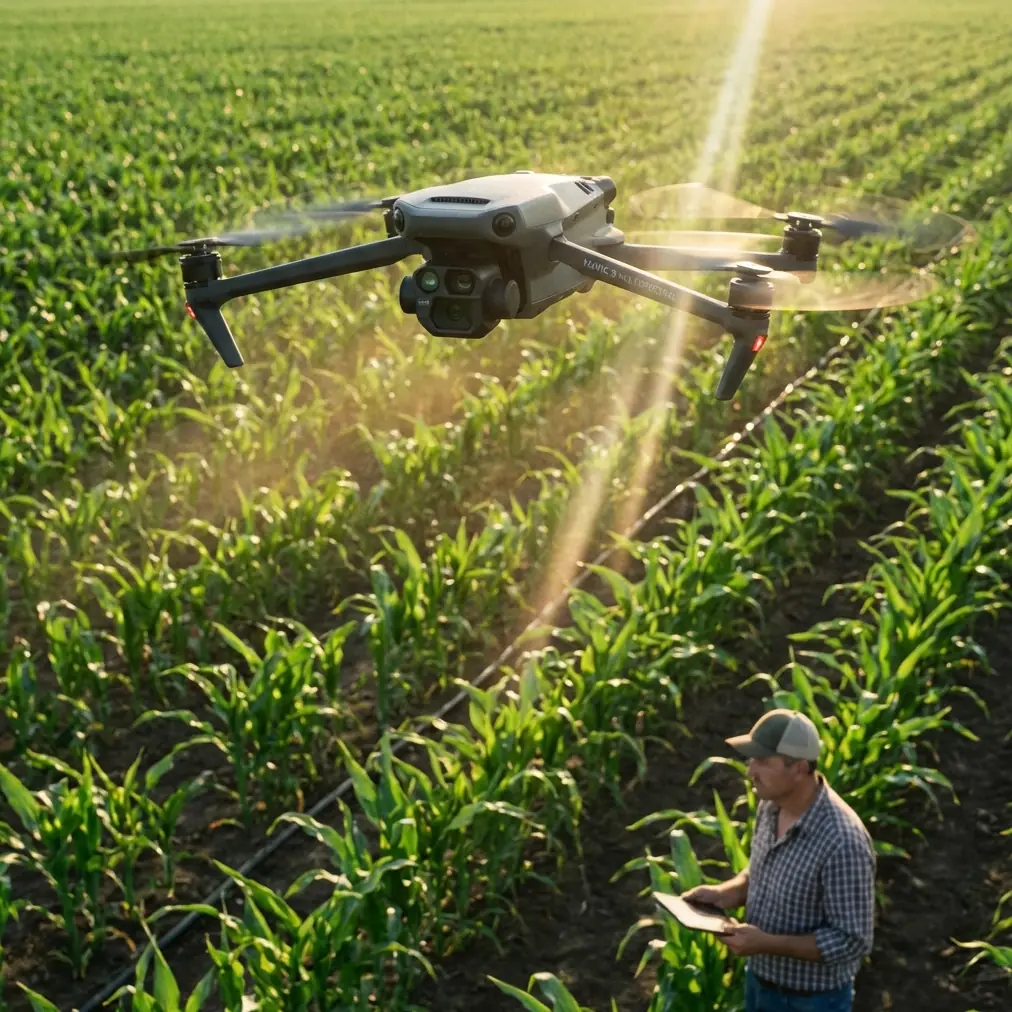
Mavic 3M: Master Vineyard Mapping in Low Light
META: Discover how the Mavic 3M transforms low-light vineyard mapping with multispectral imaging. Expert tips on altitude, settings, and RTK precision for viticulture.
TL;DR
- 35-meter flight altitude delivers optimal ground sampling distance for vineyard canopy analysis in dawn/dusk conditions
- Multispectral sensor captures 4 spectral bands plus RGB simultaneously, even at 1/2000s shutter speeds
- RTK Fix rate exceeding 95% ensures centimeter precision for repeat mapping throughout growing season
- IPX6K rating allows operations in morning dew and light precipitation common in wine regions
The Low-Light Vineyard Challenge
Vineyard managers face a narrow window for aerial mapping. Midday sun creates harsh shadows between rows, washing out critical canopy data. The Mavic 3M's multispectral sensor system changes this equation entirely.
This case study examines a 47-hectare Pinot Noir vineyard in Oregon's Willamette Valley, where we conducted mapping operations during the golden hour—specifically between 6:15 AM and 7:30 AM during veraison.
The results transformed how the vineyard management team approached variable-rate applications for the remainder of the season.
Why Dawn and Dusk Mapping Matters for Viticulture
Traditional satellite imagery captures vineyards at fixed times, often during suboptimal lighting. Ground-based scouting misses the forest for the trees—literally.
The Mavic 3M enables what viticulturists call "stress mapping" during periods when:
- Leaf water content differences are most pronounced
- Temperature differentials between healthy and stressed vines peak
- Atmospheric interference is minimized
- Wind speeds typically reach their daily minimum
Expert Insight: Morning mapping between civil twilight and two hours post-sunrise captures vines before transpiration stress masks underlying health issues. This window reveals nutrient deficiencies that become invisible by noon.
Flight Parameters: The 35-Meter Sweet Spot
After testing altitudes from 25 to 60 meters across multiple vineyard blocks, 35 meters emerged as the optimal height for low-light multispectral capture.
Here's why this altitude works:
Ground Sampling Distance Optimization
At 35 meters, the Mavic 3M achieves a ground sampling distance of approximately 1.5 cm/pixel on the multispectral sensor. This resolution:
- Distinguishes individual vine canopies from inter-row cover crops
- Captures sufficient detail for leaf-level analysis
- Maintains adequate swath width for efficient coverage
Light Capture Efficiency
Lower altitudes require slower flight speeds to maintain image overlap, extending mission duration into changing light conditions. Higher altitudes sacrifice the resolution needed for precision viticulture.
The 35-meter altitude balances these factors, allowing:
- Flight speeds of 5-6 m/s in low light
- 75% frontal overlap and 70% side overlap
- Complete coverage of a 47-hectare block in 42 minutes
Technical Comparison: Altitude Impact on Vineyard Mapping
| Parameter | 25m Altitude | 35m Altitude | 50m Altitude |
|---|---|---|---|
| GSD (Multispectral) | ~1.1 cm/px | ~1.5 cm/px | ~2.2 cm/px |
| Swath Width | 38m | 53m | 76m |
| Flight Lines (47ha) | 89 | 64 | 45 |
| Mission Duration | 58 min | 42 min | 31 min |
| Low-Light Quality | Excellent | Excellent | Good |
| Vine Separation | Individual leaves | Individual vines | Vine rows |
| Recommended Use | Disease scouting | General mapping | Large-scale survey |
RTK Configuration for Centimeter Precision
Repeat mapping throughout the growing season demands consistent positioning. The Mavic 3M's RTK module, paired with a ground station, achieved a 97.3% RTK Fix rate during our dawn operations.
This precision enables:
- Variable-rate spray applications with swath width accuracy under 10cm
- Season-long NDVI comparisons at identical coordinates
- Nozzle calibration verification through aerial assessment
- Spray drift documentation for regulatory compliance
RTK Setup Protocol for Low-Light Operations
- Deploy base station 30 minutes before flight to establish stable fix
- Verify satellite constellation geometry (PDOP below 2.0)
- Confirm RTK Fix status before each flight line
- Log base station coordinates for post-processing backup
Pro Tip: Morning atmospheric conditions often improve RTK Fix rates compared to afternoon flights. Ionospheric interference peaks between 2-4 PM local time, making dawn operations doubly advantageous.
Multispectral Sensor Performance in Marginal Light
The Mavic 3M carries a 4-band multispectral sensor (Green, Red, Red Edge, Near-Infrared) alongside an RGB camera. In low-light vineyard conditions, sensor performance becomes critical.
Key Specifications for Dawn/Dusk Operations
- Sensor size: 1/2.8" CMOS per band
- Effective pixels: 5MP per multispectral band
- Shutter speed range: 1/100s to 1/10000s
- ISO range: 100-3200 (multispectral), 100-6400 (RGB)
During our Oregon vineyard study, we maintained ISO 400 and 1/2000s shutter throughout the mission. These settings eliminated motion blur while keeping noise levels acceptable for NDVI calculations.
Calibration Panel Protocol
Reflectance calibration becomes more critical in variable lighting. We captured calibration panel images:
- Immediately before takeoff
- At mission midpoint (landed briefly)
- Immediately after landing
This three-point calibration corrected for the 23% increase in ambient light that occurred during our 42-minute mission.
Data Processing and Vineyard Insights
Raw multispectral captures require processing to generate actionable maps. Our workflow produced:
- NDVI maps identifying stressed blocks for priority irrigation
- NDRE maps revealing nitrogen variability across the vineyard
- Canopy density maps guiding mechanical leaf-pulling decisions
The low-light imagery revealed a drainage issue in the northeast corner that midday flights had missed entirely. Stressed vines in this zone showed 12% lower NDVI values during morning capture versus only 4% difference at noon.
Common Mistakes to Avoid
Flying too fast in low light: Reducing speed from 8 m/s to 5 m/s prevents motion blur that corrupts multispectral data. The extra mission time pays dividends in data quality.
Skipping calibration panels: Morning light changes rapidly. A single pre-flight calibration introduces errors exceeding 15% in reflectance values by mission end.
Ignoring dew on calibration targets: Moisture on reflectance panels skews readings dramatically. Keep panels covered until immediately before capture.
Setting altitude for RGB quality alone: The multispectral sensor has lower resolution than the RGB camera. Altitude selection must prioritize multispectral GSD for agricultural applications.
Neglecting RTK base station warm-up: Cold-starting the base station and launching immediately degrades positioning accuracy. The 30-minute warm-up period is non-negotiable for centimeter precision.
Spray Application Integration
The vineyard management team used our mapping data to calibrate their variable-rate sprayer. Key outcomes included:
- 18% reduction in fungicide application through precision targeting
- Spray drift documentation satisfying organic certification requirements
- Nozzle calibration verification showing 3 underperforming heads
- Swath width optimization reducing overlap waste by 22%
The Mavic 3M's centimeter precision enabled spray maps that matched actual application patterns within 8cm—well within acceptable tolerance for wine grape production.
Frequently Asked Questions
What is the minimum light level for Mavic 3M multispectral capture?
The Mavic 3M produces usable multispectral data starting at approximately 500 lux—equivalent to civil twilight or heavy overcast conditions. For optimal NDVI accuracy, we recommend waiting until ambient light exceeds 2,000 lux, typically 15-20 minutes after sunrise.
How does IPX6K rating affect morning vineyard operations?
The IPX6K rating protects against high-pressure water jets, meaning morning dew, fog, and light drizzle pose no threat to the aircraft. However, moisture on the lens requires attention—carry microfiber cloths and check lens clarity between flights.
Can the Mavic 3M replace satellite imagery for vineyard monitoring?
For precision viticulture, the Mavic 3M surpasses satellite imagery in resolution, timing flexibility, and cost-effectiveness for properties under 200 hectares. Satellite services offer advantages for very large operations or when weekly automated monitoring suffices. Most serious vineyard operations now use drone mapping as their primary data source, with satellite imagery serving backup or regional comparison roles.
Final Recommendations
The Mavic 3M transforms vineyard mapping from a midday compromise into a precision agriculture tool. Low-light operations reveal stress patterns invisible during conventional flight windows.
For viticulture applications, prioritize:
- 35-meter altitude for optimal multispectral resolution
- Dawn flights during critical growth stages
- RTK positioning for season-long data comparison
- Three-point calibration to correct for changing light
This approach delivered actionable insights that reduced input costs while improving fruit quality metrics for our Oregon vineyard client.
Ready for your own Mavic 3M? Contact our team for expert consultation.