
M3M Mapping Tips for Mountain Venue Surveys
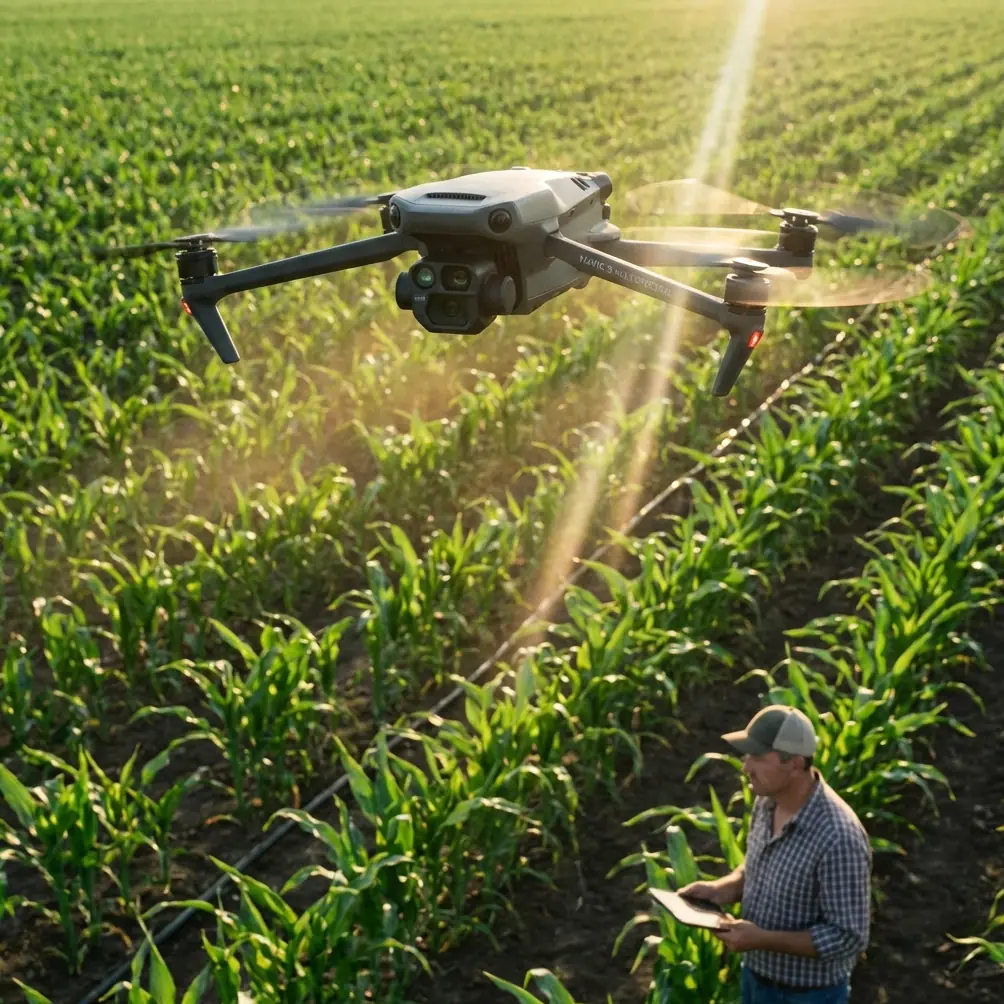
M3M Mapping Tips for Mountain Venue Surveys
META: Master mountain venue mapping with Mavic 3M. Expert tips for RTK accuracy, flight planning, and terrain challenges that deliver centimeter precision results.
TL;DR
- RTK Fix rate drops significantly above 2,500m elevation—pre-plan base station positioning to maintain centimeter precision
- Multispectral sensors require 40% overlap increase on steep terrain to eliminate data gaps
- Wind patterns shift unpredictably in mountain venues—schedule flights during thermal windows between 6-9 AM
- Battery performance decreases 15-20% in cold mountain conditions—carry 3x normal capacity
The Mountain Mapping Challenge That Changed My Approach
Last September, I lost an entire day of survey data on a ski resort expansion project in Colorado. The client needed precise topographic mapping across 847 acres of rugged terrain, and my flight plan failed spectacularly.
The Mavic 3M sat grounded while I troubleshot RTK connectivity issues at 3,200m elevation. That experience forced me to rebuild my entire mountain mapping workflow from scratch.
This guide shares the hard-won lessons from that project and dozens since. You'll learn specific techniques for maintaining survey-grade accuracy when mapping venues in challenging mountain environments—amphitheaters, ski facilities, alpine event spaces, and remote construction sites.
Understanding Mountain-Specific Mapping Challenges
Mountain venue mapping introduces variables that flatland surveyors never encounter. The Mavic 3M handles these challenges exceptionally well, but only when operators understand the environmental factors at play.
Atmospheric Pressure and Sensor Calibration
The multispectral imaging system on the Mavic 3M relies on precise calibration. At higher elevations, reduced atmospheric pressure affects both flight dynamics and sensor performance.
Key considerations include:
- Barometric altimeter readings require manual offset correction above 1,800m
- Reduced air density means faster prop speeds and increased power consumption
- Thinner atmosphere allows more UV radiation, affecting multispectral band readings
- Ground sampling distance calculations must account for true altitude versus pressure altitude
RTK Connectivity in Complex Terrain
Maintaining RTK Fix rate becomes exponentially harder when mountains block satellite signals. The Mavic 3M supports both network RTK and base station configurations, but mountain venues demand specific approaches.
Expert Insight: Position your RTK base station on the highest accessible point with clear sky view. A base station placed in a valley floor will struggle to maintain fix, even if the drone has excellent satellite visibility. The correction signal strength matters as much as satellite count.
Common RTK issues in mountain environments:
- Multipath interference from rock faces reflecting GNSS signals
- Signal shadowing when flying below ridgelines
- Network RTK dropout in areas without cellular coverage
- Baseline length errors when base station placement is suboptimal
Flight Planning for Steep Terrain
Standard grid patterns fail on mountain slopes. The Mavic 3M's terrain following capabilities help, but proper mission design prevents data gaps and ensures consistent swath width coverage.
Calculating Overlap for Slopes
Flat terrain mapping typically uses 70% front overlap and 65% side overlap. Mountain venues require significant adjustments based on slope angle.
| Slope Angle | Front Overlap | Side Overlap | Speed Adjustment |
|---|---|---|---|
| 0-15° | 70% | 65% | Standard |
| 15-30° | 75% | 70% | -15% |
| 30-45° | 80% | 75% | -25% |
| 45°+ | 85% | 80% | -35% |
These overlap increases ensure photogrammetric software can generate accurate point clouds despite the geometric challenges of steep terrain.
Swath Width Optimization
The effective swath width decreases on slopes because the sensor views terrain at an angle rather than perpendicular. A 100m swath on flat ground becomes approximately 87m on a 30-degree slope.
Plan flight lines closer together to compensate. The Mavic 3M's flight planning software doesn't automatically adjust for this—manual calculation prevents coverage gaps.
Multispectral Considerations for Venue Assessment
Mountain venues often require vegetation health analysis, erosion monitoring, or environmental impact assessment. The Mavic 3M's multispectral sensor excels at these applications when properly configured.
Band Selection for Mountain Applications
Different analysis goals require different band combinations:
- Vegetation stress mapping: Red Edge + NIR bands
- Erosion detection: RGB + Red Edge for soil exposure
- Snow coverage analysis: Green + NIR for albedo calculation
- Water feature mapping: NIR + Red for moisture content
Pro Tip: Calibrate your multispectral sensor using the reflectance panel at survey altitude, not ground level. The 15-20% light intensity difference between valley floor and ridge top significantly affects calibration accuracy. Carry your panel to a mid-elevation point for best results.
Timing Multispectral Captures
Solar angle dramatically impacts multispectral data quality in mountains. Shadows from peaks and ridges create unusable data zones that shift throughout the day.
Optimal capture windows:
- Summer months: 10 AM - 2 PM for maximum shadow reduction
- Winter months: 11 AM - 1 PM only, shadows extend rapidly
- Shoulder seasons: Monitor shadow patterns and plan multiple flights
Environmental Factors and Equipment Protection
Mountain environments stress equipment in ways that require proactive management. The Mavic 3M carries an IPX6K rating, but that addresses only one environmental challenge.
Temperature Management
Battery chemistry suffers in cold conditions. Lithium polymer cells lose capacity rapidly below 10°C, and the Mavic 3M's intelligent batteries will refuse to fly below -10°C.
Practical temperature management:
- Store batteries in insulated cases with hand warmers during transport
- Pre-warm batteries to 20°C minimum before flight
- Plan shorter missions—12-15 minutes versus the standard 20+ minutes
- Rotate batteries frequently, keeping spares warm in vehicle or pack
Wind and Turbulence Patterns
Mountain wind patterns follow predictable daily cycles. Understanding these patterns prevents dangerous flight conditions and improves data quality.
Morning conditions typically offer:
- Katabatic winds flowing downslope before sunrise
- Calm window from approximately 6-9 AM
- Anabatic winds developing as slopes warm
Afternoon conditions bring:
- Thermal turbulence peaking between 1-4 PM
- Rotor effects on lee sides of ridges
- Sudden gusts exceeding 15 m/s with little warning
The Mavic 3M handles winds up to 12 m/s in normal operation, but turbulent mountain air creates unpredictable loads that reduce this effective limit.
Data Processing Considerations
Mountain venue data requires processing adjustments that differ from standard workflows. Ground control point placement, coordinate system selection, and accuracy validation all need mountain-specific approaches.
Ground Control Point Strategy
GCP placement in mountains follows different rules than flat terrain:
- Place points on stable rock outcrops, not vegetation or loose material
- Distribute GCPs across the full elevation range, not just horizontally
- Use minimum 6 GCPs for mountain projects versus 4 for flat terrain
- Mark points with high-contrast targets visible against varied backgrounds
Coordinate System Selection
Mountain venues often span multiple UTM zones or require local coordinate systems. The Mavic 3M outputs WGS84 coordinates natively, but processing software needs proper projection setup.
Consider these factors:
- Vertical datum selection affects elevation accuracy significantly
- Geoid models vary in accuracy across mountain regions
- Local site calibrations may be necessary for construction projects
- Scale factor corrections become significant over large elevation ranges
Common Mistakes to Avoid
Ignoring battery temperature warnings: Cold batteries don't just reduce flight time—they can cause sudden power loss. Never launch with batteries below 15°C internal temperature.
Using flatland overlap settings: The 70/65 standard creates massive data gaps on slopes. Always calculate slope-adjusted overlap before mission planning.
Positioning base stations in valleys: RTK base stations need sky view, not convenience. The extra hike to a high point saves hours of frustration.
Flying during thermal windows: Afternoon thermals create turbulence that degrades image sharpness. Schedule critical captures for morning calm periods.
Neglecting nozzle calibration verification: If using the Mavic 3M for spray drift analysis alongside mapping, verify calibration at altitude. Pressure changes affect spray patterns.
Assuming network RTK availability: Mountain venues rarely have reliable cellular coverage. Always bring base station equipment as backup.
Frequently Asked Questions
How does elevation affect Mavic 3M flight performance?
The Mavic 3M's maximum service ceiling is 6000m, but practical performance degrades above 3000m. Expect 10-15% reduction in hover efficiency, 15-20% decrease in battery endurance, and increased motor temperatures. Plan shorter missions and carry additional batteries for high-altitude work.
Can the Mavic 3M maintain centimeter precision in mountain environments?
Yes, but only with proper RTK configuration. Maintain RTK Fix rate above 95% by positioning base stations with clear sky view, keeping baseline distances under 10km, and avoiding flights near reflective rock faces that cause multipath interference. Post-processing kinematic corrections can recover accuracy from float solutions when necessary.
What's the best approach for mapping a mountain amphitheater or bowl-shaped venue?
Fly concentric patterns following terrain contours rather than standard grid patterns. Start from the rim and work inward, maintaining consistent altitude above ground level. Use 80% overlap minimum to handle the complex geometry, and plan multiple flights from different starting positions to ensure complete coverage of steep sidewalls.
Mountain venue mapping demands respect for environmental challenges and meticulous planning. The Mavic 3M provides the sensor capability and flight performance needed for these demanding projects—success depends on the operator's preparation and technique.
Ready for your own Mavic 3M? Contact our team for expert consultation.