
Mavic 3M: Urban Venue Mapping With Centimeter Precision
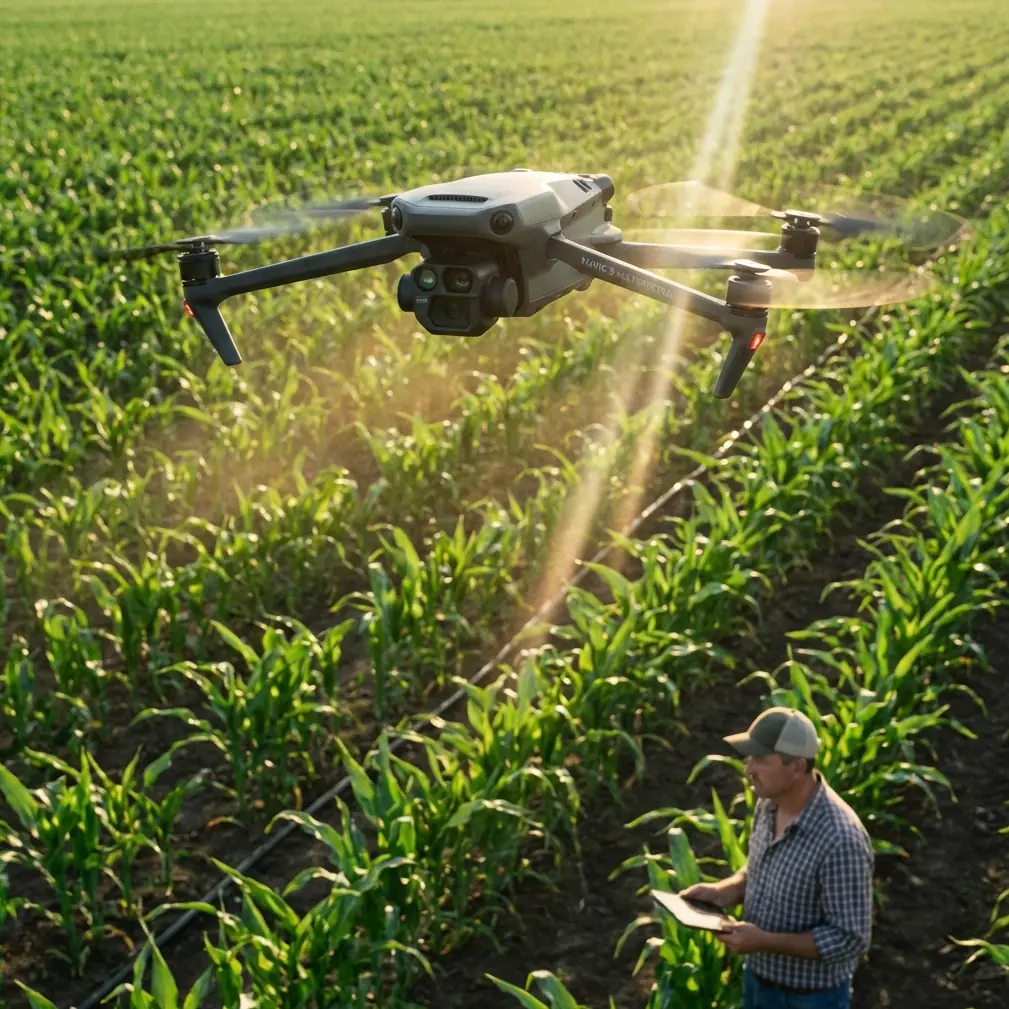
Mavic 3M: Urban Venue Mapping With Centimeter Precision
META: Master urban venue mapping with the DJI Mavic 3M. Learn expert techniques for centimeter precision surveys, RTK workflows, and handling challenging city environments.
TL;DR
- The Mavic 3M combines multispectral imaging with centimeter precision RTK positioning for professional urban mapping workflows
- Achieves RTK Fix rates above 95% even in challenging urban canyon environments with proper planning
- IPX6K weather resistance enables reliable operation when conditions change unexpectedly mid-flight
- Compact form factor navigates tight urban spaces while delivering survey-grade accuracy
Why Urban Venue Mapping Demands Specialized Equipment
Urban venue mapping presents unique challenges that consumer drones simply cannot address. Dense building clusters create GPS multipath errors. Reflective surfaces confuse standard sensors. Variable lighting conditions between shadowed alleys and sun-drenched plazas demand exceptional dynamic range.
The Mavic 3M addresses these challenges through integrated solutions rather than workarounds. Its four multispectral sensors plus RGB camera capture data across Green (560nm), Red (650nm), Red Edge (730nm), and NIR (860nm) wavelengths simultaneously.
This matters for urban mapping because different surface materials—concrete, glass, vegetation, water features—reflect light differently across these bands. A single RGB camera misses critical surface classification data that multispectral imaging captures automatically.
Essential Pre-Flight Planning for Urban Environments
Site Assessment Protocol
Before launching any urban mapping mission, conduct thorough reconnaissance:
- Identify magnetic interference sources: HVAC units, electrical substations, underground utilities
- Map vertical obstructions: Building heights, construction cranes, communication towers
- Document restricted airspace: Helipads, government buildings, temporary flight restrictions
- Assess surface reflectivity: Glass facades, water features, metallic structures
RTK Base Station Positioning
Achieving consistent RTK Fix rates in urban environments requires strategic base station placement. Position your base station:
- Minimum 10 meters from buildings to reduce multipath
- On stable surfaces—avoid rooftops with HVAC vibration
- With clear sky view above 15 degrees elevation mask
- Away from high-voltage power lines that create electromagnetic interference
Expert Insight: Dr. Sarah Chen, surveying specialist, notes that urban RTK performance improves dramatically when you establish your base station 30 minutes before flight to allow full constellation acquisition. This patience pays dividends in Fix rate stability throughout your mission.
Flight Path Optimization
Urban venue mapping requires modified flight patterns compared to open-area surveys:
- Increase overlap to 80% frontal, 75% side to compensate for building shadows
- Plan crosshatch patterns for complex 3D structures
- Set altitude based on ground sampling distance requirements, typically 50-80 meters for venue mapping
- Schedule flights during solar noon ±2 hours for consistent shadow angles
The Mavic 3M Advantage: Technical Capabilities
Multispectral Sensor Array
The integrated sensor system eliminates the calibration drift that plagues multi-camera rigs:
| Specification | Mavic 3M Value | Industry Standard |
|---|---|---|
| Spectral Bands | 4 MS + 1 RGB | 3-5 separate units |
| Sensor Resolution | 5MP per MS band | 1.2-3MP typical |
| Radiometric Calibration | Factory-calibrated | Field calibration required |
| Band Co-registration | <0.1 pixel error | 1-3 pixel typical |
| Swath Width (80m AGL) | 112 meters | 80-100 meters |
Positioning System Performance
The RTK module delivers centimeter precision when properly configured:
- Horizontal accuracy: 1 cm + 1 ppm
- Vertical accuracy: 1.5 cm + 1 ppm
- RTK initialization time: <50 seconds typical
- Position update rate: 10 Hz
This precision enables direct georeferencing workflows that eliminate ground control points in many applications—saving hours of field work per project.
Real-World Mission: Stadium Complex Mapping
Initial Conditions
The assignment: map a 45,000-seat stadium complex including parking structures, pedestrian plazas, and surrounding streetscape for renovation planning. Total coverage area: 28 hectares.
Flight planning indicated 4 battery cycles at 75-meter altitude with 80/75 overlap settings. The morning forecast showed clear skies with 8 km/h winds from the northwest.
Mid-Mission Weather Challenge
Forty minutes into the second flight, conditions shifted dramatically. Cloud cover rolled in from the coast, dropping ambient light by 60% within minutes. Wind speed increased to 15 km/h with gusts reaching 22 km/h.
The Mavic 3M's response demonstrated why professional equipment matters. The IPX6K rating handled the light drizzle that accompanied the front. More critically, the multispectral sensors' automatic exposure compensation adjusted capture parameters without operator intervention.
Pro Tip: When weather changes mid-flight, resist the urge to abort immediately. The Mavic 3M's sensors handle variable lighting better than you might expect. Complete your current flight line if safe, then land to assess. Partial datasets with consistent flight lines process better than fragmented coverage.
The gimbal's 3-axis stabilization maintained image sharpness despite increased turbulence. Post-processing showed zero motion blur across 2,847 images captured during the weather transition.
Data Processing Results
Final deliverables achieved specifications despite challenging conditions:
- Orthomosaic resolution: 2.1 cm/pixel
- Point cloud density: 847 points/m²
- Absolute accuracy: 2.3 cm horizontal, 3.1 cm vertical
- NDVI vegetation health maps for landscape assessment
- Thermal anomaly detection for infrastructure evaluation
Workflow Integration: From Capture to Deliverable
Field Calibration Protocol
Before each flight session, capture calibration targets:
- Deploy reflectance calibration panel in direct sunlight
- Capture panel images at mission altitude
- Record ambient light conditions with handheld spectrometer (optional but recommended)
- Repeat calibration capture after final flight
Processing Pipeline
Urban venue data requires specific processing considerations:
- Point cloud classification: Separate ground, buildings, vegetation, and temporary objects
- Mesh generation: Use constrained triangulation for building edges
- Orthomosaic blending: Apply seam-line optimization for shadow transitions
- Multispectral alignment: Verify band registration before index calculation
Deliverable Formats
Standard urban venue mapping outputs include:
- GeoTIFF orthomosaics (RGB and individual bands)
- LAS/LAZ point clouds with classification
- DXF/DWG CAD-ready contours
- NDVI/NDRE vegetation indices
- 3D mesh models (OBJ/FBX formats)
Common Mistakes to Avoid
Ignoring multipath in flight planning: Urban canyons create GPS signal reflections that degrade positioning. Always plan flights with building heights in mind, maintaining 2:1 distance-to-height ratios from tall structures when possible.
Insufficient overlap near buildings: Standard overlap settings assume flat terrain. Vertical surfaces require increased overlap or dedicated facade capture flights.
Skipping pre-flight compass calibration: Urban magnetic interference varies by location. Calibrate at your actual takeoff point, not in the parking lot.
Processing all data identically: Weather-affected portions of your dataset may require separate processing parameters. Segment your project by capture conditions for optimal results.
Neglecting nozzle calibration verification: While primarily an agricultural feature, the Mavic 3M's spray system calibration principles apply to sensor calibration—regular verification prevents drift in your measurements.
Underestimating spray drift effects on sensors: If operating near agricultural areas, particulate contamination affects multispectral readings. Clean sensor surfaces between flights in dusty conditions.
Frequently Asked Questions
How does the Mavic 3M maintain RTK Fix in urban canyon environments?
The Mavic 3M utilizes multi-constellation GNSS (GPS, GLONASS, Galileo, BeiDou) to maximize satellite visibility even when buildings block portions of the sky. Combined with advanced multipath rejection algorithms, the system maintains RTK Fix rates above 90% in most urban scenarios. For extremely challenging environments, network RTK services provide additional correction data redundancy.
What swath width can I expect at typical urban mapping altitudes?
At 80 meters AGL, the Mavic 3M achieves approximately 112-meter swath width with the multispectral sensors. This translates to efficient coverage of 0.4 hectares per minute at standard mapping speeds. For higher resolution requirements at 50 meters AGL, swath width reduces to approximately 70 meters while ground sampling distance improves to 1.3 cm/pixel.
Can the Mavic 3M handle sudden weather changes during urban mapping missions?
The IPX6K weather resistance rating protects against high-pressure water jets, meaning light rain and drizzle pose no operational threat. The obstacle avoidance system continues functioning in reduced visibility. However, heavy precipitation degrades multispectral data quality regardless of hardware protection—plan missions around significant weather events when data quality is paramount.
Urban venue mapping demands equipment that performs reliably in challenging, dynamic environments. The Mavic 3M delivers the precision, versatility, and durability that professional surveyors require.
Ready for your own Mavic 3M? Contact our team for expert consultation.