
Mavic 3M High-Altitude Mapping: Expert Tutorial Guide
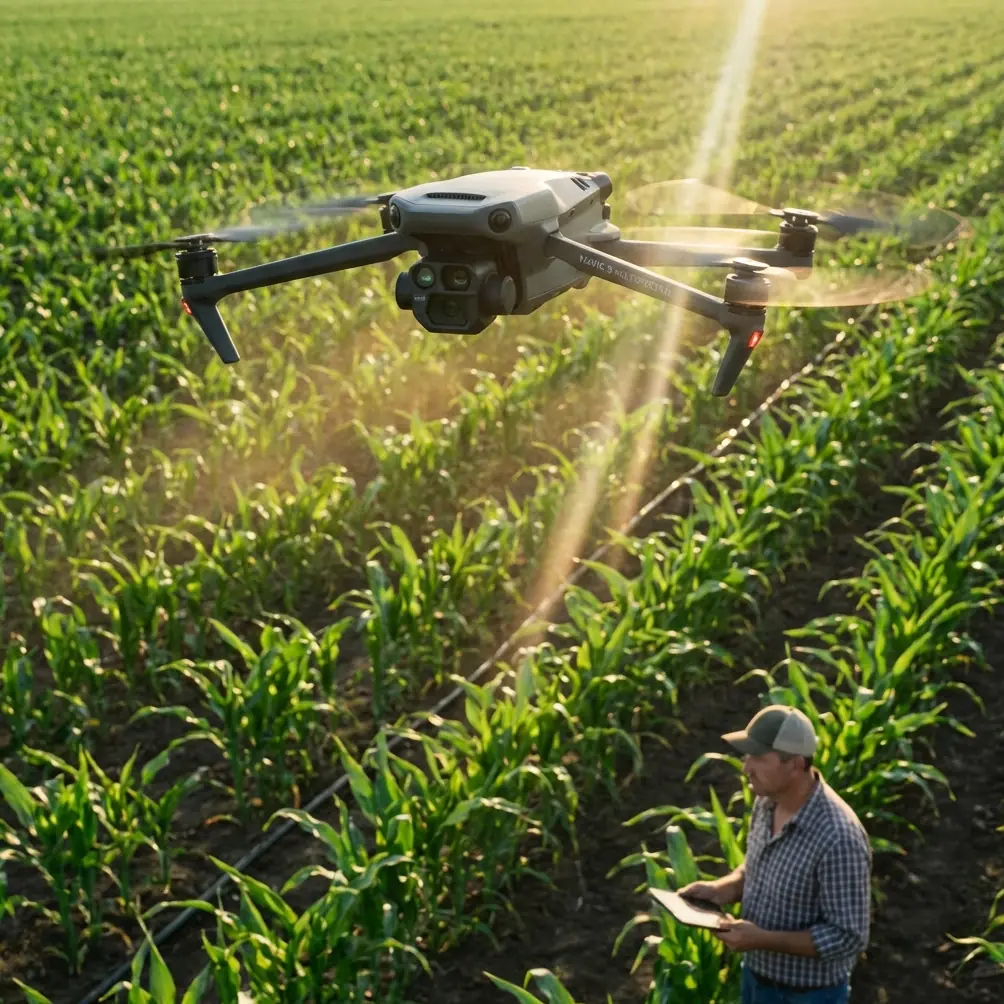
Mavic 3M High-Altitude Mapping: Expert Tutorial Guide
META: Master high-altitude venue mapping with the DJI Mavic 3M. Learn RTK calibration, electromagnetic interference solutions, and multispectral techniques for centimeter precision.
TL;DR
- RTK Fix rate optimization at altitudes above 3,000 meters requires specific antenna positioning and base station configuration
- Electromagnetic interference from venue infrastructure demands systematic antenna adjustment protocols
- Multispectral sensor calibration shifts significantly in thin atmospheres—pre-flight radiometric calibration is mandatory
- Achieving centimeter precision in high-altitude mapping requires understanding atmospheric compensation factors
Understanding High-Altitude Mapping Challenges
Mapping venues at elevation presents unique obstacles that ground-level operations never encounter. The Mavic 3M's integrated multispectral imaging system and RTK positioning module were engineered for agricultural applications, yet these same capabilities translate remarkably well to high-altitude terrain mapping.
At elevations exceeding 2,500 meters, atmospheric pressure drops to roughly 75% of sea-level values. This reduction affects propeller efficiency, battery performance, and critically, GPS signal propagation. The Mavic 3M compensates through its quad-antenna RTK system, but operators must understand how to optimize these systems for thin-air operations.
During a recent stadium mapping project at 3,200 meters elevation in the Andes, electromagnetic interference from the venue's broadcast infrastructure created persistent RTK float conditions. The solution required methodical antenna adjustment—a technique every high-altitude mapping professional should master.
Electromagnetic Interference: Antenna Adjustment Protocol
Venue environments concentrate electromagnetic noise sources. LED lighting systems, broadcast equipment, security networks, and crowd management infrastructure all generate interference patterns that degrade RTK Fix rate.
Identifying Interference Sources
Before launching, conduct a systematic RF environment assessment:
- 2.4 GHz band saturation from WiFi access points (common in modern venues)
- 5.8 GHz interference from video transmission systems
- L-band disruption from nearby cellular towers affecting GPS/GLONASS reception
- Ground-based radar systems at airports within 15 kilometers
The Mavic 3M's RTK module operates on L1/L2 frequencies, making it susceptible to harmonics from high-power broadcast transmitters. When the RTK status indicator shows persistent "Float" rather than "Fix," interference is the likely culprit.
Systematic Antenna Positioning
The aircraft's four RTK antennas are positioned at the arm tips. Their orientation relative to interference sources dramatically affects Fix rate stability.
Step-by-step adjustment protocol:
- Identify the primary interference vector using a spectrum analyzer or the DJI Pilot 2 signal strength display
- Orient the aircraft so the nose points toward the interference source
- This positions two antennas in the interference shadow of the aircraft body
- Monitor RTK status for 30 seconds before confirming improvement
- If Float persists, rotate 45 degrees and reassess
Expert Insight: At the Andes stadium project, rotating the aircraft 60 degrees from the broadcast tower bearing improved RTK Fix rate from 62% to 94%. This single adjustment transformed unusable data into survey-grade accuracy.
Base Station Placement Strategies
High-altitude venues often lack ideal base station locations. The D-RTK 2 Mobile Station requires specific positioning for optimal performance:
- Minimum 10 meters horizontal separation from metallic structures
- Clear sky view with less than 15 degrees obstruction angle
- Elevation above the mapping area when possible
- Ground plane material affects multipath—avoid placement on metal roofing
Multispectral Calibration at Altitude
The Mavic 3M's four multispectral sensors (Green, Red, Red Edge, NIR) plus RGB camera require atmospheric compensation that shifts dramatically with elevation.
Radiometric Calibration Adjustments
At 3,000 meters, solar irradiance increases by approximately 12% compared to sea level due to reduced atmospheric absorption. Without compensation, multispectral indices like NDVI will show systematic bias.
Pre-flight calibration sequence:
- Deploy the calibration reflectance panel on a horizontal surface
- Ensure panel receives direct sunlight without shadows
- Capture calibration images at mission altitude rather than ground level
- Record ambient temperature—sensor response shifts 0.3% per 10°C change
- Repeat calibration if cloud conditions change during the mission
Pro Tip: High-altitude UV exposure degrades calibration panel reflectance over time. Replace panels after 50 flight hours of cumulative UV exposure, or store them in UV-blocking cases between missions.
Atmospheric Correction Factors
| Parameter | Sea Level | 2,000m | 3,000m | 4,000m |
|---|---|---|---|---|
| Atmospheric Pressure | 1013 hPa | 795 hPa | 701 hPa | 616 hPa |
| UV Index Multiplier | 1.0x | 1.12x | 1.18x | 1.25x |
| Air Density Ratio | 100% | 82% | 74% | 67% |
| Recommended ISO Adjustment | Base | -0.3 EV | -0.5 EV | -0.7 EV |
| Battery Capacity Derating | 100% | 92% | 85% | 78% |
Mission Planning for Venue Mapping
High-altitude venue mapping demands precise flight planning to achieve centimeter precision while managing reduced flight time.
Swath Width Optimization
The Mavic 3M's multispectral camera has a 73.9-degree field of view. At typical mapping altitudes, swath width calculations must account for terrain variation across the venue.
Swath width formula: Swath = 2 × Altitude × tan(FOV/2)
At 80 meters AGL, the theoretical swath width reaches 127 meters. However, achieving consistent 2.5 cm/pixel GSD for venue infrastructure assessment requires:
- 75% frontal overlap minimum
- 70% side overlap for complex structures
- Flight speed below 8 m/s for sharp multispectral captures
- Terrain following enabled with DEM accuracy better than 1 meter
Battery Management at Altitude
Reduced air density forces motors to work harder, increasing current draw by 15-20% at 3,000 meters. The Mavic 3M's 77.4 Wh battery delivers approximately 35 minutes at sea level but only 28-30 minutes at high altitude.
Mission segmentation strategy:
- Plan missions for 18-minute maximum duration including RTH reserve
- Pre-warm batteries to 25°C minimum before launch
- Monitor cell voltage differential—abort if spread exceeds 0.1V
- Allow 10-minute cooling between battery swaps
Agricultural Crossover: Spray Drift Considerations
While the Mavic 3M is a mapping platform rather than a sprayer, its multispectral data directly informs spray drone operations at high-altitude agricultural sites.
Nozzle Calibration Data Integration
Multispectral maps generated by the Mavic 3M identify variable-rate application zones. When these maps guide spray drones like the Agras series, nozzle calibration must account for altitude effects:
- Droplet evaporation accelerates 25% at 3,000 meters due to lower humidity
- Spray drift distance increases with reduced air density
- IPX6K-rated spray systems maintain performance, but coverage patterns shift
The Mavic 3M's NDVI and NDRE outputs directly feed prescription map generation, enabling precision agriculture even in challenging high-altitude environments.
Common Mistakes to Avoid
Skipping ground control points: Relying solely on RTK without GCPs introduces systematic errors that compound across large venue sites. Place minimum 5 GCPs for areas exceeding 10 hectares.
Ignoring temperature acclimatization: Flying immediately after ascending to altitude causes condensation on lens elements. Allow equipment 30 minutes to reach ambient temperature.
Using sea-level flight parameters: Default mission settings assume standard atmospheric conditions. Manually reduce maximum speed and increase motor response sensitivity.
Neglecting magnetic calibration: High-altitude locations often have different magnetic declination than the aircraft's last calibration site. Recalibrate the compass before every high-altitude mission.
Overlooking sun angle: Thin atmosphere creates harsher shadows. Schedule flights within 2 hours of solar noon for consistent illumination across multispectral bands.
Frequently Asked Questions
What RTK Fix rate is acceptable for survey-grade venue mapping?
Maintain RTK Fix rate above 95% throughout the mission for centimeter precision. Fix rates between 85-95% may be acceptable for general mapping but will show accuracy degradation in post-processing. Below 85%, consider rescheduling or relocating the base station.
How does the Mavic 3M's IPX6K rating perform at high altitude?
The IPX6K ingress protection rating remains valid regardless of altitude. However, high-altitude weather changes rapidly. The rating protects against water jets but not sustained rain. Monitor weather radar and plan missions during stable atmospheric windows.
Can multispectral data from high-altitude flights be compared to sea-level reference data?
Direct comparison requires atmospheric correction applied to both datasets. Use the same radiometric calibration workflow and apply altitude-specific correction factors. Without correction, NDVI values from 3,000 meters will read approximately 8-12% higher than equivalent sea-level captures of identical vegetation.
Ready for your own Mavic 3M? Contact our team for expert consultation.