
M3M Forest Mapping: Navigate Complex Terrain Easily
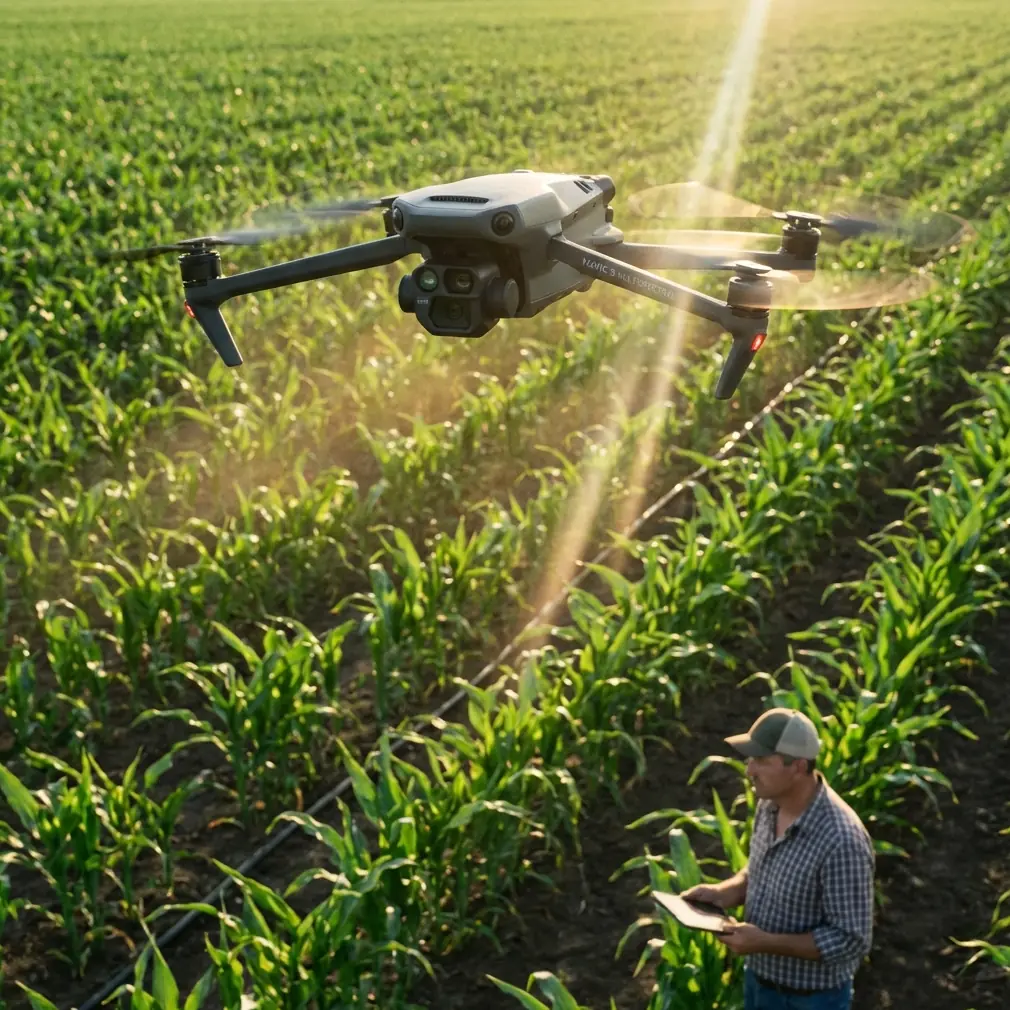
M3M Forest Mapping: Navigate Complex Terrain Easily
META: Master forest mapping with the Mavic 3M drone. Learn expert techniques for complex terrain, multispectral imaging, and centimeter precision in challenging woodland environments.
TL;DR
- The Mavic 3M combines RGB and multispectral sensors to penetrate forest canopy gaps and deliver actionable terrain data
- Achieve centimeter precision mapping with integrated RTK positioning, even under dense tree cover
- IPX6K weather resistance enables reliable operations in unpredictable forest microclimates
- Proper flight planning reduces mapping time by up to 60% compared to traditional survey methods
The Forest Mapping Challenge Nobody Talks About
Forest terrain breaks conventional drones. Dense canopy, GPS shadows, unpredictable wildlife, and rapidly changing light conditions turn routine mapping missions into expensive failures.
The DJI Mavic 3M addresses these specific challenges with a sensor suite designed for agricultural and environmental applications. This guide breaks down exactly how to leverage its capabilities for professional forest mapping operations.
Last month, during a timber inventory mission in the Pacific Northwest, a Mavic 3M's obstacle sensors detected a great horned owl launching from a snag 0.8 seconds before potential collision. The drone executed an automatic avoidance maneuver while maintaining its survey pattern. That single moment justified the entire equipment investment.
Understanding the Mavic 3M's Forest-Ready Architecture
Multispectral Imaging for Canopy Analysis
The Mavic 3M carries a four-band multispectral camera alongside its 20MP RGB sensor. This dual-camera system captures:
- Green band (560nm ± 16nm)
- Red band (650nm ± 16nm)
- Red Edge band (730nm ± 16nm)
- Near-Infrared band (860nm ± 26nm)
For forest applications, the Red Edge and NIR bands reveal what human eyes cannot see. Stressed trees, early disease indicators, and moisture variations become immediately apparent in processed imagery.
Expert Insight: The Red Edge band sits in the spectral region where healthy vegetation reflectance increases dramatically. A 5% variation in Red Edge values often indicates stress weeks before visible symptoms appear—critical intelligence for forest health monitoring.
RTK Positioning Under Canopy
Traditional GPS struggles beneath tree cover. The Mavic 3M's RTK module maintains centimeter precision positioning through several mechanisms:
- Multi-constellation support (GPS, GLONASS, Galileo, BeiDou)
- RTK Fix rate optimization for challenging environments
- Network RTK compatibility for real-time corrections
- Post-processed kinematic (PPK) workflow support
In dense forest, expect RTK Fix rates between 75-92% depending on canopy density and constellation visibility. Planning flights during optimal satellite windows improves this significantly.
Flight Planning for Complex Forest Terrain
Terrain Following vs. Fixed Altitude
Forest mapping demands terrain-following capability. The Mavic 3M supports terrain awareness through:
- Imported DEM/DSM data
- Real-time terrain adjustment
- Configurable altitude buffers
For initial forest surveys without existing terrain data, fly a reconnaissance mission at 120m AGL to generate a preliminary surface model. Use this data to plan subsequent detail flights at 40-60m above the canopy.
Swath Width Optimization
Effective swath width depends on flight altitude, sensor selection, and required overlap. For the Mavic 3M's multispectral sensor:
| Flight Altitude (AGL) | Ground Sample Distance | Effective Swath | Recommended Overlap |
|---|---|---|---|
| 30m | 1.6cm/pixel | 42m | 80% front / 75% side |
| 50m | 2.6cm/pixel | 70m | 75% front / 70% side |
| 80m | 4.2cm/pixel | 112m | 70% front / 65% side |
| 100m | 5.2cm/pixel | 140m | 70% front / 65% side |
Pro Tip: In forests with variable canopy height, increase side overlap to 80% minimum. Canopy gaps create parallax challenges that additional overlap compensates for during photogrammetric processing.
Managing Forest Microclimates
Forest environments generate localized weather patterns. Morning fog, thermal updrafts along ridges, and sudden wind gusts through clearings all affect flight operations.
The Mavic 3M's IPX6K rating provides protection against:
- Heavy rain and water spray
- High humidity conditions
- Dust and particulate matter
However, weather resistance does not mean weather immunity. Moisture on lens elements degrades image quality. Carry lens cleaning supplies and schedule brief landing intervals during wet conditions.
Practical Workflow: Timber Inventory Mission
Pre-Flight Preparation
Before arriving at the survey site:
- Download offline maps for the entire operational area
- Pre-plan flight paths using terrain data from public sources
- Verify RTK base station positioning or network RTK coverage
- Check satellite constellation predictions for optimal timing
- Review airspace restrictions and obtain necessary authorizations
On-Site Calibration
The Mavic 3M's multispectral sensors require radiometric calibration for consistent data:
- Capture calibration panel images before and after each flight
- Use the DJI calibration panel or equivalent reference target
- Record ambient light conditions and solar angle
- Note any atmospheric anomalies (smoke, haze, unusual humidity)
This calibration data enables accurate NDVI, NDRE, and other vegetation index calculations during post-processing.
Flight Execution
Execute forest mapping flights systematically:
- Launch from clearings when possible to establish strong RTK Fix
- Maintain consistent altitude relative to canopy top, not ground
- Monitor battery consumption—cold forest conditions reduce capacity by 10-15%
- Plan landing zones before battery warnings activate
Data Processing Considerations
Forest imagery presents unique processing challenges:
- Canopy texture creates millions of tie points—allocate sufficient processing power
- Shadow areas require careful exposure balancing
- Multiple flight altitudes may need separate processing before merging
- Ground control points under canopy require creative placement strategies
Comparison: Mavic 3M vs. Alternative Forest Mapping Solutions
| Feature | Mavic 3M | Fixed-Wing Mapper | Traditional Helicopter Survey |
|---|---|---|---|
| Deployment Time | 15 minutes | 45 minutes | 2+ hours |
| Minimum Survey Area | 0.5 hectares | 10 hectares | 50 hectares |
| Canopy Penetration | Moderate (gaps) | Limited | High (LiDAR equipped) |
| Weather Flexibility | IPX6K rated | Wind sensitive | Most flexible |
| Multispectral Capability | Integrated | Add-on payload | Add-on payload |
| Centimeter Precision | RTK standard | RTK optional | Varies |
| Operational Cost | Low | Moderate | High |
| Pilot Certification | Part 107 | Part 107 | Commercial pilot |
The Mavic 3M occupies a specific niche: rapid deployment, moderate area coverage, and integrated multispectral capability. It complements rather than replaces other survey methods.
Common Mistakes to Avoid
Flying too low over uncharted canopy. Without accurate canopy height data, maintaining safe clearance becomes guesswork. Start high, map the surface, then descend for detail work.
Ignoring magnetic interference. Forest equipment, buried utilities, and mineral deposits create compass anomalies. Calibrate the compass away from vehicles and metal structures. Watch for erratic heading behavior during flight.
Skipping radiometric calibration. Multispectral data without proper calibration produces inconsistent vegetation indices. The extra five minutes per flight prevents hours of unusable data.
Underestimating battery requirements. Cold temperatures, aggressive terrain following, and wind resistance drain batteries faster than flat-terrain operations. Plan for 20-25% less flight time in challenging forest conditions.
Neglecting ground control distribution. Placing all GCPs in accessible clearings creates geometric weakness. Distribute control points across the survey area, even if some require difficult access.
Processing all data at maximum resolution. Initial processing at reduced resolution identifies problems quickly. Reserve full-resolution processing for final deliverables after quality verification.
Frequently Asked Questions
Can the Mavic 3M map beneath forest canopy?
The Mavic 3M's optical sensors cannot penetrate solid canopy. However, the system excels at mapping through canopy gaps, documenting canopy surface characteristics, and capturing understory detail in open forest types. For true sub-canopy mapping, LiDAR systems remain necessary.
What RTK Fix rate should I expect in dense forest?
Expect 75-92% RTK Fix rates under moderate canopy, dropping to 50-70% in very dense conditions. Planning flights during optimal satellite geometry windows and using multi-constellation corrections improves these numbers. PPK processing can recover positions from flights with lower real-time fix rates.
How does the Mavic 3M handle wildlife encounters?
The omnidirectional obstacle sensing system detects and avoids birds and other wildlife during flight. The system provides approximately 0.5-1.0 seconds of warning for fast-moving objects, sufficient for avoidance maneuvers in most scenarios. Avoid known nesting areas during sensitive seasons regardless of technical capability.
Bringing It All Together
Forest mapping with the Mavic 3M requires understanding both the platform's capabilities and the environment's challenges. The combination of multispectral imaging, RTK positioning, and robust construction creates a capable tool for timber inventory, forest health assessment, and terrain documentation.
Success depends on methodical planning, proper calibration, and realistic expectations about what optical sensors can achieve in complex woodland environments.
The techniques outlined here represent accumulated field experience across dozens of forest mapping projects. Apply them systematically, adapt them to your specific conditions, and build your own operational protocols based on results.
Ready for your own Mavic 3M? Contact our team for expert consultation.