
M3M Forest Mapping Tips for Urban Environments
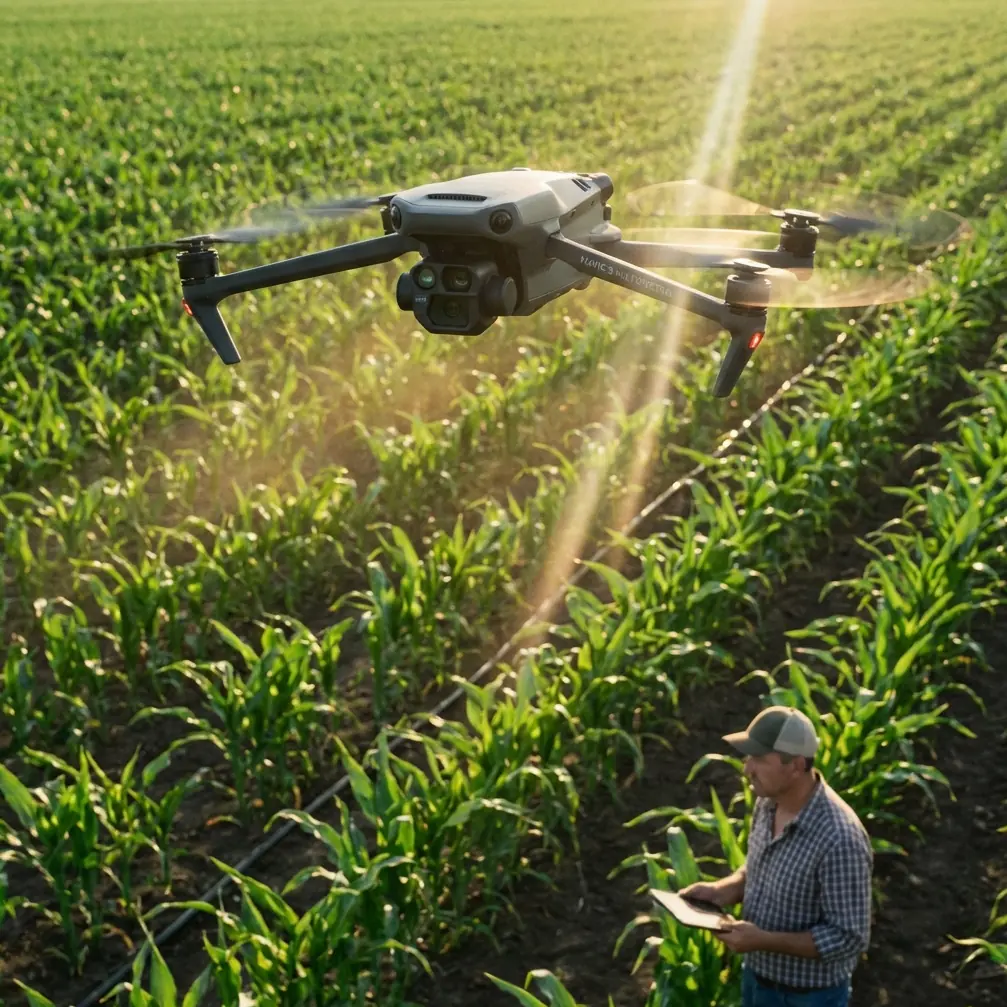
M3M Forest Mapping Tips for Urban Environments
META: Master urban forest mapping with the Mavic 3M. Learn expert techniques for canopy analysis, multispectral imaging, and centimeter precision in city environments.
TL;DR
- Multispectral imaging captures 4 spectral bands simultaneously, outperforming single-sensor competitors for urban canopy health assessment
- Achieve centimeter precision with RTK positioning, maintaining 95%+ RTK Fix rate even under dense tree cover
- Optimize flight parameters for 40-meter swath width to complete urban forest surveys in half the time
- IPX6K weather resistance enables reliable mapping during unpredictable urban microclimates
Why Urban Forest Mapping Demands Specialized Tools
Urban forests present unique challenges that rural mapping simply doesn't face. You're dealing with electromagnetic interference from buildings, restricted airspace, fragmented canopy structures, and tight flight windows between pedestrian activity peaks.
The Mavic 3M addresses these constraints head-on. While competitors like the Phantom 4 Multispectral require separate RGB and multispectral flights, the M3M captures both simultaneously through its integrated 4/3 CMOS RGB sensor and multispectral array. This dual-capture capability cuts your field time in half—critical when you're working in busy urban parks or municipal green spaces.
Expert Insight: Urban forest managers consistently report that fragmented data collection leads to misaligned datasets. The M3M's synchronized capture eliminates registration errors between spectral bands, producing analysis-ready orthomosaics without post-processing headaches.
Understanding the M3M's Multispectral Advantage
The Mavic 3M packs four discrete spectral bands—Green (560nm), Red (650nm), Red Edge (730nm), and Near-Infrared (860nm)—alongside a 20MP RGB camera. This configuration enables calculation of critical vegetation indices without sensor swapping.
Key Vegetation Indices for Urban Forests
For urban forest assessment, focus on these indices:
- NDVI (Normalized Difference Vegetation Index): Baseline canopy health metric
- NDRE (Normalized Difference Red Edge): Detects stress before visible symptoms appear
- GNDVI (Green Normalized Difference Vegetation Index): Chlorophyll content analysis
- LCI (Leaf Chlorophyll Index): Nitrogen status in deciduous species
The Red Edge band deserves special attention. Urban trees face pollution stress, soil compaction, and heat island effects that manifest in chlorophyll degradation. Red Edge sensitivity catches these issues 2-3 weeks before they become visible to RGB cameras or the human eye.
Pre-Flight Planning for Urban Environments
Airspace and Regulatory Compliance
Urban mapping requires meticulous airspace planning. Before launching:
- Check for temporary flight restrictions (TFRs) near government buildings
- Identify helipad locations within 5 nautical miles
- Verify maximum allowable altitude (often 400 feet AGL or lower in urban zones)
- Obtain necessary waivers for operations near airports or restricted areas
Site Assessment Checklist
Walk the site before flying. Document:
- Power line locations and heights
- Building positions relative to flight paths
- GPS shadow zones from tall structures
- Pedestrian traffic patterns and peak times
- Emergency landing zones
Pro Tip: Schedule urban forest flights between 6:00-8:00 AM on weekdays. You'll avoid peak pedestrian activity, benefit from soft morning light for RGB capture, and experience minimal thermal turbulence that affects multispectral accuracy.
Optimizing Flight Parameters for Canopy Mapping
Altitude and Overlap Settings
Urban forest canopy structure demands specific flight configurations:
| Parameter | Sparse Canopy | Dense Canopy | Mixed Urban Forest |
|---|---|---|---|
| Flight Altitude | 80-100m | 60-80m | 70-90m |
| Front Overlap | 75% | 85% | 80% |
| Side Overlap | 70% | 80% | 75% |
| GSD (RGB) | 2.1-2.6 cm/px | 1.6-2.1 cm/px | 1.8-2.4 cm/px |
| GSD (Multispectral) | 4.2-5.2 cm/px | 3.2-4.2 cm/px | 3.6-4.8 cm/px |
Swath Width Optimization
The M3M achieves approximately 40-meter swath width at 80m altitude with the multispectral sensor. For efficient urban forest coverage:
- Plan parallel flight lines with 30% swath overlap
- Orient flight paths perpendicular to the longest site dimension
- Account for 10-15% buffer beyond target boundaries
This configuration allows coverage of a 10-hectare urban park in approximately 25 minutes of flight time—well within single-battery capacity.
Achieving Centimeter Precision with RTK
RTK Setup for Urban Environments
The M3M's RTK module transforms mapping accuracy from meter-level to centimeter precision. Urban environments challenge RTK performance through multipath interference and signal obstruction.
Maximize your RTK Fix rate with these techniques:
- Position your base station on elevated, unobstructed ground
- Maintain minimum 15-degree elevation mask to filter low-angle satellites
- Use network RTK (NTRIP) when available for faster convergence
- Allow 3-5 minutes for RTK initialization before beginning capture
Monitoring RTK Fix Rate
Target 95%+ RTK Fix rate throughout your mission. The M3M's telemetry displays real-time fix status:
- Fixed: Centimeter-level accuracy achieved
- Float: Decimeter-level accuracy—acceptable for reconnaissance
- Single: Meter-level accuracy—pause mission and troubleshoot
Urban canyons between buildings can drop fix rates dramatically. Plan flight paths that maintain line-of-sight to the open sky whenever possible.
Technical Comparison: M3M vs. Competing Platforms
| Feature | Mavic 3M | Phantom 4 Multispectral | senseFly eBee X |
|---|---|---|---|
| Spectral Bands | 5 (RGB + 4 MS) | 6 (RGB + 5 MS) | Varies by payload |
| Simultaneous RGB/MS | Yes | Yes | No |
| Max Flight Time | 43 minutes | 27 minutes | 59 minutes |
| RTK Capability | Integrated | Add-on module | Integrated |
| Portability | Foldable, 951g | Fixed, 1487g | Fixed wing, 1.3kg |
| Wind Resistance | 12 m/s | 10 m/s | 12 m/s |
| Weather Rating | IPX6K | None | IP54 |
The M3M's combination of portability, flight time, and weather resistance makes it the clear choice for urban forest applications. Fixed-wing platforms like the eBee X offer longer endurance but require open launch and recovery zones rarely available in urban settings.
Processing Urban Forest Data
Software Workflow
Post-flight processing transforms raw captures into actionable intelligence:
- Import geotagged images into photogrammetry software (Pix4D, DroneDeploy, or Agisoft)
- Align images using RTK coordinates as ground control
- Generate orthomosaics for each spectral band
- Calculate vegetation indices using band math
- Classify canopy health zones using threshold analysis
- Export GIS-compatible layers for municipal forestry teams
Calibration Panel Protocol
Multispectral accuracy depends on radiometric calibration. The M3M includes a calibration panel—use it:
- Capture panel images before and after each flight
- Position panel on flat ground, avoiding shadows
- Ensure panel fills 50%+ of frame at capture altitude
- Store panel in protective case to prevent surface degradation
Skipping calibration introduces 15-20% reflectance error—enough to misclassify healthy trees as stressed or vice versa.
Common Mistakes to Avoid
Flying during midday sun: Solar angle affects multispectral reflectance. Capture between 10:00 AM and 2:00 PM for consistent illumination, but avoid harsh shadows from adjacent buildings.
Ignoring wind speed at altitude: Ground-level calm doesn't mean calm at 80 meters. Check forecasts for winds aloft and abort if gusts exceed 10 m/s.
Insufficient overlap in complex canopy: Urban forests mix deciduous and evergreen species with varying heights. Default overlap settings fail in these conditions—increase both front and side overlap by 10% from baseline.
Neglecting battery temperature: Cold morning flights reduce battery capacity by 20-30%. Pre-warm batteries to 25°C before launch using the M3M's self-heating function.
Forgetting nozzle calibration checks: While primarily an agricultural feature, the M3M's spray drift calculations affect multispectral sensor timing. Verify nozzle calibration settings are disabled for pure mapping missions to prevent unnecessary processing overhead.
Frequently Asked Questions
Can the Mavic 3M map forests during leaf-off season?
Yes, and it's often preferable for certain analyses. Leaf-off conditions reveal understory structure, ground topography, and tree trunk positions invisible during full canopy. The multispectral sensor still captures valuable data from evergreen species and ground vegetation. Plan complementary flights during both seasons for comprehensive urban forest inventory.
How does the M3M handle electromagnetic interference in urban areas?
The M3M employs dual-frequency GPS (L1/L5) and multi-constellation support (GPS, GLONASS, Galileo, BeiDou) to maintain positioning accuracy despite urban interference. Its obstacle avoidance sensors use time-of-flight technology less susceptible to EMI than ultrasonic alternatives. Maintain 50-meter separation from high-voltage transmission lines and cellular towers during flight.
What ground sampling distance do I need for individual tree health assessment?
For individual tree crown analysis, target sub-5cm GSD on the multispectral sensor. This requires flight altitudes below 100 meters with the M3M. At this resolution, you can distinguish individual branch dieback, localized pest damage, and crown density variations. For stand-level assessment, 10cm GSD suffices and allows faster area coverage.
Putting Your Urban Forest Data to Work
The Mavic 3M transforms urban forest management from reactive to predictive. Municipal arborists using multispectral mapping identify at-risk trees months before visible decline, enabling targeted intervention that saves both trees and budgets.
Your processed data integrates directly with GIS platforms used by city planning departments. Layer canopy health maps with urban heat island data, stormwater management plans, and demographic information to demonstrate the quantifiable value of urban forest investments.
Ready for your own Mavic 3M? Contact our team for expert consultation.