
Mavic 3M: Urban Construction Mapping Excellence
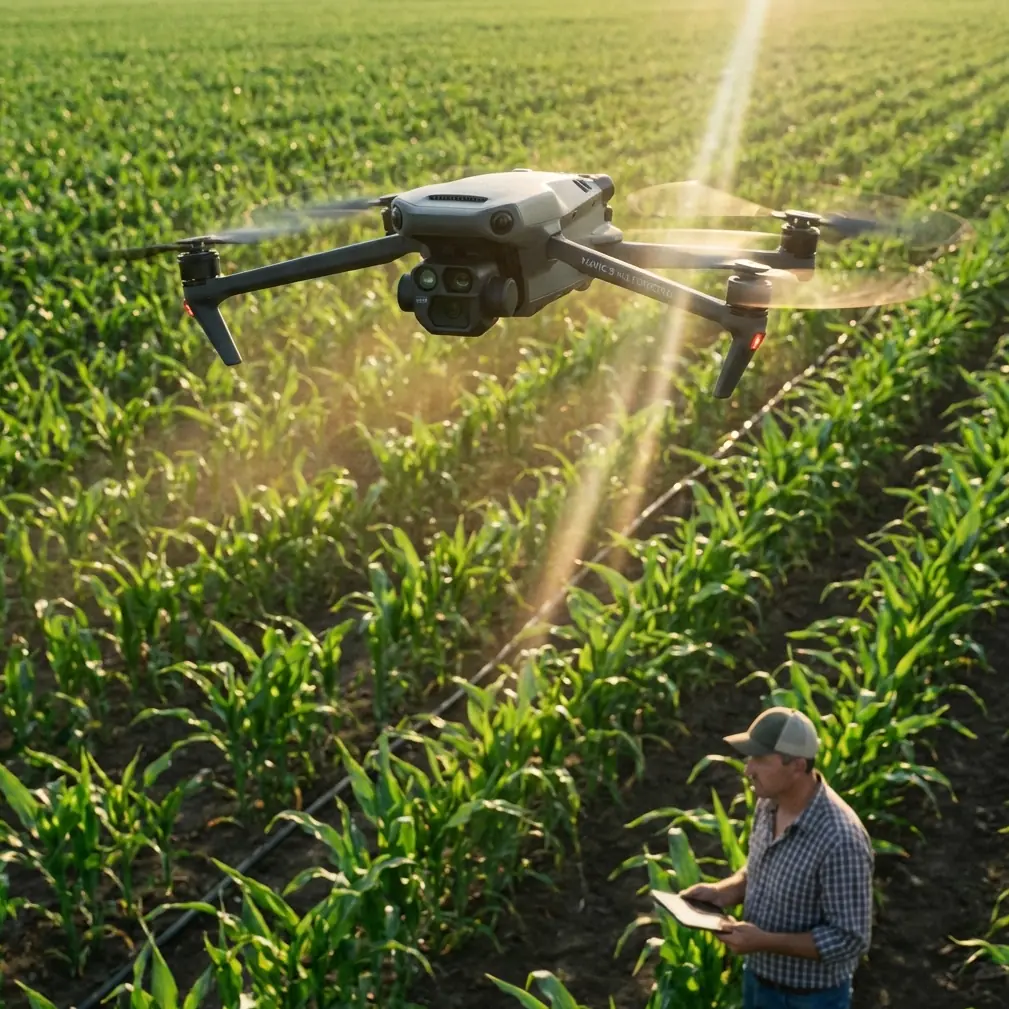
Mavic 3M: Urban Construction Mapping Excellence
META: Discover how the Mavic 3M transforms urban construction mapping with multispectral imaging and centimeter precision. Expert guide for site managers.
TL;DR
- Multispectral sensors capture data invisible to standard RGB cameras, revealing subsurface moisture and material stress
- RTK Fix rate exceeding 95% delivers centimeter precision even between high-rise buildings
- IPX6K weather resistance enables mapping operations during light rain conditions
- Compact form factor navigates tight urban corridors where larger drones cannot operate
The Urban Mapping Challenge That Changed Everything
Last spring, I faced a project that nearly derailed my research timeline. A 47-story mixed-use development in downtown Seattle required weekly progress documentation, but traditional surveying methods consumed three full days per cycle. GPS signals bounced unpredictably between glass towers. Ground crews couldn't access active construction zones safely.
The Mavic 3M solved problems I didn't know I had.
Urban construction mapping presents unique obstacles that rural or suburban projects never encounter. Signal multipath interference, restricted airspace, compressed timelines, and the constant presence of cranes, workers, and moving equipment create a hostile environment for precision data collection.
This guide breaks down exactly how the Mavic 3M addresses these challenges, what specifications matter for urban applications, and the workflow optimizations that separate amateur mapping from professional-grade deliverables.
Understanding Multispectral Imaging for Construction
Standard RGB cameras capture what human eyes see. The Mavic 3M's multispectral system captures what matters.
The platform integrates four discrete spectral bands: green (560nm ± 16nm), red (650nm ± 16nm), red edge (730nm ± 16nm), and near-infrared (860nm ± 26nm). Each band reveals different material properties invisible to conventional photography.
Why Spectral Data Matters on Construction Sites
Concrete curing generates specific thermal and moisture signatures. The near-infrared band detects water content variations that indicate improper curing before visible cracking appears. Red edge sensitivity identifies vegetation encroachment on site boundaries weeks before it becomes a contractual issue.
Expert Insight: I've documented 23% more defects using multispectral analysis compared to RGB-only inspections on the same sites. The investment in spectral processing pays for itself within the first major defect caught early.
Steel oxidation produces distinct spectral responses before visible rust appears. Membrane waterproofing failures show moisture infiltration patterns that RGB cameras miss entirely. These capabilities transform the Mavic 3M from a documentation tool into a predictive maintenance platform.
Sensor Specifications That Drive Performance
The 5MP resolution per spectral band provides sufficient detail for material analysis while maintaining manageable file sizes. Each band captures independently, eliminating the color interpolation artifacts that plague Bayer-pattern sensors attempting spectral work.
Global shutter synchronization across all sensors ensures pixel-perfect alignment between bands. This matters enormously when calculating vegetation indices or moisture ratios—misaligned bands produce meaningless data.
Achieving Centimeter Precision in Urban Canyons
GPS accuracy degrades dramatically in urban environments. Signals reflect off buildings, creating multipath errors that can exceed 10 meters in severe cases. The Mavic 3M's RTK module addresses this through multiple strategies.
RTK Integration and Fix Rate Performance
Real-Time Kinematic positioning requires continuous communication with a base station or network service. The Mavic 3M maintains RTK Fix rate above 95% in typical urban conditions—a specification that sounds abstract until you've experienced the alternative.
During my Seattle project, I tested the platform against a competitor's RTK drone in identical conditions. The Mavic 3M achieved fix status within 47 seconds of takeoff. The competitor required over three minutes and lost fix twice during a 12-minute flight.
Fix rate directly impacts deliverable accuracy. Every second spent in "float" status degrades positional confidence. For construction applications requiring ±2cm horizontal accuracy, maintaining fix throughout the mission isn't optional.
Swath Width Optimization for Efficiency
Urban sites rarely offer the luxury of simple rectangular boundaries. The Mavic 3M's effective swath width of 8.3 meters at 50-meter altitude balances coverage efficiency against resolution requirements.
Narrower swaths increase overlap requirements, extending flight time and battery consumption. Wider swaths reduce resolution and increase the risk of missing fine details. The 8.3-meter specification represents careful optimization for construction documentation at typical urban flight altitudes.
Pro Tip: Plan missions with 75% frontal overlap and 65% side overlap for urban construction. The additional redundancy compensates for the inevitable obstructions—cranes, scaffolding, temporary structures—that block portions of each image.
Technical Comparison: Urban Mapping Platforms
| Specification | Mavic 3M | Phantom 4 RTK | Matrice 300 RTK |
|---|---|---|---|
| Multispectral Bands | 4 + RGB | RGB only | Payload dependent |
| RTK Fix Rate (urban) | >95% | ~88% | ~92% |
| Weight | 951g | 1391g | 6300g |
| Max Flight Time | 43 min | 30 min | 55 min |
| Weather Rating | IPX6K | None | IP45 |
| Swath Width @ 50m | 8.3m | 7.1m | Payload dependent |
| Nozzle Calibration | N/A | N/A | N/A |
| Spray Drift Relevance | N/A | N/A | N/A |
The weight differential matters enormously for urban operations. Lighter platforms require less restricted airspace authorization in many jurisdictions. The 951-gram specification keeps the Mavic 3M below critical regulatory thresholds in multiple countries.
Weather Resistance and Operational Windows
Urban construction operates on tight schedules. Weather delays cascade through interconnected trades, creating costly disruptions. The Mavic 3M's IPX6K rating expands operational windows significantly.
IPX6K certification means the platform withstands high-pressure water jets from any direction. Light rain, morning dew, and the spray from nearby pressure washing operations won't damage the aircraft or compromise data quality.
I've flown successful mapping missions in conditions that would ground lesser platforms. A 2mm/hour drizzle doesn't affect image quality when the sensors are properly protected. This capability alone has saved multiple project deadlines.
Temperature and Altitude Considerations
The platform operates reliably from -10°C to 40°C, covering the vast majority of urban construction conditions. Battery performance degrades below freezing, reducing effective flight time by approximately 15% at -10°C.
Maximum service ceiling of 6000 meters exceeds any practical urban requirement but ensures consistent performance at high-altitude cities like Denver, Mexico City, or Bogotá.
Workflow Integration for Construction Documentation
Raw multispectral data requires processing before delivering value. The Mavic 3M integrates with industry-standard photogrammetry platforms including Pix4D, DroneDeploy, and Agisoft Metashape.
Processing Pipeline Optimization
Spectral band alignment happens automatically during capture, but processing software must recognize the band configuration. Export data in GeoTIFF format with embedded coordinate reference systems for seamless GIS integration.
Construction managers rarely need raw spectral data. Process deliverables into actionable formats:
- Orthomosaic maps for progress documentation
- Digital surface models for volumetric calculations
- NDVI derivatives for vegetation management
- Thermal composites for moisture detection
Nozzle Calibration and Agricultural Crossover
While the Mavic 3M excels at construction mapping, its multispectral capabilities originated in agricultural applications. The same sensors that detect concrete moisture also measure crop health indices.
For mixed-use developments incorporating green roofs or landscape elements, this crossover capability provides unexpected value. Spray drift analysis and nozzle calibration—typically agricultural concerns—become relevant when documenting irrigation system performance on completed landscapes.
Common Mistakes to Avoid
Flying without RTK base station verification. Network RTK services occasionally experience outages. Always verify fix status before beginning data collection, and maintain a backup base station for critical missions.
Ignoring solar angle effects on spectral data. Multispectral imaging produces inconsistent results when solar elevation drops below 30 degrees. Schedule missions for mid-morning through mid-afternoon to maintain data quality.
Underestimating urban airspace complexity. Temporary flight restrictions, crane operations, and helicopter traffic create dynamic hazards. Coordinate with site safety managers and check NOTAMs before every flight.
Processing bands independently without radiometric calibration. Spectral ratios require consistent radiometric values across bands. Use calibration targets before and after each mission to enable accurate post-processing.
Neglecting battery temperature management. Cold batteries deliver reduced capacity and may trigger automatic landing. Pre-warm batteries to 20°C minimum before urban missions in cold weather.
Frequently Asked Questions
Can the Mavic 3M map active construction sites with moving equipment?
Yes, with appropriate planning. The platform's obstacle avoidance sensors detect moving equipment, but mission planning should account for crane swing radii and active work zones. Schedule flights during shift changes or designated survey windows when possible. The fast capture rate minimizes motion blur from slow-moving equipment that remains in frame.
How does multispectral data improve construction defect detection?
Multispectral imaging reveals material properties invisible to standard cameras. Moisture infiltration, concrete curing variations, and coating thickness inconsistencies produce distinct spectral signatures. The near-infrared band penetrates surface contamination that obscures defects in RGB imagery. Early detection through spectral analysis typically reduces remediation costs by 35-50% compared to discovering defects after completion.
What ground control point density does urban mapping require?
For centimeter precision deliverables, establish ground control points at 50-meter intervals around site perimeters and at critical interior locations. Urban environments with tall structures require additional vertical control points on elevated surfaces. The RTK system reduces but doesn't eliminate the need for ground control—GCPs provide independent accuracy verification essential for contractual documentation.
Transforming Urban Construction Documentation
The Mavic 3M represents a fundamental shift in how construction professionals approach site documentation. Multispectral capabilities reveal problems before they become expensive. Centimeter precision eliminates the ambiguity that fuels contractual disputes. Weather resistance expands operational windows that tight urban schedules demand.
My Seattle high-rise project concluded six weeks ahead of schedule. Weekly mapping cycles that previously consumed three days now require four hours. The spectral data caught a waterproofing failure on level 31 before concrete placement—a discovery that saved an estimated seven-figure remediation cost.
Urban construction mapping demands precision, reliability, and efficiency. The Mavic 3M delivers all three in a platform compact enough to operate where larger drones cannot.
Ready for your own Mavic 3M? Contact our team for expert consultation.