
Mavic 3M Guide for Coastal Wildlife Inspection
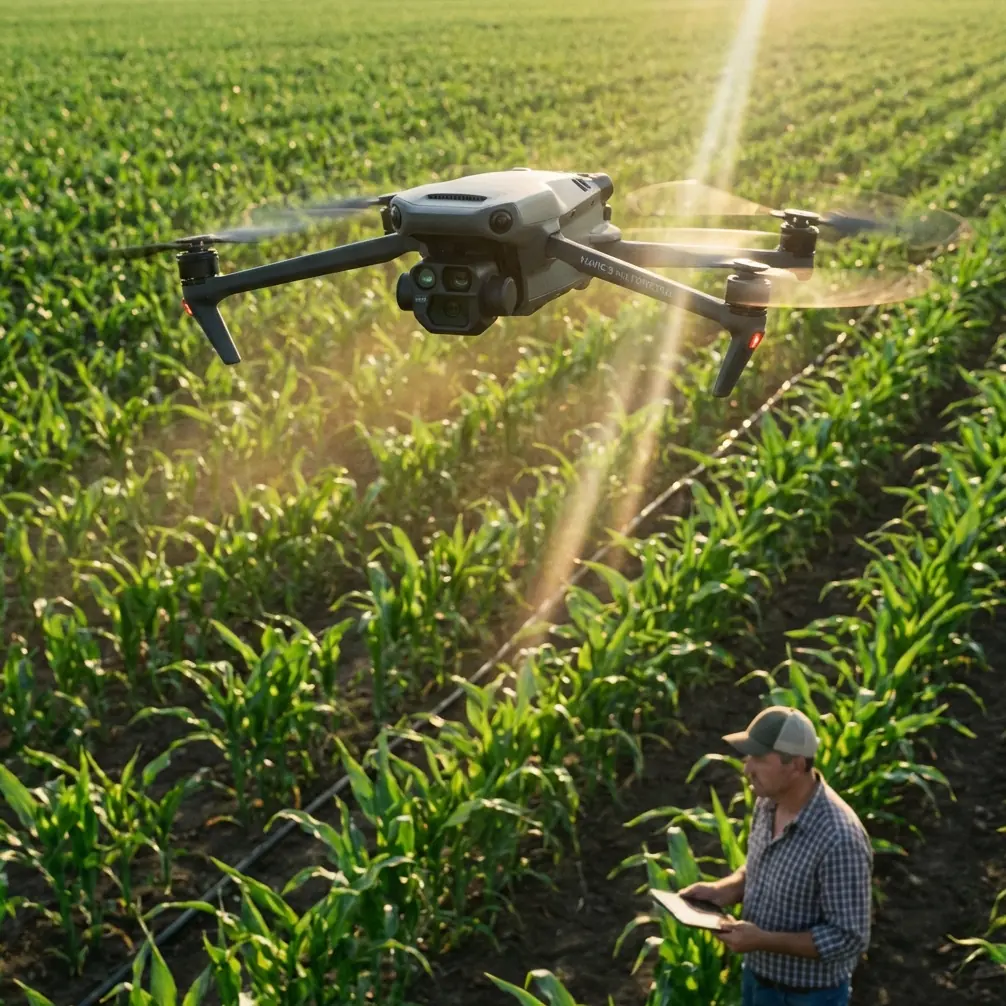
Mavic 3M Guide for Coastal Wildlife Inspection: Why One Minute of Setup Matters More Than Most Pilots Think
META: A practical Mavic 3M guide for coastal wildlife inspection, focused on pre-flight setup, multispectral workflow, RTK fix discipline, weather changes, and image quality that holds up in real field conditions.
Coastal wildlife work punishes sloppy drone habits.
Salt haze softens contrast. Wet sand throws glare back into the lens. Wind direction shifts faster than the forecast suggests. One minute you are tracking nesting areas along a tidal flat, and the next you are dealing with a crosswind pushing over marsh grass while cloud cover cuts your scene brightness in half.
That is exactly why the most useful lesson for a Mavic 3M operator does not come from a spec sheet. It comes from a simple photography principle: the gap between mediocre imagery and genuinely useful imagery usually is not the camera alone. It is whether the operator takes a moment to set things up properly before pressing the shutter.
That idea comes from a practical photography reference aimed at ordinary users. Its core point is blunt: image quality differences often come less from hardware than from method. It breaks the work into four parts: basic settings, composition, light, and post-processing. It even makes a very specific claim that resonates in drone operations: spending one minute adjusting key settings before shooting can noticeably improve results.
For a Mavic 3M pilot inspecting wildlife in coastal terrain, that is not casual advice. It is operational discipline.
The Mavic 3M Is Powerful, but Coastal Work Exposes Every Weak Habit
The Mavic 3M gives you a serious imaging platform for civilian environmental work. Multispectral capture, mapping capability, and RTK-supported positioning can turn a shoreline survey into something that is measurable rather than merely visible. But powerful hardware does not rescue weak fieldcraft.
In coastal wildlife inspection, your mission is rarely just “get nice images.” You are often trying to identify vegetation stress around habitats, document changes to nesting buffers, compare repeated flights over the same swath, or verify whether a disturbed area is actually changing over time. That means image consistency matters as much as image sharpness.
This is where the photography reference becomes unexpectedly relevant. It argues that people often shoot first and think later, ignoring a handful of settings that make a large quality difference. Drone pilots do the same thing. They launch quickly because weather windows are short, wildlife movement is unpredictable, and field teams do not want delays. But rushing the first minute can cost the whole dataset.
If your RTK fix rate is unstable, your repeatability suffers. If your exposure strategy is drifting between bright surf reflection and dark vegetation, your multispectral comparison gets messy. If your framing ignores shoreline geometry, your mapping outputs become harder to interpret. The aircraft can fly beautifully and still bring home weak evidence.
Start With the “One-Minute Rule” Before Every Coastal Flight
That reference mentions a simple habit: spend a minute adjusting critical settings before shooting. For a Mavic 3M in coastal wildlife inspection, I would formalize that into a one-minute pre-capture rule.
Here is what that minute should accomplish.
1. Confirm positioning quality, not just GPS presence
Seeing satellites is not enough. You want a strong RTK fix rate before you begin any flight intended for repeatable habitat documentation. In a coastal environment, where restoration lines, marsh edges, and dune transitions may be reviewed across multiple dates, centimeter precision is not a luxury. It is what lets you compare change without guessing.
Operational significance: if your RTK status is poor at launch, the same patch of vegetation can appear shifted across missions, making ecological change harder to separate from mapping inconsistency.
2. Review exposure against coastal glare
Water and wet sand can fool automated settings. A scene that looks balanced to your eye can produce flat highlights or underexposed shoreline vegetation. The photography source emphasizes that technique outweighs hardware, and this is one of the clearest examples. The sensor is capable. The pilot still has to tell the system what matters.
Operational significance: in multispectral work, exposure inconsistency can complicate interpretation of plant condition and site boundaries. Even in visual review, blown reflective surfaces can erase contextual detail around birds, vegetation zones, or tidal intrusion.
3. Define the actual survey composition
The source divides photography into settings, composition, light, and post. That is not just for phone users. In drone inspection, composition is mission geometry. Where does your swath width begin? How much margin do you want around nesting habitat or marsh transition bands? Are you including too much bright surf that weakens consistency across the rest of the frame?
Operational significance: better composition in the field reduces unnecessary re-flying and creates cleaner comparisons when you revisit the same corridor later.
4. Read the light before takeoff, not after the dataset is compromised
Coastal weather changes quickly. If the sun is in and out of cloud banks, your imagery can vary dramatically over a short mission. A one-minute pause to study light direction and cloud movement often tells you whether you should fly immediately, adjust route priority, or split the mission.
Operational significance: if a critical habitat section is likely to lose usable light in ten minutes, survey it first.
That minute sounds small. It is not. It is often the difference between data you can defend and data you can only describe.
Multispectral Work Rewards Methodical Pilots
The photography reference is practical by design. No theory for theory’s sake. That mindset is exactly right for Mavic 3M users working around wildlife in coastal zones.
Multispectral imaging is valuable because it helps reveal differences that are not always obvious in standard visual imagery. But the more analytical the tool, the less forgiving it becomes when your field method is loose. Small inconsistencies compound.
That is why I advise operators to treat every coastal mission like a structured imaging exercise, not just a flight. The four-part framework from the reference adapts surprisingly well:
- Basic settings become camera and mission parameter discipline.
- Composition becomes flight line placement and subject prioritization.
- Light becomes environmental timing and reflective surface management.
- Post-processing becomes careful comparison, annotation, and report-ready outputs.
Notice the pattern. None of that depends on buying “better hardware” in the abstract. It depends on knowing how to use the hardware you already have. That is the exact spirit of the source material, and it applies directly here.
A Mid-Flight Weather Shift Is Where Good Preparation Pays Off
On one coastal wildlife inspection scenario, conditions started clean enough: moderate visibility, manageable wind, stable light over the estuary edge. The first passes over the habitat corridor were steady, with a reliable RTK fix and consistent scene brightness. Then the weather turned.
A bank of cloud moved in faster than expected. Wind shifted from a relatively helpful tail component to a crosswind pressing over the shoreline. Surface glare changed immediately. What had been a readable waterline became a mix of darker water, bright reflections, and moving shadows across marsh vegetation.
This is the moment when operators discover whether they prepared for the mission or merely launched into it.
Because the route had been composed properly from the start, the priority habitat zone had already been captured under the best available light. Because key settings had been checked during that first minute, the resulting imagery retained consistency where it mattered most. Because the operator was watching environmental light rather than fixating only on aircraft position, the mission could be adjusted instead of abandoned.
The Mavic 3M handled the shift well as an aircraft. The real win, though, came from workflow. Hardware stability matters, but disciplined setup is what protects the value of the dataset when conditions stop cooperating.
That is the practical meaning of the source’s claim that one minute of adjustment can “significantly improve” image quality. In drone terms, that minute can preserve the entire usable section of a mission before conditions degrade.
Coastal Wildlife Inspection Is Not the Time to “Fix It Later”
The same photography reference includes post-processing as one of its four pillars. That matters, but it should not be misunderstood. Post-processing is where you refine interpretation, not where you rescue bad capture habits.
I see this mistake often in technical drone work. Operators assume they can sort out brightness, alignment, or framing issues later in software. Sometimes they can soften the damage. They cannot recreate clean source conditions.
If your original capture was inconsistent because you ignored changing light, post-processing becomes triage. If your route included unnecessary reflective coastline while skipping the true habitat edge, no amount of editing restores the missing coverage. If your RTK fix discipline was weak, your map alignment can become a confidence issue rather than a trusted deliverable.
For coastal wildlife teams, that matters because decisions are often cumulative. One mission alone may only show a snapshot. Several missions over time reveal trend lines. Trend lines depend on consistency. Consistency starts before takeoff.
What This Means for Real Operators in the Field
If you are using the Mavic 3M to inspect coastal wildlife areas, here is the practical takeaway.
Do not think like a pilot first. Think like an image-maker responsible for evidence.
That shift sounds subtle, but it changes behavior immediately. You stop launching the moment the props spin. You start evaluating whether your next pass will be useful under current light. You care more about repeatability and swath width than about simply covering ground fast. You monitor RTK health because centimeter precision affects future comparisons, not just the current map. You understand that multispectral value depends on consistency in capture, not merely access to the feature.
The photography source was written for regular people using phones, yet its core lesson scales perfectly into professional drone work: better results usually come from better method. In a field environment as visually tricky as the coast, that is not a creative slogan. It is a workflow rule.
A Simple Coastal Workflow for Better Mavic 3M Results
If I were training a team tomorrow for shoreline habitat inspection, I would keep it simple.
Before launch:
- Take one minute to verify key settings and mission priorities.
- Confirm RTK status and expected repeatability.
- Check how glare, tide position, and cloud movement will affect the scene.
- Set route order based on the most light-sensitive habitat zones first.
During flight:
- Watch for weather shifts, not just battery status.
- Prioritize consistent coverage over opportunistic wandering.
- Protect your core survey block before experimenting with additional angles.
After flight:
- Review whether the imagery supports comparison over time.
- Flag any sections where changing light or wind may affect interpretation.
- Process with the understanding that post is for refinement, not rescue.
That is not flashy advice. It is the kind that keeps field programs reliable.
If you are building or refining that workflow and want a second set of eyes on mission planning, corridor layout, or multispectral capture discipline, you can message Marcus directly here.
The Real Advantage Is Not Just the Aircraft
The Mavic 3M earns its place in civilian environmental work because it combines mobility with serious imaging capability. But in coastal wildlife inspection, its real advantage appears only when the operator matches that capability with method.
And the most useful reminder may come from outside the drone industry entirely. A practical photography article for ordinary users points out that hardware is rarely the whole story, that image quality improves when you focus on settings, composition, light, and post, and that even one minute of preparation can make a noticeable difference.
For Mavic 3M operators, that is not a beginner lesson. It is an expert one.
Coastal conditions change too fast to rely on luck. Wildlife inspection demands imagery that can stand up to review, comparison, and repeated use. The pilot who understands that will get more from the aircraft than the pilot who only knows the feature list.
Ready for your own Mavic 3M? Contact our team for expert consultation.