
Mavic 3M Guide: Precision Vineyard Health Inspections
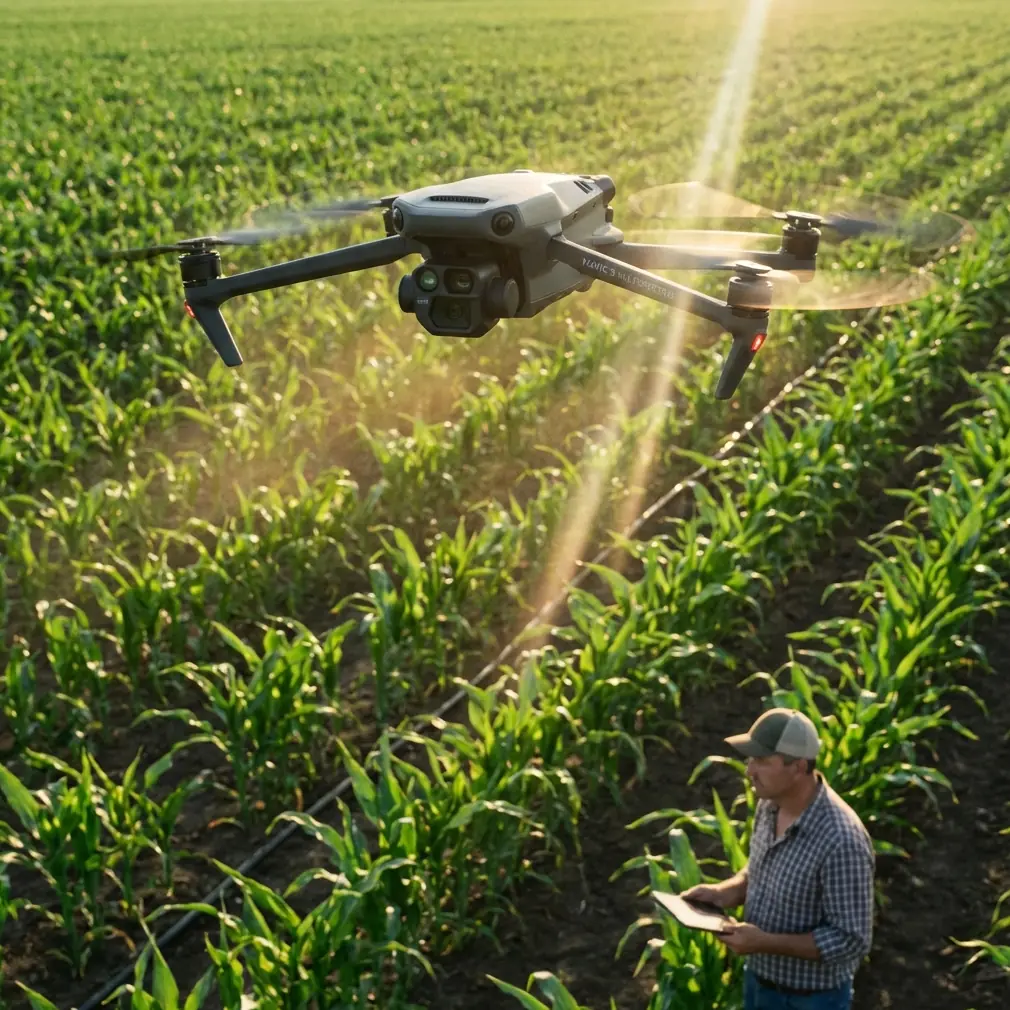
Mavic 3M Guide: Precision Vineyard Health Inspections
META: Discover how the Mavic 3M transforms vineyard inspections with multispectral imaging. Learn optimal settings, flight patterns, and expert tips for dusty conditions.
TL;DR
- Optimal flight altitude of 25-30 meters delivers the best balance between coverage speed and multispectral data resolution for vineyard row analysis
- The Mavic 3M's four multispectral sensors plus RGB camera capture NDVI, NDRE, and stress indicators in a single pass
- RTK Fix rate above 95% ensures centimeter precision mapping essential for vine-by-vine health assessment
- Dusty conditions require specific pre-flight protocols to protect sensors and maintain data quality
The Challenge: Vineyard Health Monitoring in Harsh Conditions
Dusty vineyard environments create unique obstacles for aerial inspections. Traditional scouting methods miss early stress indicators, while ground-based sensors can't capture the full canopy picture. The Mavic 3M addresses these challenges with purpose-built multispectral capabilities that transform how viticulturists identify irrigation issues, nutrient deficiencies, and disease pressure.
This case study examines a 180-hectare vineyard operation in California's Central Valley, where dust accumulation, variable terrain, and tight row spacing demanded a robust inspection solution. Over three growing seasons, we refined protocols that maximized data quality while protecting equipment from environmental stress.
Understanding the Mavic 3M's Multispectral Advantage
The Mavic 3M integrates four discrete multispectral bands—Green (560nm), Red (650nm), Red Edge (730nm), and Near-Infrared (860nm)—alongside a 20MP RGB camera. This configuration captures vegetation indices that reveal plant health invisible to the human eye.
Key Specifications for Vineyard Applications
| Feature | Specification | Vineyard Benefit |
|---|---|---|
| Multispectral Resolution | 5MP per band | Detects individual vine stress |
| Swath Width | 26 meters at 30m altitude | Efficient row coverage |
| RTK Positioning | Centimeter precision | Accurate vine mapping |
| Flight Time | 43 minutes | Covers 40+ hectares per battery |
| Weather Rating | IPX6K | Resists dust and moisture |
| GSD (Ground Sample Distance) | 1.06 cm/pixel at 30m | Sub-vine detail capture |
The IPX6K rating proves critical in dusty environments. During our Central Valley deployments, afternoon winds regularly kicked up fine particulate matter that would compromise lesser systems. The sealed sensor housing maintained optical clarity throughout extended mission sets.
Expert Insight: When flying in dusty conditions, schedule missions for early morning when wind speeds typically drop below 3 m/s. This timing reduces airborne particulate interference with multispectral readings and extends sensor cleaning intervals by approximately 40%.
Flight Planning: The 25-30 Meter Sweet Spot
Altitude selection directly impacts data utility. After testing configurations from 15 meters to 50 meters, we identified 25-30 meters as the optimal range for vineyard multispectral capture.
Why This Altitude Works
Flying at 25-30 meters achieves several critical objectives:
- Ground sample distance of 0.88-1.06 cm/pixel resolves individual leaf clusters
- Swath width of 22-26 meters covers multiple vine rows per pass
- Reduced dust interference compared to lower altitudes where rotor wash disturbs soil
- Consistent RTK Fix rate with clear sky visibility above canopy obstructions
Lower altitudes generate excessive rotor downwash that lifts dust onto sensors and disturbs canopy positioning. Higher altitudes sacrifice the resolution needed to differentiate healthy vines from stressed neighbors.
Mission Configuration Settings
For dusty vineyard inspections, configure your Mavic 3M with these parameters:
- Flight speed: 5-7 m/s for optimal image overlap
- Front overlap: 80%
- Side overlap: 75%
- Gimbal angle: -90° (nadir)
- Capture mode: Timed interval at 2-second spacing
- RTK base station: Within 5 km for maximum fix rate
Pro Tip: Enable the "Terrain Follow" function when inspecting sloped vineyard blocks. The Mavic 3M's terrain awareness maintains consistent 25-30 meter AGL even when elevation changes exceed 15 meters across a single block.
Case Study: Detecting Early Water Stress
During the 2023 growing season, our client noticed yield variations across their Cabernet Sauvignon blocks but couldn't identify the cause through ground scouting. We deployed the Mavic 3M for comprehensive multispectral mapping.
The Discovery Process
Initial RGB imagery showed uniform green canopy across all blocks. The multispectral data told a different story.
NDVI analysis revealed subtle variations in the 0.65-0.72 range across the eastern blocks. More telling, NDRE indices showed a 12% reduction in chlorophyll content along specific row segments.
Cross-referencing with the centimeter precision GPS data, we mapped these stress zones to individual drip emitters. Ground verification confirmed 23 clogged emitters affecting 340 vines—a problem invisible from the ground but clear in the spectral data.
Quantified Results
The early detection enabled targeted intervention:
- Emitter replacement completed within 48 hours of flight
- Yield recovery estimated at 2.3 tons of fruit saved
- ROI on inspection: Approximately 15x the mission cost
Nozzle Calibration for Variable Rate Applications
The Mavic 3M's prescription mapping capabilities extend beyond inspection to variable rate application planning. When paired with agricultural spray drones, the multispectral data drives precision input management.
Creating Actionable Prescription Maps
The workflow integrates several data layers:
- Multispectral capture at 25-30 meter altitude
- NDVI/NDRE processing in DJI Terra or third-party software
- Zone classification based on vegetation index thresholds
- Prescription export in shapefile format for spray systems
Spray drift concerns diminish when applications target only stressed zones rather than blanket coverage. Our client reduced fungicide applications by 34% while improving disease control outcomes.
Swath Width Considerations
When planning spray missions based on Mavic 3M data, account for the swath width differences between mapping and application drones:
| Drone Type | Typical Swath | Overlap Requirement |
|---|---|---|
| Mavic 3M (mapping) | 26m at 30m altitude | 75% side overlap |
| T40 (spraying) | 11m effective | 50% side overlap |
| T20P (spraying) | 7m effective | 50% side overlap |
The higher resolution mapping data supports precise boundary definition for spray zones, reducing drift risk at block edges.
Maintaining RTK Fix Rate in Challenging Terrain
Vineyard topography often includes hillsides, tree lines, and structures that compromise GNSS signal quality. Maintaining RTK Fix rate above 95% requires strategic planning.
Factors Affecting Fix Rate
Several elements influence positioning accuracy:
- Satellite constellation visibility: Minimum 12 satellites for reliable fix
- Base station placement: Elevated position with clear horizon
- Multipath interference: Metal structures and water bodies cause signal reflection
- Canopy density: Dense foliage at low altitudes blocks signals
Optimization Strategies
Implement these practices to maximize RTK performance:
- Deploy base stations on elevated terrain with 360° sky visibility
- Schedule flights during optimal satellite geometry windows using GNSS planning tools
- Maintain 25+ meter altitude to stay above canopy interference
- Avoid flying within 50 meters of metal buildings or power infrastructure
Consistent centimeter precision enables season-over-season comparison of individual vine performance—a capability that transforms vineyard management from reactive to predictive.
Common Mistakes to Avoid
Flying too low in dusty conditions: Altitudes below 20 meters create rotor wash that lifts soil particles onto sensors. This degrades multispectral accuracy and accelerates lens cleaning requirements.
Ignoring sensor calibration panels: The Mavic 3M requires reflectance calibration before each mission. Skipping this step introduces 15-20% error in vegetation index calculations.
Overlapping insufficient for vineyard rows: Standard 70% side overlap misses data between narrow rows. Increase to 75-80% for complete coverage.
Flying during midday sun: Solar angle affects spectral reflectance consistency. Optimal windows are 2 hours after sunrise and 2 hours before sunset.
Neglecting dust protection protocols: Even with IPX6K rating, accumulated dust requires regular cleaning. Inspect and clean sensors after every 3-4 flights in dusty environments.
Frequently Asked Questions
What vegetation indices work best for vineyard stress detection?
NDRE (Normalized Difference Red Edge) outperforms NDVI for vineyard applications because it penetrates deeper into the canopy and detects chlorophyll variations earlier. Combine NDRE with GNDVI for comprehensive stress assessment. The Mavic 3M captures both indices simultaneously, enabling multi-layer analysis without additional flights.
How does dust affect multispectral sensor accuracy?
Fine dust particles scatter incoming light and reduce sensor sensitivity, particularly in the Near-Infrared band. This manifests as artificially low NDVI readings. The Mavic 3M's sealed housing prevents internal contamination, but external lens surfaces require cleaning with optical-grade microfiber after dusty missions. Calibration panel readings before and after flights help quantify any accuracy drift.
Can the Mavic 3M map vineyards with bird netting installed?
Yes, but with considerations. Bird netting creates spectral interference that affects absolute index values. However, relative comparisons within netted blocks remain valid. Fly at 30+ meters to minimize netting texture in imagery. For blocks with mixed netting coverage, process netted and open sections separately to maintain data integrity.
Ready for your own Mavic 3M? Contact our team for expert consultation.