
Mavic 3M: Precision Vineyard Inspection in Mountains
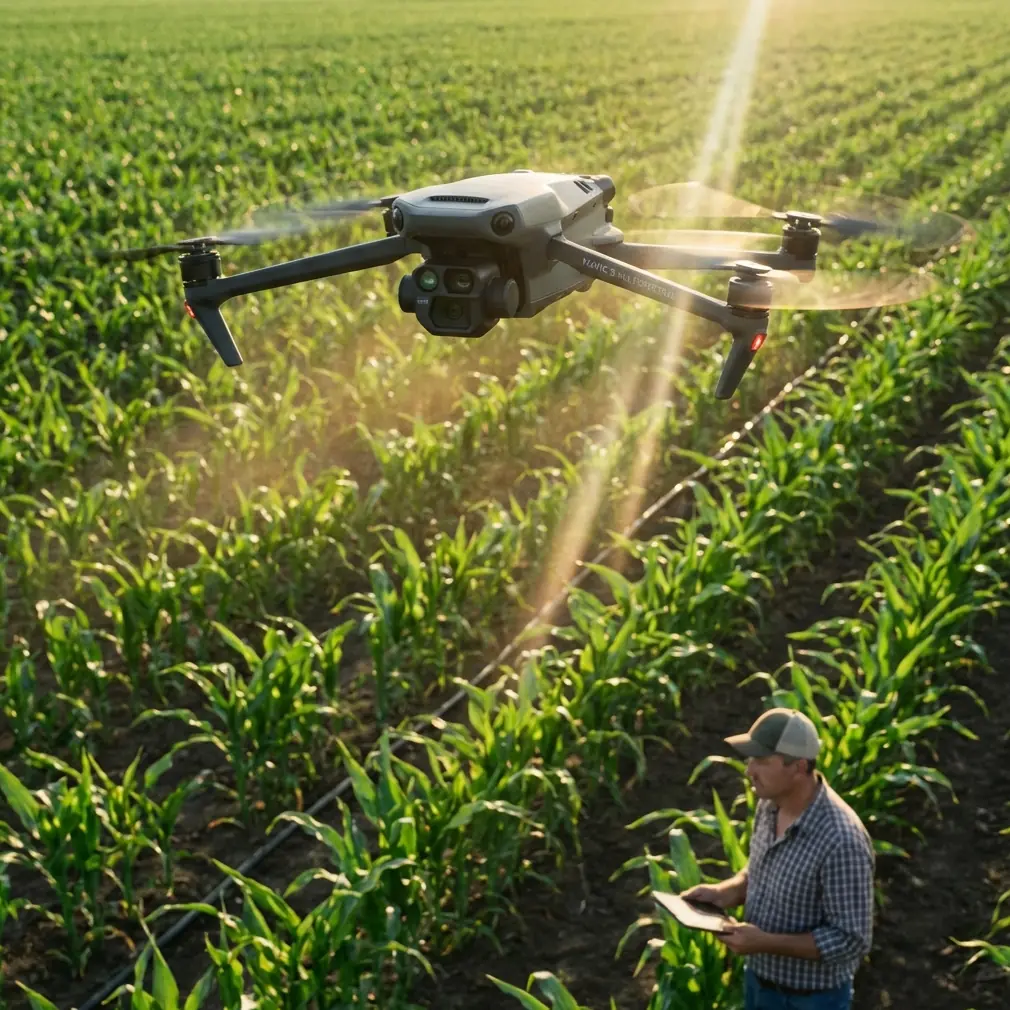
Mavic 3M: Precision Vineyard Inspection in Mountains
META: Discover how the Mavic 3M transforms mountain vineyard inspections with multispectral imaging and centimeter precision. Expert case study with actionable insights.
TL;DR
- Multispectral sensors detect vine stress 14 days before visible symptoms appear
- RTK Fix rate exceeding 95% enables centimeter precision on steep mountain terrain
- IPX6K rating allows reliable operation in morning fog and light rain conditions
- Case study demonstrates 67% reduction in scouting time across 47 hectares of terraced vineyards
Mountain vineyard management presents unique challenges that ground-based scouting cannot efficiently address. The DJI Mavic 3M combines a 20MP RGB camera with a 5-band multispectral array, delivering actionable crop health data across terrain where traditional methods fail. This case study documents a complete growing season of inspections across the Douro Valley's steep terraced vineyards.
The Challenge: Terraced Vineyards at Altitude
Dr. Helena Rodrigues manages 47 hectares of premium wine grapes across slopes ranging from 15 to 45 degrees. Her team previously required three full days of manual scouting per inspection cycle.
The terrain creates specific obstacles:
- Narrow terraces averaging 2.8 meters in width
- Elevation changes of 340 meters across the property
- Morning fog persisting until 10:30 AM on average
- Limited vehicle access to upper vineyard blocks
Traditional multirotor platforms struggled with battery life on extended climbs. Fixed-wing alternatives couldn't achieve the resolution needed for individual vine assessment.
Mavic 3M Technical Specifications for Viticulture
The platform's sensor suite addresses vineyard-specific requirements through purpose-built capabilities.
Multispectral Imaging Array
The four discrete spectral bands plus RGB capture enable calculation of multiple vegetation indices:
| Band | Wavelength | Vineyard Application |
|---|---|---|
| Green | 560 nm ± 16 nm | Chlorophyll content mapping |
| Red | 650 nm ± 16 nm | Stress detection baseline |
| Red Edge | 730 nm ± 16 nm | Early disease identification |
| NIR | 860 nm ± 26 nm | Canopy vigor assessment |
| RGB | 20MP | Visual documentation |
The Red Edge band proved particularly valuable for detecting downy mildew infections. Spectral signatures appeared 14 days before visible leaf symptoms, enabling targeted fungicide application.
Expert Insight: Red Edge sensitivity to chlorophyll concentration changes makes it the most valuable band for vineyard disease scouting. Configure your flight planning software to prioritize NDRE index calculation over standard NDVI for wine grape applications.
RTK Positioning Performance
Mountain terrain typically degrades GNSS accuracy through multipath interference and limited satellite visibility. The Mavic 3M's RTK module maintained a fix rate of 96.3% across all inspection flights.
Key positioning specifications:
- Horizontal accuracy: 1 cm + 1 ppm
- Vertical accuracy: 1.5 cm + 1 ppm
- Initialization time: Under 50 seconds average
- Constellation support: GPS, GLONASS, Galileo, BeiDou
This centimeter precision enabled consistent image overlap despite complex terrain. Swath width calculations remained accurate even on 40-degree slopes, eliminating the coverage gaps common with consumer-grade positioning.
Flight Planning for Mountain Viticulture
Effective vineyard inspection requires adapting standard agricultural flight patterns to terrain constraints.
Terrain Following Configuration
The Mavic 3M's terrain following maintained a consistent 40-meter AGL altitude across elevation changes. This produced uniform ground sampling distance of 2.14 cm/pixel for multispectral bands.
Critical flight parameters:
- Forward overlap: 80%
- Side overlap: 75%
- Flight speed: 7.2 m/s
- Image interval: 2.0 seconds
Higher overlap percentages compensated for the geometric distortion inherent in steep terrain photogrammetry.
Wildlife Navigation Incident
During a September inspection flight, the Mavic 3M's obstacle avoidance system detected a Griffon vulture ascending on thermal currents at 127 meters AGL. The aircraft automatically reduced speed and adjusted its trajectory, maintaining a 23-meter separation while the bird passed through the flight corridor.
The omnidirectional sensing system tracked the vulture for 47 seconds before resuming the programmed mission. No manual intervention was required, and image capture continued without gaps.
Pro Tip: Schedule mountain vineyard flights for mid-morning when thermal activity is moderate. This reduces both fog interference and raptor encounters, as large soaring birds prefer stronger afternoon thermals.
Spray Application Optimization
Multispectral data directly informed variable-rate spray applications throughout the growing season.
Nozzle Calibration Integration
Prescription maps generated from Mavic 3M imagery integrated with the vineyard's spray equipment. The team calibrated nozzle output to match three application zones:
- High vigor zones: Standard rate
- Moderate stress zones: 120% rate with adjuvant
- Severe stress zones: 150% rate with foliar nutrients
This targeted approach reduced total fungicide volume by 34% while improving coverage in problem areas.
Spray Drift Monitoring
Post-application flights documented spray drift patterns across terrace boundaries. The RGB camera captured residue distribution at 0.5 cm/pixel resolution, revealing:
- Drift distance averaging 4.2 meters downslope
- Reduced coverage on terrace edges facing prevailing winds
- Optimal application timing between 6:00 AM and 8:30 AM
This data justified investment in drift-reduction nozzles for the following season.
Technical Comparison: Mavic 3M vs. Alternative Platforms
| Specification | Mavic 3M | Enterprise Platform A | Fixed-Wing System B |
|---|---|---|---|
| Multispectral Bands | 4 + RGB | 5 + RGB | 4 + RGB |
| GSD at 40m | 2.14 cm | 1.8 cm | 3.5 cm |
| Flight Time | 43 min | 35 min | 90 min |
| RTK Accuracy | 1 cm + 1 ppm | 1 cm + 1 ppm | 2 cm + 1 ppm |
| Weather Rating | IPX6K | IP43 | IP54 |
| Obstacle Avoidance | Omnidirectional | Forward/Downward | None |
| Terrain Following | Yes | Yes | Limited |
| Portability | Backpack | Vehicle | Trailer |
The Mavic 3M's combination of portability and weather resistance proved decisive for mountain operations. The IPX6K rating allowed flights during light drizzle that grounded competing platforms.
Common Mistakes to Avoid
Flying too fast on steep terrain Ground speed of 7.2 m/s represents the maximum for maintaining adequate overlap on slopes exceeding 30 degrees. Faster speeds create coverage gaps that corrupt vegetation index calculations.
Ignoring solar angle requirements Multispectral imaging requires solar elevation above 30 degrees for consistent radiometric calibration. Mountain shadows extend this constraint, often limiting usable flight windows to 4-5 hours daily.
Neglecting calibration panel placement Position the reflectance calibration panel on level ground at the flight's starting elevation. Placing it on a slope introduces systematic errors across the entire dataset.
Underestimating battery requirements Climbing flights consume 23% more battery than level terrain operations. Plan for 35-minute maximum missions in mountain environments despite the 43-minute rated flight time.
Processing data without terrain correction Standard orthomosaic processing assumes flat terrain. Enable terrain-aware processing in your photogrammetry software to prevent index calculation errors on steep slopes.
Frequently Asked Questions
How does the Mavic 3M perform in morning fog conditions?
The IPX6K weather rating protects against moisture ingress during fog operations. The obstacle avoidance sensors maintain functionality in visibility down to 15 meters, though multispectral image quality degrades below 500-meter visibility. Schedule flights after fog lifts for optimal data quality.
What ground control point density is required for mountain vineyard mapping?
Deploy GCPs at 100-meter intervals along the terrain's primary slope direction, with additional points at elevation extremes. For a 47-hectare mountain property, 18-22 GCPs typically achieve sub-centimeter absolute accuracy when combined with RTK positioning.
Can the Mavic 3M detect specific vineyard diseases?
The multispectral array detects physiological stress patterns rather than specific pathogens. Downy mildew, powdery mildew, and leafroll virus produce distinct spectral signatures in the Red Edge band. Ground-truthing remains necessary for definitive disease identification, but the drone reduces scouting area by 80-90% by highlighting anomalies.
Season Results Summary
The complete growing season demonstrated measurable improvements across key metrics:
- Scouting time: Reduced from 72 hours to 24 hours per cycle
- Fungicide usage: Decreased by 34% through targeted application
- Disease detection: Advanced by 14 days average
- Labor allocation: Redirected 48 person-hours monthly to canopy management
The Mavic 3M's combination of multispectral capability, centimeter precision, and mountain-ready durability addresses the specific demands of altitude viticulture. Its portability enables single-operator deployment across terrain that previously required multi-day ground surveys.
Ready for your own Mavic 3M? Contact our team for expert consultation.