
Inspecting Dusty Venues With Mavic 3M: What This Week’s
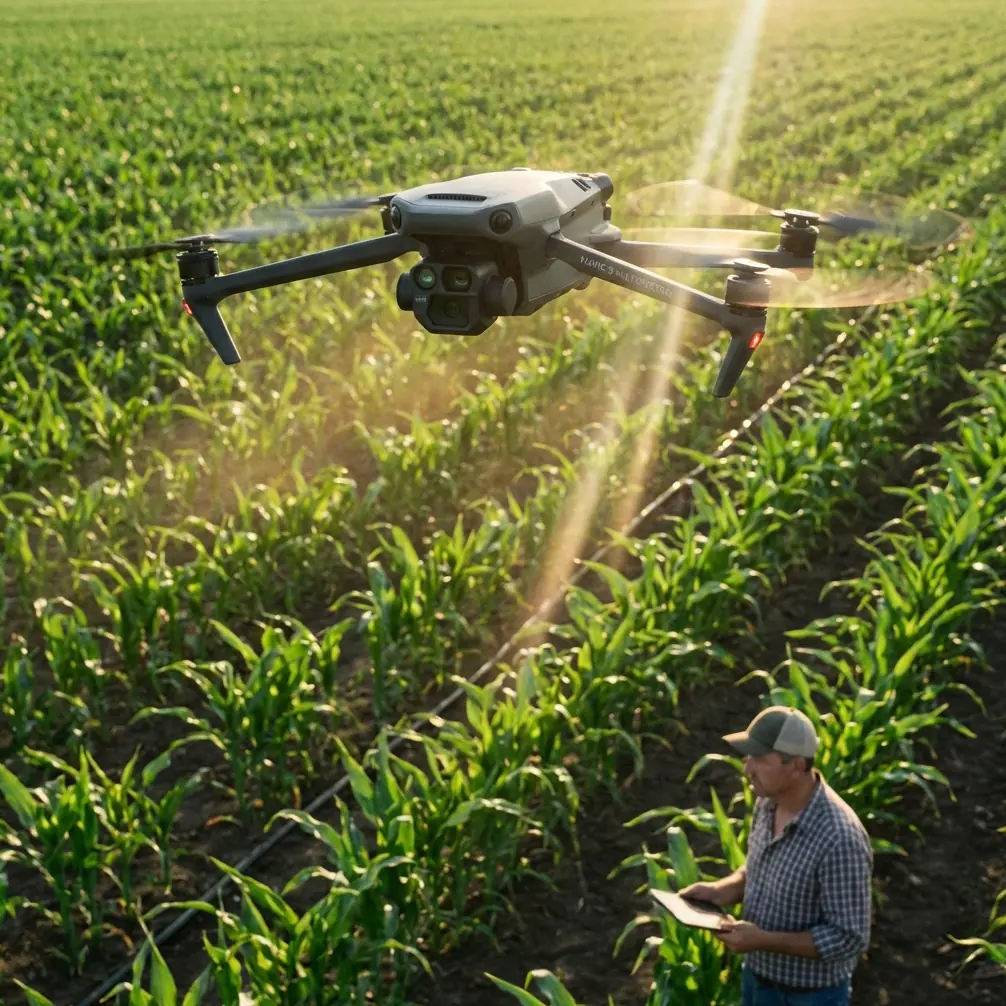
Inspecting Dusty Venues With Mavic 3M: What This Week’s Drone News Really Means for Field Reliability
META: A technical review of how recent UAV industry news on precision flight and maintenance training translates into smarter, safer Mavic 3M venue inspections in dusty conditions.
Dust is rarely treated as a headline issue in drone operations. It should be.
For Mavic 3M crews working venue inspections in dry, debris-prone environments, airborne dust changes everything: sensor confidence, cooling efficiency, post-flight maintenance, and even how much trust you can place in a clean-looking RTK or multispectral data set. That is why two recent aviation stories, while not directly about the Mavic 3M, deserve close attention from anyone running serious inspection workflows.
One story centers on a March 25 agreement between Guangdong Huitian Aviation Aerospace Technology and Guangzhou Civil Aviation College to build a joint industry academy focused on electric aviation maintenance talent. The other, also highlighted on March 25, describes a drone company winning strong demand by using particle-flight patent technology to achieve millimeter-level positioning and choreograph highly complex flight paths. Put those together and you get a clear signal about where the UAV market is heading: precision alone is not enough, and maintenance alone is not enough. The operators who win will be the ones who connect both.
That lesson lands directly on the Mavic 3M.
Why dusty venue inspections expose the real limits of a drone program
The Mavic 3M is often discussed through its payload stack. Fair enough. Multispectral capture is the main attraction. But in venue inspection work, especially across construction grounds, festival sites, unpaved staging areas, sports complexes under development, or industrial campuses with loose particulate matter, the hardware’s practical value is defined by repeatability under contamination pressure.
A drone can have centimeter precision on paper and still produce operational friction if dust starts affecting cooling vents, optical surfaces, landing gear interfaces, or visual positioning behavior during takeoff and landing. When that happens, the problem is not just image quality. It is decision quality.
A venue manager may be using Mavic 3M outputs to assess surface conditions, drainage patterns, stressed vegetation, disturbed soil, perimeter encroachment, or early signs of environmental drift around treated or maintained areas. If your multispectral data is solid but your pre-flight hygiene is weak, small contamination issues can cascade into delayed launches, noisy data capture, or unreliable mission-to-mission consistency.
That is where the Huitian-school partnership becomes more relevant than it first appears.
The maintenance story is bigger than one company
Huitian’s new cooperation with Guangzhou Civil Aviation College is built around custom training for electric aviation maintenance personnel, shared training platforms, two-way instructor exchange, and joint work on industry standards. More importantly, the partnership explicitly addresses a shortage of specialized maintenance talent that is already constraining higher-quality industry growth.
That is not an abstract policy point. It has direct meaning for Mavic 3M operators inspecting dusty venues.
In the field, most failures do not arrive as dramatic component breakdowns. They show up as small degradations that go unrecognized until they cost a mission. A dusty gimbal face. Residue around a sensor window. Debris accumulation near folding joints. Reduced confidence in obstacle sensing during low-angle approaches. Slower setup because a team is improvising cleaning practices instead of following a consistent maintenance routine.
What Huitian and the college are doing signals a broader market truth: the UAV sector is finally taking after-delivery airworthiness and service continuity seriously. Their stated goal includes building support for continued airworthiness and after-sales service after product delivery. Translate that into Mavic 3M field language, and it means this: the drone is only as valuable as the quality of the system around it. Inspection teams need maintenance literacy, not just piloting skill.
For dusty venue inspections, one pre-flight cleaning step matters more than many crews admit: clean and verify every exposed vision and imaging surface before power-on, not after startup. That includes the multispectral windows, RGB camera cover glass, downward vision sensors, and any surfaces near navigation or landing assist functions. If dust is already caked on before initialization, you risk beginning the mission with compromised environmental awareness. Wiping after boot is not the same as presenting a clean sensor suite to the aircraft’s startup checks.
It sounds basic. It is not. It is operational discipline.
What millimeter-level flight news tells us about inspection expectations
The second news item comes from Yangzhou Donghuan UAV Technology, which was featured for “hard-core” technical capability built on stable drone performance and a particle-flight patented system that enables millimeter-level positioning while managing complex aerial movement. One quoted detail stands out: by March 24, the company had already taken its 19th performance order that month, and its schedule was booked through the end of the year. It had also won a drone inspection project.
That combination matters. Entertainment flights and inspection contracts are different worlds, but they share a critical common denominator: positional trust.
When a drone company is praised for millimeter-level precision and smooth execution of complex “dance steps,” it reflects market appetite for more exact flight behavior under real-world conditions. Inspection buyers are developing the same expectation, just framed differently. They may not ask whether your aircraft can execute choreography. They will ask whether repeated passes align accurately, whether anomalies are truly real, whether swath width stays consistent, and whether RTK Fix rate remains stable near structures, fencing, light poles, or temporary installations.
For Mavic 3M operators in dusty venue environments, this is where precision marketing ends and precision practice begins.
Centimeter precision only delivers value if the rest of the workflow supports it:
- takeoff and landing on a clean surface or pad rather than bare dust,
- propeller and motor inspection before each sortie,
- careful monitoring of RTK Fix rate before committing to a mapping run,
- and mission planning that respects downwash effects over loose particulate surfaces.
If you launch carelessly from powdery ground, rotor wash can create a localized dust plume that immediately contaminates the very sensors and optics you need for reliable mission execution. The result may not be catastrophic. It may be worse: subtly degraded. Those are the errors that make reports look polished while hiding uncertainty.
How this changes a real Mavic 3M venue inspection workflow
A well-run dusty venue mission with the Mavic 3M should look more like a controlled technical procedure than a casual site flyover.
Start with surface management. Use a landing pad or a hard, clean launch zone whenever possible. The objective is not neatness. It is to prevent self-induced contamination during spool-up and landing. In dry venues, the aircraft itself can become the source of the dust event.
Then perform the cleaning sequence before power-on. I would prioritize it in this order:
- multispectral and RGB optical surfaces,
- downward and forward vision areas,
- air intake and exterior seams where dust visibly accumulates,
- arm hinges and landing contact points.
That sequence protects both data integrity and safety features. If the aircraft boots with obstructed visual sensing, your confidence in low-altitude maneuvering and landing logic is already compromised.
Next comes positioning discipline. A good RTK Fix rate is not a box to check once. It is a live condition to monitor. Venue environments often create mixed signal conditions because of truss systems, nearby structures, metallic clutter, and temporary installations. If your mission depends on repeatable geospatial comparison, wait for stable positioning. “Good enough” is where low-quality trend analysis begins.
After that, mission design has to respect dust. Choose a flight path and altitude that reduce unnecessary downwash interaction with loose surface material. If you are evaluating vegetation health or surface anomalies with multispectral imagery, keep swath width consistent across passes so that environmental interpretation is driven by site conditions rather than inconsistent acquisition geometry.
This is also where adjacent concepts like spray drift and nozzle calibration become more relevant than many venue operators realize. Even if you are not conducting agricultural spraying, venue sites often border landscaped zones, treated perimeters, or managed turf. Multispectral patterns can reflect stress, overspray effects, water distribution issues, or maintenance inconsistencies. If nearby operations involve application equipment, understanding drift patterns and calibration logic helps you interpret what the sensors are telling you instead of guessing.
The hidden value of Mavic 3M in dirty environments
The Mavic 3M is attractive because it compresses serious sensing capability into a compact platform. That convenience is real. But compact aircraft operating in dirty environments also have less margin for sloppy handling.
Every experienced field crew eventually learns the same lesson: contamination management is not a post-flight housekeeping issue. It is a mission-quality issue.
That is why the Huitian story deserves attention from people who might otherwise skip a training-industry headline. Their partnership focuses on a full pathway from training and practical exercises to employment. The operational significance is obvious. UAV work is moving toward professionalized support ecosystems, where maintenance, field procedures, and technical standards sit alongside flight capability. As users ask more from platforms like the Mavic 3M, the weak point becomes the operator’s system discipline, not the spec sheet.
The Donghuan story points to the same conclusion from the opposite direction. Demand is clustering around companies that can prove stable, exact performance in public, under pressure, at scale. Nineteen performance jobs in a month and bookings through year-end are not just growth stats. They show that clients reward predictable execution. Inspection clients do the same, even if they express it through questions about deliverables, confidence levels, and turnaround time.
If your team inspects dusty venues with an M3M, the takeaway is blunt: precision data and maintenance rigor are now one conversation.
Practical field notes for dusty Mavic 3M deployments
A few habits make a disproportionate difference.
First, never treat visible dust as the only dust. Fine particulate matter settles on optical surfaces lightly enough to be missed in poor light, yet heavily enough to affect image quality or sensing confidence. Use deliberate inspection angles.
Second, watch landing behavior closely. Many crews focus on the outbound mission and forget that landing is where dust exposure often peaks. A clean takeoff followed by a dirty touchdown can still compromise the next sortie if turnaround is short.
Third, log cleaning and anomalies together. If you notice reduced image clarity, inconsistent altitude hold near the ground, or suspicious mission deviations, pair those notes with contamination observations. Patterns emerge quickly when crews document properly.
Fourth, avoid rushing post-flight wipe-downs with whatever cloth is handy. The wrong cleaning material can create its own problems on lens and sensor surfaces. A proper field kit matters.
If your team is building a venue-inspection SOP for Mavic 3M operations and wants a second set of eyes, you can share your draft workflow here: https://wa.me/example
What operators should watch next
The broader UAV industry is showing two strong signals at once.
One: maintenance capacity is becoming a strategic bottleneck, serious enough that companies are building formal talent pipelines to address it.
Two: customers increasingly expect precise, repeatable, technically disciplined flight performance, whether the mission is public entertainment, infrastructure work, or site inspection.
For Mavic 3M operators, especially those working in dusty venues, these signals should shape daily practice now. Clean before power-on. Protect sensor integrity at launch and landing. Treat RTK Fix rate as operationally meaningful, not cosmetic. Plan for repeatability, not just completion. And remember that multispectral value depends on trust in the entire capture chain.
The Mavic 3M remains a highly capable platform. But in environments where dust is active, capability is only the starting point. The real differentiator is how well the team protects the aircraft’s sensing and positioning advantages from the moment it comes out of the case.
That is where reliable inspection work is won.
Ready for your own Mavic 3M? Contact our team for expert consultation.