
Mavic 3M at Dawn: A Solar Farm Case Study on Low
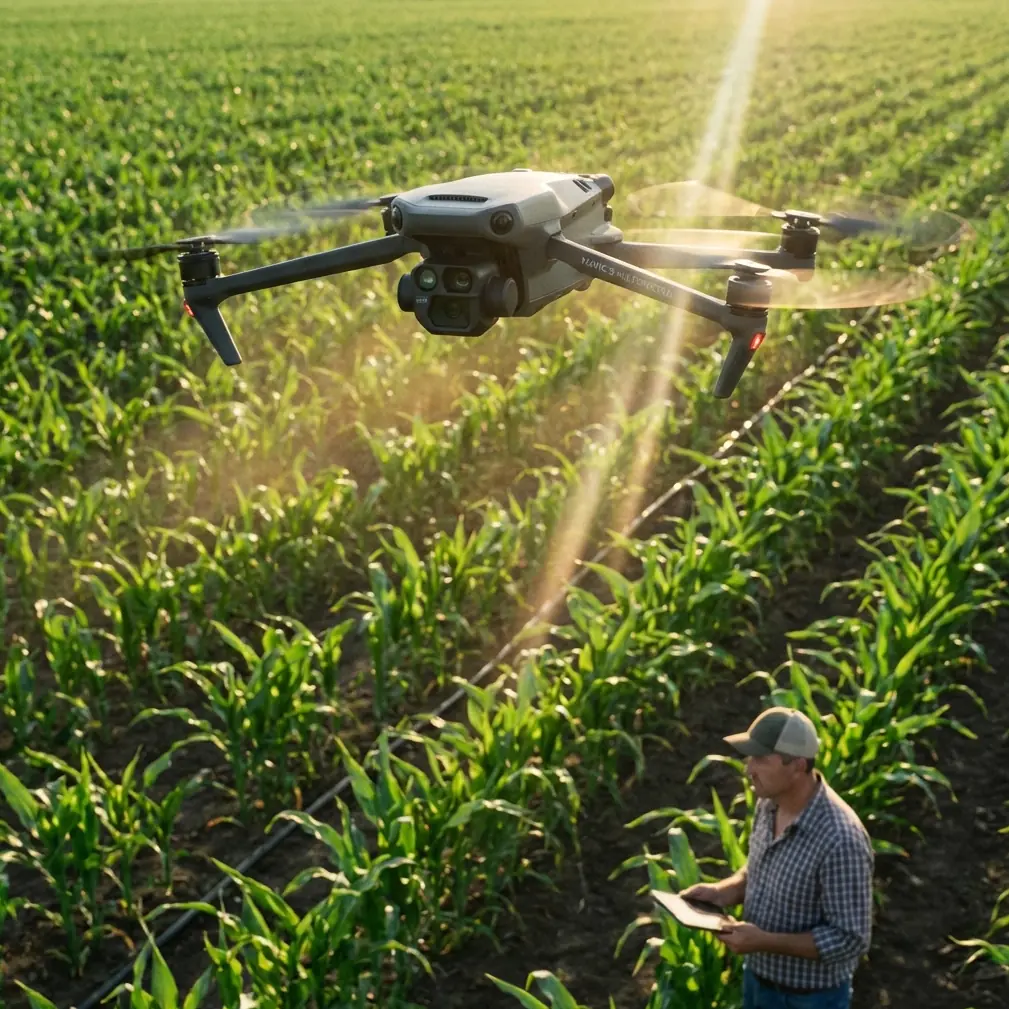
Mavic 3M at Dawn: A Solar Farm Case Study on Low-Light Inspection, Sensor Discipline, and Range Setup
META: A field-driven Mavic 3M case study for low-light solar farm inspection, covering multispectral workflow, antenna positioning, sequential mission logic, and practical imaging lessons.
I’m Marcus Rodriguez, and one of the more interesting briefs I get is this: use a Mavic 3M on a solar site when the light is poor, the schedule is tight, and the operator still needs data that holds up once the morning rush begins.
That sounds straightforward until you stand in front of a solar farm before sunrise.
Rows of glass are catching stray points of light from inverters, perimeter fixtures, service vehicles, and the first hard glints on panel edges. The human eye loves that scene. Sensors do not always agree. In low light, reflective infrastructure can create visual distractions, weak texture, and uneven contrast across long corridors of modules. This is where operators either drift into improvisation or tighten their workflow. The Mavic 3M rewards the second approach.
The assignment
The site in this case covered a broad utility-scale array with long tracker rows and access lanes that looked almost identical from one block to the next. The client wanted early-morning inspection because by mid-morning, crews and vehicles would be moving across several sections of the farm. We were not chasing dramatic visuals. We were chasing usable data: repeatable coverage, clean georeferencing, and enough image quality to flag anomalies for follow-up.
The Mavic 3M made sense for one reason above all: multispectral collection paired with RTK-grade positioning discipline. On large solar properties, that combination matters more than people think. Centimeter precision is not just a specification line. It changes what happens later in the office when you need to associate a suspect panel string, combiner area, or recurring reflectance issue with a real physical location that a maintenance team can find quickly.
Why low light changes the job
A lot of drone articles talk about low light in broad terms. On a solar farm, the issue is more specific. Before full daylight, you can get a mix of dark module surfaces, isolated bright highlights, and long repetitive geometry. That can reduce the amount of visual texture available for matching across images. If your RTK fix rate is unstable, or your flight design is too casual, that repetitive environment starts to work against you.
This is also where operators get distracted by aesthetics. Recently I saw a phone photography tutorial making the point that even a regular smartphone can produce starburst-style light effects with only a few simple settings, no extra lens, and no complicated parameter knowledge. That idea is useful here, not because you should treat a solar inspection like a creative night shoot, but because it reminds us how easily bright point sources can be exaggerated by small setup changes.
For inspection work, those spark-like highlights are not your friend. They can make an operator think a frame looks “sharp” or “dramatic” while the actual subject data is less reliable. In practical terms, if perimeter lights or early sun reflections start creating attractive glare patterns, resist the temptation to trust the image emotionally. Trust the mission design, histogram discipline, overlap, and positional integrity.
The mission philosophy: keep it sequential
One of the oddest but most relevant reference points for this job comes from educational drone programming. In the DJI TT training material, there’s a very simple teaching concept: the sequential program structure is the most basic and most commonly used, and when the program starts, it executes strictly from top to bottom. Another example in that same material shows a single red dot moving one grid at a time, every second, until it reaches the sixth position and stops.
That sounds far removed from a Mavic 3M on a utility site. It isn’t.
On low-light solar missions, sequential discipline is exactly what keeps the data set clean. One block at a time. One altitude. One overlap profile. One confirmed RTK state before launch. One direction of travel for a pass set. One review checkpoint before moving to the next section.
In the field, people want to skip steps because the site looks repetitive. But repetitive terrain is precisely why strict sequence matters. If you depart from plan halfway through a block, your data gaps often don’t reveal themselves until processing. By then, the light has changed, the site is active, and a refl y means your comparison quality is already compromised.
So the workflow we used was intentionally plain:
- Confirm RTK health and lock.
- Confirm base operational area and airspace constraints.
- Verify antenna orientation on the controller for the intended lanes.
- Fly one section with fixed mission parameters.
- Inspect a sample of captured frames immediately.
- Only then move to the next block.
It sounds simple because it is. That is the point.
Antenna positioning advice that actually matters
Let’s talk range, because too many operators reduce it to signal bars and luck.
For a solar farm, the best antenna setup is rarely dramatic. Keep the broad faces of the controller antennas oriented toward the aircraft’s route, not the tips pointed at it. Think of the antenna surfaces “looking” at the drone along the mission corridor. On long row alignments, I prefer standing where the aircraft will spend the greatest portion of the mission with minimal obstructions from service buildings, parked vehicles, or elevation breaks.
If the flight path runs parallel to tracker rows, I align my own body position so I’m not constantly rotating the controller through each leg. Excessive repositioning creates inconsistency, especially when the aircraft is at distance and low-angle reflections are already complicating visual perception. Pick a stance that preserves line of sight over the longest useful segment.
A few practical notes:
- Avoid standing close to metal-sided maintenance sheds or inverter stations if you can help it.
- Do not let a vehicle roof become your “convenient” operating desk if it forces a poor antenna angle.
- If one section of the site consistently gives weaker link behavior, move yourself before you blame the aircraft.
Maximum range on paper means very little compared with clean signal geometry in the field. Good antenna positioning is less glamorous than flight specs, but on a dawn mission it often determines whether the inspection feels effortless or fragile.
Sensor expectations in reflective environments
The Mavic 3M’s role on a solar farm is not identical to broadacre crop work, even though terms like multispectral, swath width, and RTK fix rate carry over from agriculture. In farming, you may be thinking about canopy consistency, spray drift context, or nozzle calibration influence on crop response patterns. On a solar site, your visual and multispectral interpretation priorities are different, but the discipline behind collection is surprisingly similar.
You still care about:
- consistent coverage across a repeatable swath width
- position accuracy for revisits
- stable lighting logic within a single mission block
- avoiding operator-driven variability
That is why I caution teams against over-tuning in the field. There is a useful lesson in another technical reference, a BLHeli ESC manual, which notes that damped light mode can produce uneven running at low speeds on some motor, ESC, and voltage combinations. It also mentions that with very low damping, loss may be added in 1 out of 9 PWM cycles; with low damping, 1 out of 5 cycles.
You are not tuning a Mavic 3M ESC from a solar-farm inspection workflow. But the engineering principle still applies: when a system is operating near the edge of a condition envelope, small parameter choices can create uneven behavior. In our world, that means low light, repetitive surfaces, long rows, and operator impatience can combine into subtle inconsistency. The answer is not field experimentation for its own sake. The answer is reducing variables.
On this project, we locked the mission profile and resisted the urge to change altitude or route pattern once the first block validated well. Consistency beats cleverness when the environment itself is already unstable.
What the first pass revealed
The opening pass told us almost everything we needed to know.
Contrast was lower than ideal over the central rows. Edge highlights on some panel lines looked stronger than expected because a few site lights were still active. The aircraft link was solid, but only after the pilot adjusted stance and antenna orientation to face the longest corridor directly rather than operating from beside a service track intersection.
That small change mattered. The mission became quieter. Fewer corrections. Less body movement. Better concentration.
Once the first block was captured, we reviewed frames on site rather than pushing ahead blindly. This is where sequential logic earns its keep. If the first set is weak, every following block multiplies the problem. If the first set is sound, the rest becomes controlled repetition.
The hidden advantage of a beginner mindset
There is another lesson worth borrowing from the smartphone starburst article. Its whole premise is that beginners can achieve a polished effect by adjusting only a few settings, without extra lens accessories or advanced technical knowledge. In inspection, that translates into something valuable: operators often do better when they focus on a small number of meaningful controls rather than constantly chasing complexity.
For low-light solar farm work, your core checklist should not be endless. It should be disciplined.
Focus on the things that truly move the result:
- launch only with stable positioning confidence
- maintain clean antenna geometry
- keep mission sequence fixed
- check representative images early
- avoid mid-mission setting changes unless a defect is obvious
That kind of restraint is not simplistic. It is professional.
Operational significance of two small details
Two reference details deserve emphasis because they sound minor and are not.
The first is the training manual’s note that a program can run in strict top-to-bottom order, and that a dot can move one position every second until it reaches a final sixth point. Operationally, that is the blueprint for mission repeatability. On a solar farm, orderly execution prevents skipped rows, uneven overlap, and hard-to-diagnose inconsistencies between blocks. It turns the inspection from a manual art into a controlled procedure.
The second is the BLHeli note that low-speed behavior can become uneven on certain combinations, especially where damping force and switching behavior interact poorly. The operational significance for Mavic 3M users is conceptual but real: low-light inspections are a condition where system smoothness depends on keeping unnecessary variables out of play. If a workflow starts to feel inconsistent, first simplify. Don’t stack more field adjustments on top of a marginal situation.
What we delivered
By the end of the morning, the client had a coherent inspection data set with traceable locations and consistent section logic. That matters more than isolated “good” images. Utility operators need to send crews to the right place, compare one pass against another, and build confidence that anomalies are real rather than artifacts of changing conditions.
This is the real strength of the Mavic 3M in this setting. Not magic. Not marketing mythology. It is the combination of multispectral capability, disciplined flight structure, and positional repeatability under field pressure.
If you’re planning a similar workflow and want a practical discussion about setup, message me here for field-specific Mavic 3M planning. Low-light solar work is manageable, but only when the mission is designed to remove ambiguity before takeoff.
Final takeaway
Inspecting a solar farm at dawn with a Mavic 3M is not about forcing cinematic conditions into technical work. The smartest operators do almost the opposite. They strip away distractions, build a sequential mission, hold a stable RTK workflow, and pay attention to something as basic as antenna positioning.
When the site is reflective, repetitive, and only partially lit, those fundamentals decide whether your data is dependable. The aircraft can do the job. The real question is whether the workflow respects the environment enough to let it.
Ready for your own Mavic 3M? Contact our team for expert consultation.