
Mavic 3M Inspecting Tips for Solar Farms
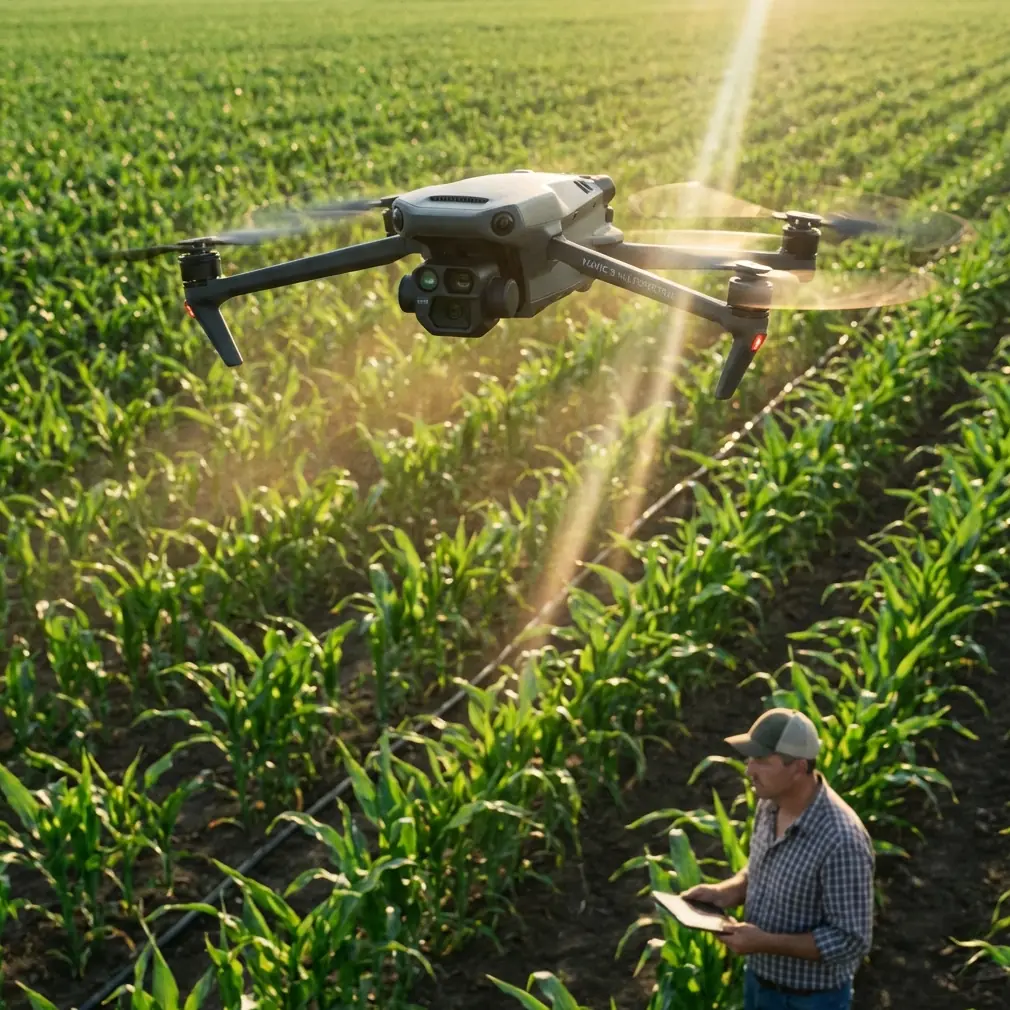
Mavic 3M Inspecting Tips for Solar Farms: What This Week’s Drone News Really Means in Extreme Conditions
META: A field-focused analysis of how recent drone deployment and imaging insights apply to Mavic 3M solar farm inspections in extreme temperatures, with practical guidance on reliability, multispectral workflow, and operational precision.
Solar farm inspection gets difficult long before the aircraft leaves the case.
Heat shimmer can soften visual detail across long panel rows. Cold snaps punish batteries and slow crews down. Remote sites often lack stable power, dependable network coverage, or both. For teams using the DJI Mavic 3M, that reality matters as much as sensor quality. The drone may be capable of excellent data capture, but the result still depends on how well the operation is designed around harsh conditions and inconsistent infrastructure.
Two recent stories point to the same underlying lesson from very different angles. One, published on March 25, 2026, introduced Flying Lion’s DroneBooth, a portable enclosure aimed at drone dock deployment where there is no fixed power or internet, while also targeting 24×7 operations. The other, published March 26, 2026, was not a drone product release at all. It was a photography piece arguing that standout imagery is not the product of luck or talent alone, but of deep creative discipline, attention to detail, and a commitment to what sits behind the lens.
At first glance, those items live in separate worlds. They do not. For Mavic 3M operators inspecting solar farms in extreme temperatures, they describe the same operational truth: reliable outcomes come from a system, not a spec sheet.
The solar farm problem is bigger than image capture
A lot of discussion around the Mavic 3M centers on its multispectral payload, and rightly so. On utility-scale solar sites, multispectral can help reveal subtle spatial patterns that standard RGB imagery may miss, especially when vegetation encroachment, drainage shifts, dust accumulation, or thermal-context clues need to be interpreted alongside visible inspection data. But on difficult sites, the limiting factor is often not whether the aircraft can see enough. It is whether the team can deploy consistently, at the right time, with repeatable geometry, in conditions that stress every part of the workflow.
That is where the DroneBooth announcement becomes surprisingly relevant to Mavic 3M users, even if they are not operating a docked system today.
A portable enclosure built for locations without permanent infrastructure addresses a problem solar inspectors know well: remote facilities are often operationally important but logistically neglected. You may have long fence lines, weak connectivity, no climate-controlled staging area, and wide temperature swings across a single day. Flying Lion’s emphasis on operation without fixed power or internet highlights a strategic direction in the drone industry. Inspection programs are moving away from the assumption that every serious mission needs a fully built-out site.
For Mavic 3M operators, that has immediate significance. It reinforces the value of designing a field kit and mission plan that assumes the site will not support you. In extreme heat, that means managing battery temperature before takeoff, reducing unnecessary idle time, and staging sorties around the sun angle that preserves useful contrast across panel surfaces. In extreme cold, it means planning shorter cycles, validating battery condition aggressively, and protecting the aircraft during waits between missions. The aircraft is only one node in the system. The rest of the system decides whether the data is trustworthy.
Why a photography article matters to multispectral inspection
The March 26 photography piece makes a point that many technical drone teams need to hear more often. Strong results are not built on chance. They come from deliberate refinement, careful attention to detail, and a durable sense of purpose behind the camera.
Translated into Mavic 3M work, that means inspection quality is rarely ruined by one dramatic mistake. It is usually degraded by small inconsistencies that stack up: variable altitude, uneven overlap, poor swath width planning, a weak RTK fix rate, rushed launches during unstable lighting, or a team that treats the mission as routine and stops looking closely at edge cases.
The article also argues against being trapped by a single subject category, saying there is no hard boundary between landscapes, street life, portraits, and other forms of visual storytelling. That matters more than it seems. Solar inspection teams sometimes separate “technical” imagery from “context” imagery too rigidly. The Mavic 3M performs best when operators think in layers rather than silos.
A panel anomaly is one layer. The terrain around the array is another. Maintenance access routes matter. Vegetation patterns matter. Standing water matters. Dust sources matter. If a team captures only the narrowest definition of inspection evidence, it may miss the operational story that explains the defect pattern. The lesson from the photography piece is simple: do not let category thinking reduce your field awareness.
That is one area where the Mavic 3M can outperform many competing workflows. Some inspection setups produce either strong mapping data or useful situational imagery, but not both with equal efficiency. The Mavic 3M is especially effective when the operator uses its multispectral and visual capture as a connected decision tool rather than separate deliverables. On solar farms, that integrated mindset often leads to faster root-cause identification.
Extreme temperatures expose weak workflows fast
When temperatures become severe, every shortcut becomes visible.
In hot conditions, solar sites can create difficult visual environments. Reflective surfaces and radiant heat increase pilot fatigue. Midday shimmer can reduce the sharpness of distant details. Battery management becomes less forgiving. Even where the aircraft remains within normal operating parameters, the overall inspection chain may start losing precision. A mission that looked acceptable on paper can produce weaker reconstruction quality or inconsistent comparison data from one flight to the next.
In cold conditions, different weaknesses appear. Deployment slows down. Hands are less precise. Setup errors become more common. Airframe handling changes. Batteries demand more discipline. If the crew is working from vehicles or temporary shelters because there is no permanent infrastructure, the practical value of portable, protected deployment concepts becomes obvious.
That is why the DroneBooth story deserves attention beyond docked drone circles. The headline feature is not just portability. It is portability in service of continuity. A system built for 24×7 operations without fixed power or internet points toward a more resilient operating model for remote industrial sites. Mavic 3M crews may still be flying manually or semi-manually, but the same principle applies: if your process depends on ideal site conditions, it is not ready for utility-scale inspection.
What “detail” actually means on a Mavic 3M mission
The photography article’s emphasis on detail can sound abstract until you convert it into field choices.
For solar farm inspection, detail begins before takeoff:
- Define the inspection question clearly. Are you tracking vegetation stress near panel rows, looking for drainage-related patterns, documenting access constraints, or building repeatable baseline maps for change detection?
- Set swath width intentionally instead of defaulting to the widest possible coverage. In extreme conditions, ambitious swath width can save minutes while quietly sacrificing clarity and consistency.
- Watch RTK fix rate closely if your workflow depends on centimeter precision. In large arrays, even small positional instability can complicate comparisons over time.
- Standardize launch timing. If one mission is flown in calm morning light and the next in harsh afternoon thermals, your data may be less comparable than you think.
- Build a battery rotation plan that accounts for ambient temperature, not just total flight count.
This is also where some operators borrow concepts from agricultural operations, even if they are not spraying anything on-site. Terms like spray drift and nozzle calibration belong to application drones, but the discipline behind them is useful here. Drift is a reminder that environmental forces change outcomes after the plan is made. Calibration is a reminder that precision must be verified, not assumed. For Mavic 3M users in solar inspection, the equivalents are wind-aware route design, overlap verification, sensor confidence checks, and stable georeferencing.
The best crews treat these as routine controls rather than advanced extras.
Where Mavic 3M holds an edge
The Mavic 3M is particularly strong for teams that need mobility without giving up analytical value.
On remote solar farms, that balance matters. Heavier, more infrastructure-dependent platforms may offer advantages in some enterprise scenarios, but they can also bring operational friction. If the site is difficult, the weather is punishing, and the inspection window is short, speed and portability become performance factors in their own right. The Mavic 3M’s strength is not just that it carries a multispectral payload. It is that it can bring multispectral capability to places where a bulkier workflow becomes hard to sustain.
That practical advantage grows in extreme temperatures. A platform that is quick to stage, fast to reposition, and easier to protect between sorties is often the one that produces the most usable weekly or monthly dataset. Competitors may look impressive in controlled demonstrations. On a sprawling solar asset with unstable connectivity and no permanent support infrastructure, resilience tends to beat complexity.
That is the hidden connection between both news items. One stresses disciplined image-making. The other stresses field-ready deployment where infrastructure is absent. Together, they describe the operating conditions where the Mavic 3M makes the most sense.
A better problem-solution approach for solar teams
If your current solar inspection process feels inconsistent, the fix is usually not to chase more hardware first. Start by solving the operational bottlenecks that extreme conditions expose.
Problem: Data quality drops during hot or cold weather windows.
Solution: Build temperature-specific flight profiles, including shorter missions, controlled battery transitions, and standardized capture times.
Problem: Remote locations delay setup and reduce sortie count.
Solution: Borrow the logic behind portable deployment systems like DroneBooth. Even without a dock, create a self-contained field workflow that assumes no fixed power and no dependable internet.
Problem: Multispectral outputs are hard to interpret in context.
Solution: Capture broader scene evidence deliberately. Follow the photography principle that useful visual work should not be trapped by a single category. Pair anomaly mapping with contextual imagery that explains site conditions.
Problem: Repeatability is inconsistent.
Solution: Monitor RTK fix rate, route geometry, and swath width with the same seriousness application teams give to nozzle calibration. Precision is a managed variable.
Problem: Crews become reactive instead of analytical.
Solution: Slow down just enough to preserve observation quality. The March 26 article is right on this point: powerful images and, by extension, powerful inspection datasets, come from sustained attention rather than luck.
For teams trying to tighten that workflow, a practical field discussion can help more than another generic checklist. If you want to compare deployment setups or extreme-weather inspection routines, you can message our field desk here: https://wa.me/example
The bigger takeaway from this week’s news
Neither of these stories mentions the Mavic 3M directly. That is exactly why they are useful.
The first reminds us that drone operations are moving toward infrastructure-light deployment models. The second reminds us that image quality, and by extension decision quality, comes from rigor and intention. Put those together and you get a clear operating philosophy for solar farm inspection: treat the mission as a disciplined system built for imperfect environments.
That is where Mavic 3M teams can separate themselves.
Not by flying more often for the sake of it. Not by collecting more imagery than anyone has time to analyze. By creating repeatable, field-hardened inspection routines that preserve multispectral value when the site is hot, cold, remote, and inconvenient. Utility-scale solar work rewards crews that can keep quality stable under stress.
The March 25 DroneBooth release put a spotlight on one part of that future: portable support for around-the-clock drone activity without fixed power or internet. The March 26 photography article put a spotlight on the human side: craft deep enough to make details matter. For Mavic 3M operators on solar assets, those are not separate insights. They are the same blueprint viewed from two angles.
Ready for your own Mavic 3M? Contact our team for expert consultation.