
Mavic 3M Guide for Highway Inspection in Low Light
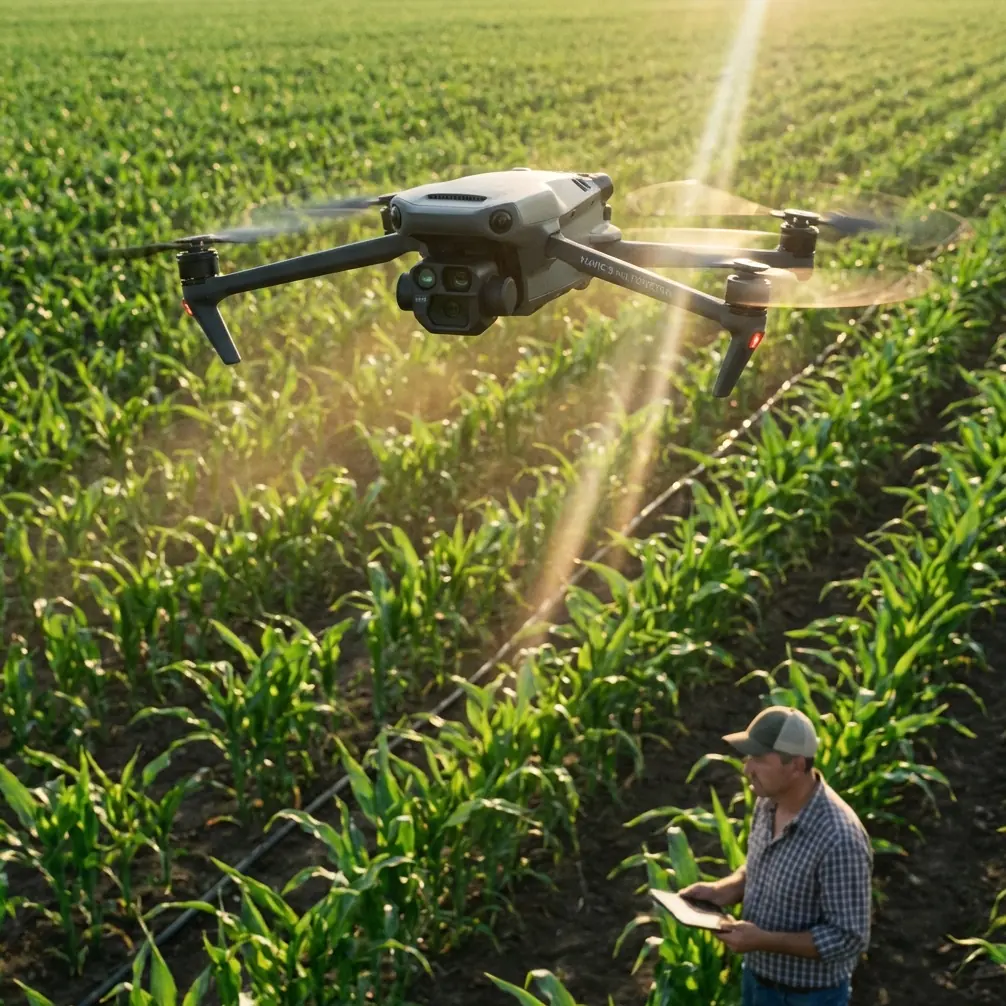
Mavic 3M Guide for Highway Inspection in Low Light: What Actually Matters in the Field
META: A practical Mavic 3M tutorial for low-light highway inspection, covering manual imaging control, RTK discipline, pilot oversight, and handling electromagnetic interference near roadside infrastructure.
Highway inspection at dusk exposes two weak habits at once: trusting auto exposure too much, and trusting aircraft autonomy more than the mission deserves.
That combination creates bad data.
Anyone who has tried to document road lighting, reflective signage, gantry hardware, barriers, drainage edges, or utility crossings after sunset has seen the problem. Bright lamps turn into blown-out white blobs. The surrounding structure disappears. Contrast collapses. The image stops being evidence and becomes atmosphere. A recent photography note made the issue plain in a way every field operator recognizes: when shooting lights with a phone, automatic mode often turns a streetlamp into “one mass of white,” with no layering or detail. The fix was equally plain—switch off automatic mode and take control.
That advice sounds almost too simple, but it has real operational value for a Mavic 3M crew working highways in low light.
The aircraft may be sophisticated. The payload may be purpose-built. The workflow may include RTK, mission planning, and tightly defined flight lines. None of that changes a basic truth: if the operator leaves critical image decisions to automation in a high-contrast environment, the final inspection record can fail its purpose.
This guide is about using the Mavic 3M more deliberately when inspecting highways under dim light, especially around road lamps and electrically noisy infrastructure where electromagnetic interference can complicate control quality and RTK stability.
Why low-light highway inspection punishes lazy camera settings
A highway at dusk is visually messy in a way daytime survey teams sometimes underestimate.
You are often dealing with:
- point light sources from streetlamps and vehicles
- reflective paint and retroreflective signs
- dark asphalt with low texture
- concrete surfaces with uneven moisture
- metal structures that throw back hotspots
- long corridors where signal quality can vary as the aircraft moves
In these scenes, auto exposure usually tries to rescue the darkest part of the frame. The result is familiar: luminaires bloom, reflective surfaces clip, and the operator loses the very detail the mission needed to preserve. You can still produce a visually attractive image that way. You may not produce a defensible inspection image.
The phone-photography example about lamps becoming featureless white halos is useful because it points to a broader discipline. Manual control is not a creative luxury. In inspection work, it is often the difference between seeing fixture geometry and seeing only glare.
For Mavic 3M highway work, that means setting your capture strategy around the brightest object in the scene, not the average scene brightness. If the lamp head, illuminated sign face, or reflective marker is the item of interest, protect highlights first. Then decide whether you need a second pass for shadow detail.
The hidden lesson from consumer photography: stop surrendering to auto mode
The source article on shooting streetlights with a phone framed manual mode as a “small move” that changes everything. That idea translates well to drone inspection.
On a highway corridor, the small move is not only changing exposure behavior. It is changing mindset.
A lot of crews still treat modern drones as if the aircraft can carry the mission by itself. But one of the clearest training principles in DJI educational material is that unmanned aircraft, even when using autonomous flight functions, are still operated by a pilot on the ground. The aircraft may execute loaded programs, hold attitude, follow routes, or handle parts of navigation, yet the process still depends on a human to load the plan, start the mission, supervise it, and intervene when conditions exceed what the flight control system can handle.
That matters more at night or near-night highway work than in broad daylight.
The same training material distinguishes between limited autonomous capability—where the system can maintain stability but may require remote intervention when the task becomes difficult—and more advanced autonomous functions such as route control, route planning, obstacle avoidance, and automatic takeoff and landing. Operationally, the lesson is not “trust the machine less because it is weak.” The lesson is “know where autonomy ends and pilot judgment begins.”
Low-light inspection is exactly where that boundary shows up.
The aircraft can hold a route. It cannot decide whether your overexposed lamp image is useless for documenting fixture degradation. It cannot know whether EMI near a power-fed lighting run is beginning to affect heading confidence. It cannot interpret whether a drifting RTK status is still acceptable for the precision standard your asset owner expects.
That is the pilot’s work.
Building a low-light highway workflow around the Mavic 3M
The Mavic 3M is usually discussed through its multispectral and precision-agriculture strengths, but those same habits of disciplined data capture matter in corridor inspection too. Highway operators care about repeatability, not just flight success. If you revisit a stretch of road after resurfacing, after drainage remediation, or after lighting replacement, you need imagery and positioning you can compare with confidence.
Here is the workflow I recommend.
1. Treat the mission like an evidence collection task, not a scenic flight
Before launch, define what must be visible in each image class:
- luminaire housing condition
- pole-to-arm junctions
- sign reflectivity and edge condition
- barrier alignment
- shoulder erosion or pooling indicators
- pavement markings in relation to lane geometry
- cable runs, junction boxes, or utility interfaces
That list affects your exposure strategy. If the objective is to inspect the shape and condition of a bright light source area, do not let auto mode blow it out. If the objective is to assess darker pavement edge defects, you may need a separate capture run with different settings.
One pass rarely does everything well in low light.
2. Use RTK discipline, but do not confuse RTK with mission immunity
Corridor work often leans on centimeter precision for repeatability. That is justified. When you are comparing shoulder movement, sign placement, or maintenance progress along a linear asset, precision positioning helps keep datasets aligned and reduces ambiguity.
But low-light roadside environments can create a false sense of confidence. Teams see an RTK fix and assume the hard part is over. It is not.
Highway corridors are full of things that can degrade positioning quality or control confidence in localized segments: overhead signage structures, lighting systems, utility lines, reinforced concrete, communication equipment, and variable sky visibility. Your RTK fix rate matters, but so does your behavior when the fix degrades or fluctuates.
A practical rule: if the aircraft enters a stretch where your fix behavior becomes inconsistent, do not keep pressing forward because the route plan looks clean on the tablet. Pause, assess, and if needed, back out and modify the segment. Repeatability comes from conservative decision-making, not from forcing continuity.
3. Watch for electromagnetic interference where highway assets cluster
This is one of the most under-discussed problems in roadside drone work.
Highways collect electrical hardware in concentrated zones: light poles, control cabinets, message boards, traffic sensors, communication relays, and power-fed gantries. In some areas, that can produce electromagnetic interference that may not be dramatic enough to trigger immediate abort logic, but is still strong enough to affect directional confidence, control feel, or GNSS consistency.
This is where antenna adjustment becomes a practical skill rather than a checkbox.
If you notice intermittent signal quality issues while inspecting a lit section of roadway, do not only stare at the signal bars. Reorient the controller antennas deliberately relative to aircraft position, and if possible shift your pilot stance a few meters away from the offending roadside equipment or metal structure. Small ground-position changes can clean up a messy control link. On long highway runs, I have seen teams waste time troubleshooting software when the real fix was simply improving the geometry between controller and aircraft.
The Mavic 3M is capable, but capability does not cancel physics. Near electrically dense roadside infrastructure, antenna discipline can be the difference between a smooth inspection leg and a mission that keeps producing inconsistent telemetry.
If your team is building a highway inspection SOP and wants a field checklist for this kind of EMI troubleshooting, I usually suggest sending the crew a short pre-mission briefing note through this direct WhatsApp line so everyone works from the same procedure.
4. Separate navigation automation from image judgment
This is the core lesson from both the drone training reference and the low-light photography reference.
Autonomous or semi-autonomous flight is excellent for path consistency. It is not excellent at deciding whether your imagery is diagnostically useful. A half-autonomous system may keep the aircraft stable and on line, but when the task becomes difficult, the ground operator still has to take over. The training document states that clearly: stability alone is not enough when the aircraft encounters mission demands it cannot fully resolve.
In highway inspection, those difficult moments often look ordinary:
- the lamp flare suddenly expands as the angle changes
- the shadow under a gantry wipes out bolt detail
- the aircraft enters a reflective corridor and metering shifts
- signal quality drops near a control cabinet
- a passing truck changes your risk picture near the shoulder
Your operator has to recognize that the planned route is no longer producing inspection-grade output and make a correction.
5. Capture multispectral only when it answers a highway question
Because the platform is the Mavic 3M, crews sometimes feel obligated to use multispectral outputs on every mission. That is not good practice.
Use multispectral data when it supports a real infrastructure question. In highway environments, that may include vegetation encroachment along embankments, moisture-related anomalies near drainage paths, or ground-condition comparison after maintenance. It can also support corridor management where plant growth affects sightlines or shoulder stability.
But if the mission is mainly low-light visual inspection of poles, signs, barriers, and pavement markings, do not let the existence of multispectral capability complicate your sortie without a clear deliverable. The best operators are selective. They know when an advanced sensor improves decision-making and when it simply adds processing time.
What a strong low-light Mavic 3M sortie looks like
A good mission does not feel dramatic.
The pilot remains active even during automated segments. Exposure is chosen on purpose. Bright light sources are protected from clipping. RTK status is monitored as a quality factor, not worshipped as a guarantee. Antennas are adjusted when the environment gets electrically noisy. The crew understands that ground control is not a formality; it is the heart of the operation.
That last point deserves emphasis because it comes straight from foundational UAV training doctrine: the pilot may not sit inside the aircraft, but the aircraft still has a pilot. The ground operator is responsible whether the machine is flying a loaded route or being hand-flown through a problematic segment. For low-light inspection, that distinction is operationally significant. It prevents a dangerous mental shortcut—assuming the drone is “doing it by itself.”
It never is.
A few field mistakes worth eliminating
Letting blown highlights pass because the route completed successfully
Mission completion is not mission success. If a streetlamp head or illuminated sign is a white smear, re-fly.
Ignoring localized EMI because control never fully dropped
Partial interference can still corrupt the smoothness and consistency needed for inspection-quality capture.
Flying one exposure strategy for the entire corridor
Roadways change. Lighting density changes. Surface reflectivity changes. Adapt.
Confusing stable attitude with useful autonomy
A system holding position well does not mean it is making the right inspection decisions for you.
Collecting extra sensor data without a downstream use case
Advanced payloads are valuable when they answer a real maintenance or engineering question.
The broader lesson for Mavic 3M highway teams
The most useful insight in the reference material is not glamorous.
From the photography side: automatic mode often destroys detail around bright lights, and manual control restores structure.
From the UAV training side: regardless of autonomous features, the aircraft remains under the responsibility of a ground pilot, and some tasks still require direct human intervention when conditions become difficult.
Put those together and you get the right operating philosophy for low-light highway inspection with the Mavic 3M:
Use automation for consistency. Use human judgment for everything that affects data quality.
That includes exposure, route revision, RTK skepticism, and antenna adjustment when roadside infrastructure starts polluting the electromagnetic environment. If your objective is reliable inspection output rather than merely a completed flight log, those habits matter more than any marketing headline.
The Mavic 3M is at its best when the crew treats it as a precision tool, not a shortcut.
Ready for your own Mavic 3M? Contact our team for expert consultation.