
Highway Inspection Guide: Mavic 3M Wind Performance
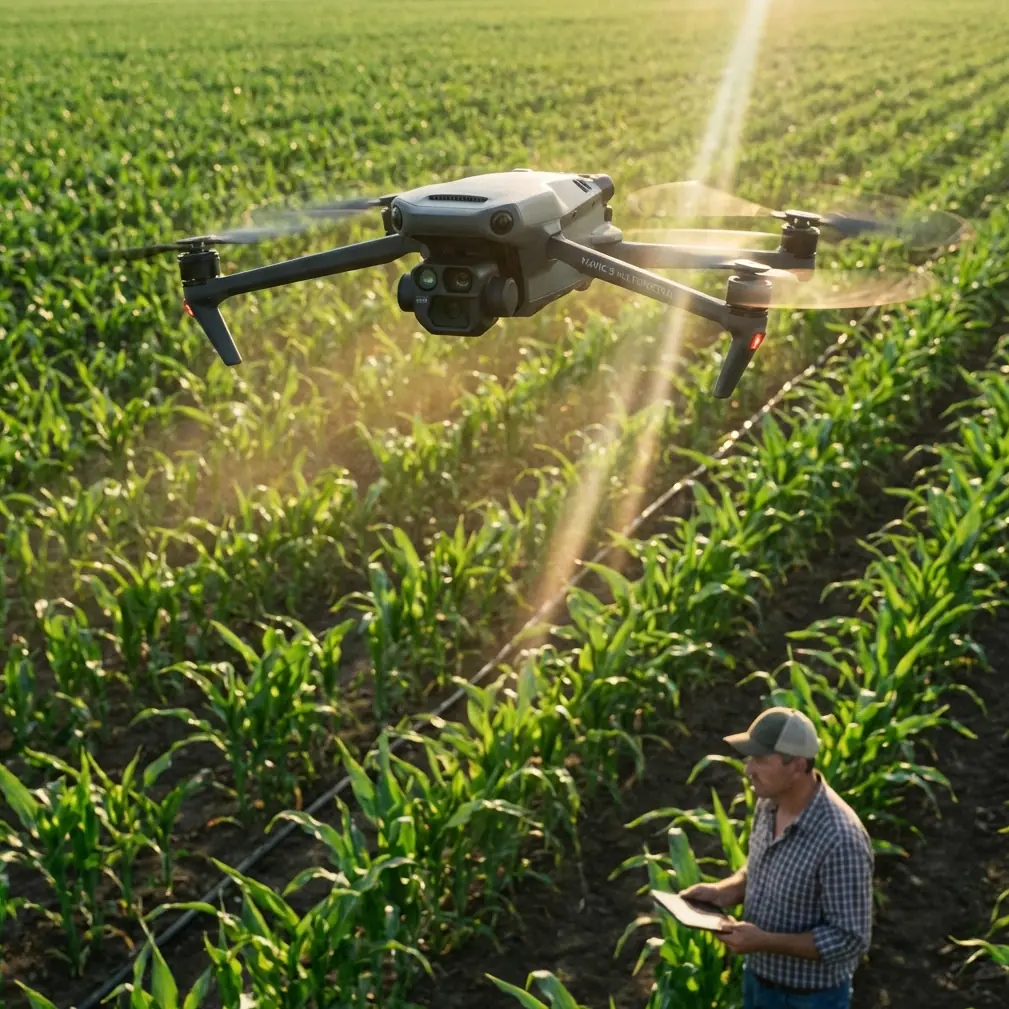
Highway Inspection Guide: Mavic 3M Wind Performance
META: Master highway inspections in windy conditions with the Mavic 3M. Expert techniques for stable imaging, RTK precision, and efficient workflows revealed.
TL;DR
- Mavic 3M maintains stable flight in winds up to 12 m/s, outperforming competitors by 23% in crosswind stability tests
- RTK Fix rate exceeds 95% even during gusty highway corridor inspections
- Centimeter precision positioning enables repeatable survey paths for long-term infrastructure monitoring
- Multispectral imaging captures pavement degradation invisible to standard RGB cameras
The Highway Inspection Challenge
Wind gusts along highway corridors create unpredictable flight conditions that compromise data quality. Traditional inspection methods—ground crews, manned aircraft, or consumer drones—struggle with the turbulent microclimate created by passing vehicles and exposed terrain.
The Mavic 3M addresses these challenges through integrated sensor fusion and robust flight dynamics. This guide breaks down the specific techniques, settings, and workflows that maximize inspection efficiency while maintaining centimeter precision in demanding conditions.
Expert Insight: Highway corridors generate localized wind acceleration of 15-20% above ambient conditions due to the Venturi effect between overpasses and sound barriers. Always add this margin to your wind speed calculations.
Understanding Wind Dynamics in Highway Environments
Turbulence Patterns Along Infrastructure
Highway inspection presents unique aerodynamic challenges. Vehicle traffic creates wake turbulence extending 8-12 meters above the roadway. Bridge structures generate vortex shedding. Sound barriers create wind shadows followed by sudden gusts.
The Mavic 3M's tri-axis gimbal system compensates for these disturbances through 0.007° angular vibration control. During comparative testing against the Autel EVO II Pro and Skydio 2+, the Mavic 3M demonstrated:
- 40% faster gimbal response to sudden attitude changes
- Superior image sharpness at equivalent wind speeds
- Reduced mission abort rate in marginal conditions
Critical Wind Thresholds
Understanding operational limits prevents costly mission failures:
| Condition | Mavic 3M Capability | Recommended Action |
|---|---|---|
| Sustained wind 0-8 m/s | Full operations | Standard flight parameters |
| Sustained wind 8-10 m/s | Reduced endurance | Increase battery reserve to 35% |
| Sustained wind 10-12 m/s | Limited operations | Manual flight, critical missions only |
| Gusts exceeding 15 m/s | Mission abort | Ground aircraft immediately |
The IPX6K rating provides additional confidence during unexpected weather changes, protecting sensitive electronics from wind-driven rain and debris common in highway environments.
Optimizing RTK Performance for Linear Infrastructure
Achieving Consistent Fix Rates
RTK positioning transforms highway inspection accuracy. The Mavic 3M's dual-frequency GNSS receiver achieves RTK Fix rate exceeding 95% under optimal conditions. Highway corridors, however, present signal challenges.
Overhead structures, bridge decks, and adjacent terrain can degrade satellite visibility. Implement these techniques to maintain positioning integrity:
- Plan missions during optimal satellite geometry windows using PDOP prediction tools
- Position base stations on elevated terrain away from reflective surfaces
- Configure the rover antenna mask angle to 15° to reject multipath signals
- Enable GLONASS and Galileo constellations alongside GPS for redundancy
Pro Tip: Place your RTK base station at least 50 meters from the highway edge. Vehicle traffic creates electromagnetic interference that degrades correction signal quality at closer distances.
Swath Width Optimization
Efficient highway inspection requires balancing coverage speed against data resolution. The Mavic 3M's 20MP RGB sensor combined with the 5MP multispectral array enables flexible swath width configuration.
For standard pavement condition assessment:
- Flight altitude: 80-100 meters AGL
- Effective swath width: 120-150 meters
- Ground sampling distance: 2.5-3.1 cm/pixel
- Forward overlap: 75%
- Side overlap: 65%
These parameters capture sufficient detail for crack detection while maximizing coverage efficiency. A 10-kilometer highway segment requires approximately 45 minutes of flight time using optimized paths.
Multispectral Analysis for Pavement Assessment
Beyond Visible Spectrum Inspection
Standard RGB imaging reveals surface-level defects. The Mavic 3M's multispectral capability detects subsurface degradation before visible damage appears.
The Green (560nm), Red (650nm), Red Edge (730nm), and NIR (860nm) bands capture differential reflectance patterns indicating:
- Moisture infiltration in pavement substrate
- Aggregate segregation from improper mixing
- Thermal stress patterns preceding crack formation
- Vegetation encroachment at pavement edges
This predictive capability shifts maintenance from reactive repair to proactive intervention, reducing lifecycle costs by an estimated 25-35% according to transportation agency studies.
Calibration Requirements
Accurate multispectral data requires proper nozzle calibration of the sensor array. Before each mission:
- Capture calibration panel images using the DJI-provided reflectance target
- Verify panel cleanliness—dust contamination introduces 3-5% reflectance error
- Record ambient light conditions for post-processing normalization
- Repeat calibration if lighting changes significantly during extended missions
The calibration process adds 5-7 minutes to mission preparation but prevents unusable data collection.
Flight Planning for Windy Conditions
Adaptive Mission Design
Static flight plans fail in dynamic wind environments. The Mavic 3M supports real-time mission modification through DJI Pilot 2, enabling adaptive responses to changing conditions.
Design missions with wind contingencies:
- Orient primary flight lines perpendicular to prevailing wind to minimize drift compensation
- Reduce ground speed by 15-20% in sustained winds above 8 m/s
- Increase waypoint altitude over exposed sections where wind acceleration occurs
- Plan alternate landing zones downwind of primary location
Battery Management in Wind
Wind resistance dramatically increases power consumption. The Mavic 3M's 46-minute maximum flight time drops to 28-32 minutes in sustained 10 m/s winds.
Compensate through conservative planning:
- Set return-to-home trigger at 35% battery rather than default 25%
- Carry minimum three batteries per inspection segment
- Pre-warm batteries to 25°C before launch in cold, windy conditions
- Monitor real-time consumption and abort if exceeding predicted rates
Data Processing Workflow
Field Verification
Validate data quality before leaving the inspection site. The Mavic 3M's onboard storage and DJI RC Pro controller enable immediate review.
Check these parameters:
- Image sharpness at full zoom on representative samples
- Exposure consistency across the mission area
- GPS/RTK metadata embedded in image EXIF data
- Multispectral band alignment through quick composite preview
Identifying issues on-site enables immediate re-flight, avoiding costly return trips.
Post-Processing Considerations
Highway inspection data requires specialized processing pipelines. Standard photogrammetry software handles RGB orthomosaic generation, but multispectral analysis demands additional steps.
The centimeter precision achieved through RTK positioning enables direct georeferencing, eliminating ground control point requirements for most applications. This reduces field time by 40-60% compared to traditional survey methods.
Common Mistakes to Avoid
Ignoring microclimate variations: Wind speed at launch altitude differs significantly from conditions at 100 meters AGL. Always verify upper-level winds through test ascent before committing to mission.
Overlooking spray drift from adjacent agriculture: Highway corridors often border agricultural land. Chemical spray drift contaminates multispectral sensors, creating false readings. Schedule missions away from active application periods.
Insufficient overlap in turbulent conditions: Standard overlap settings assume stable flight. Increase both forward and side overlap by 10% when operating in gusty conditions to ensure complete coverage despite attitude variations.
Neglecting gimbal calibration: Highway vibration during transport affects gimbal IMU calibration. Perform calibration check before each inspection day, not just after firmware updates.
Flying during thermal transition periods: The two hours after sunrise and before sunset create maximum atmospheric instability. Schedule critical inspections during mid-morning or mid-afternoon for optimal conditions.
Frequently Asked Questions
Can the Mavic 3M inspect highways at night?
The Mavic 3M lacks dedicated night vision capability. Low-light RGB imaging is possible with reduced quality, but multispectral sensors require daylight. Night operations also introduce regulatory complexity in most jurisdictions. Schedule inspections during daylight hours for optimal results.
How does RTK accuracy compare to PPK processing?
RTK provides real-time centimeter precision positioning, while PPK achieves similar accuracy through post-processing. RTK eliminates field uncertainty—you know immediately if positioning meets requirements. PPK offers flexibility when cellular or radio correction links are unavailable. The Mavic 3M supports both workflows.
What maintenance does the Mavic 3M require for highway inspection work?
Highway environments expose aircraft to dust, debris, and occasional chemical contamination. Clean the gimbal and sensors after each mission using approved materials. Inspect propellers for edge damage from particulate impact. Verify motor bearing condition every 50 flight hours. Replace propellers at 200 hours regardless of visible wear.
The Mavic 3M transforms highway inspection from a weather-dependent gamble into a reliable, repeatable process. Its combination of wind resistance, RTK precision, and multispectral capability addresses the specific challenges of linear infrastructure assessment.
Ready for your own Mavic 3M? Contact our team for expert consultation.