
Mavic 3M in Extreme Temperatures: A Field Case Study
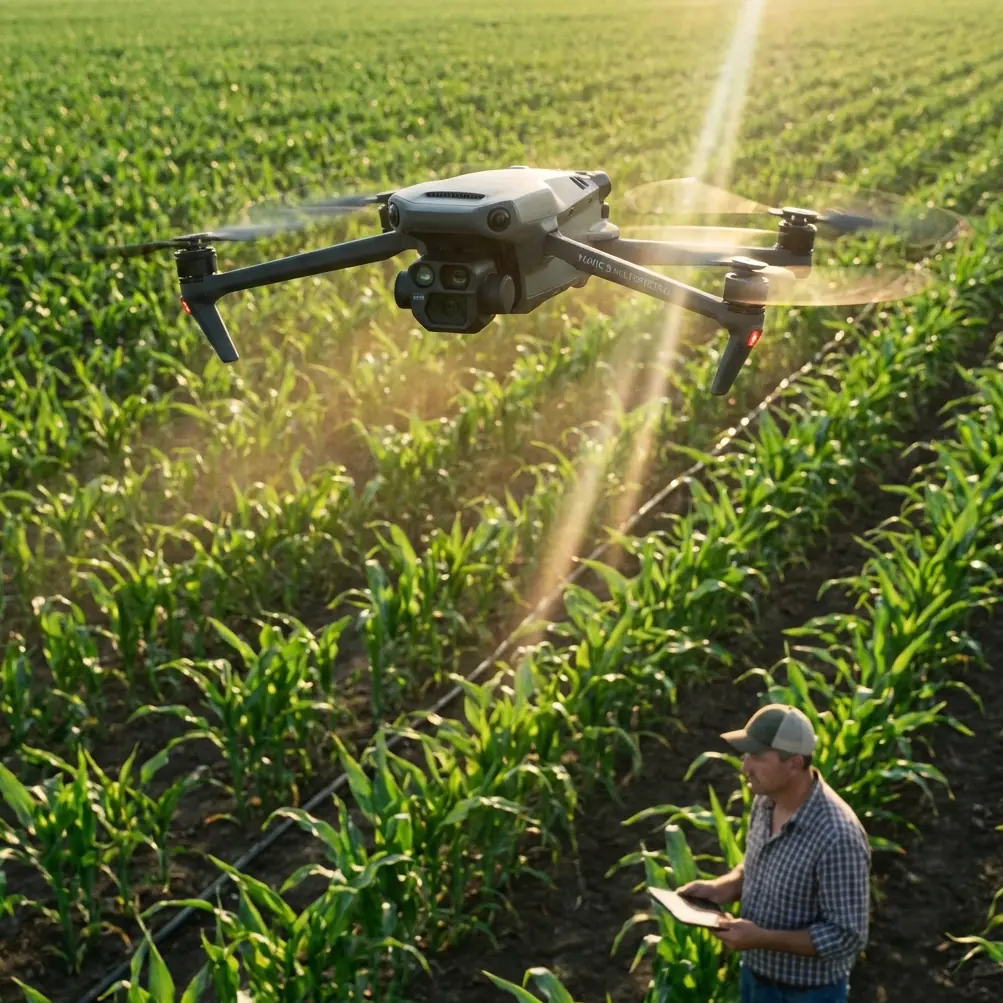
Mavic 3M in Extreme Temperatures: A Field Case Study on Smarter Venue Mapping and Vegetation Reading
META: A practical case study on using the Mavic 3M for venue work in extreme temperatures, with insights on flight altitude, multispectral value, live video links, and map-processing workflow.
When people look at the Mavic 3M, they often reduce it to one label: an agricultural drone for crop intelligence. That misses the point. In the field, its real advantage is not the market category it sits in, but the type of decisions it helps you make when conditions are messy, time is short, and visual judgment alone starts to break down.
That became obvious during a recent venue assessment workflow in extreme temperatures. The assignment was civilian and straightforward: document a large outdoor site, evaluate vegetation stress around event-use zones, verify surface conditions, and produce clean mapping outputs that a planning team could actually use. Not a glossy reel. Not a hobby flight. A working survey with environmental pressure, schedule pressure, and a client that needed more than pretty images.
This is exactly where the Mavic 3M starts to make sense.
Why venue work in extreme temperatures exposes weak workflows
Extreme heat and cold do something subtle to drone operations. They do not just affect batteries, pilot comfort, or scheduling windows. They expose whether your workflow is built around usable data or around assumptions.
At a venue site, especially one with landscaped perimeters, access roads, open congregation zones, and mixed surface materials, standard RGB imagery can tell you only so much. You can see discoloration. You can spot obvious wear. You can notice standing water, bare patches, and uneven growth. But when the task involves identifying plant stress before it becomes visible, separating genuine vegetation decline from temporary color shifts, or comparing one zone against another after exposure to temperature extremes, broad visual impressions stop being enough.
The reference material on hyperspectral remote sensing explains the core reason. Many vegetation types can appear deceptively similar in ordinary imagery because of what remote sensing specialists describe as subtle spectral overlap. In practice, different plant types—or the same plant under different stress conditions—may not reveal their differences clearly through wide-band visual capture. The document even cites research where hyperspectral analysis was able to distinguish 11 forest types that would be difficult to separate reliably using simpler imaging alone. That matters operationally because venue managers are rarely asking abstract ecological questions; they want to know which sections need intervention, which can wait, and where maintenance resources should go first.
The Mavic 3M is not a hyperspectral aircraft, and pretending otherwise would be sloppy. But the lesson from that research still applies: once you move beyond standard visible-light capture, your interpretation improves. For venue work in temperature-stressed landscapes, multispectral data gives a planner a much better chance of separating “looks fine” from “actually under stress.”
The case: mapping a venue perimeter after a temperature swing
The site in this case had three problem areas.
First, a landscaped entrance corridor that had been through strong daytime heat loading. Second, a service-road edge where reflected heat from hard surfaces was affecting adjacent vegetation. Third, an open-use lawn where visual inspection from the ground produced conflicting opinions. One team thought irrigation distribution was uneven. Another blamed foot traffic. A third suspected drainage issues.
The Mavic 3M was brought in for one reason: not to replace inspection judgment, but to make that judgment measurable.
For this type of mission, the most useful altitude is usually not the highest legal or convenient one. The optimal flight altitude is the one that balances three things at once: ground detail, multispectral consistency, and operational efficiency. On venue properties, that sweet spot is often lower than pilots expect.
Optimal flight altitude insight for this scenario
For extreme-temperature venue assessments with the Mavic 3M, I generally favor a moderate low-altitude mapping pass, roughly in the 40 to 60 meter range, then adjust upward only if the site footprint forces it.
Why that window?
At that height, you preserve enough surface detail to compare stressed grass edges, planting bands, drainage signatures, and hardscape transitions without making the mission inefficient through excessive line counts. You also reduce the risk of “averaging away” smaller thermal-stress patterns inside mixed-use zones. A lawn section next to concrete, temporary structures, or vehicle routes can show micro-variations that become less obvious when the aircraft is flown too high and each pixel covers too much ground.
Go too low, and you create unnecessary mission time, battery cycling, and overlap management. Go too high, and you may still get a map, but not necessarily a decision-grade map.
That distinction matters more in extreme temperatures because environmental stress is often patchy. The damaged section is not always the whole field. Sometimes it is a narrow strip following radiant heat from pavement. Sometimes it is a cluster near drainage inefficiency. Sometimes it is a perimeter zone where exposure and wind patterns compound drying. If your altitude is wrong, you can still produce a visually impressive orthomosaic and still miss the point.
Why live transmission quality still matters in a mapping job
A lot of drone teams treat live video as secondary during mapping because the final output comes later in post-processing. That is a mistake, especially on venue assignments where site access, public safety coordination, and changing surface conditions matter.
One of the most useful reference details here comes from an emergency mapping solution document describing an HD digital video transmission system. Its transmitter supports 1920×1080 at 60P/50P, with a stated transmission distance of 5 km at 100 m, and the ground station is built around dual-antenna redundant reception with 500 ms end-to-end latency. That setup is not the Mavic 3M itself, but it illustrates an operational truth: reliable live image transmission is not a luxury add-on for professional work. It is what allows the field team to verify coverage, identify anomalies during the mission, and decide whether a second pass is needed before leaving site.
For venue work in extreme temperatures, that matters for two reasons.
First, conditions can shift quickly. Haze shimmer, glare, ground activity, and surface reflectivity can affect interpretation during the flight. A high-quality live view helps the operator catch those issues immediately.
Second, if the end client needs fast decisions, waiting until back-office processing to discover a missed corridor or incomplete overlap is a preventable failure. The emergency mapping document’s emphasis on HD transmission and low-latency monitoring points to the same principle professional Mavic 3M operators should follow: field verification is part of data quality, not separate from it.
From capture to actionable output: why processing workflow is half the job
Once the venue flights were complete, the real value came from the post-processing pipeline. Another reference document highlights software capabilities that are highly relevant here, particularly the ability to generate orthomosaics in GeoTIFF, DEM outputs, point clouds, 3D models, and even automatic accuracy reports. Again, this is not about naming a software package for the sake of it. It is about understanding what a serious mapping workflow should produce.
On this venue project, the orthomosaic mattered because planners needed one clean, shared spatial reference. The elevation model mattered because slight grade differences were part of the irrigation and runoff question. The denser spatial outputs mattered because site managers wanted to compare vegetation stress with actual built-environment relationships rather than rely on isolated still images.
That is where Mavic 3M operations tend to separate into two camps.
One camp captures images and delivers screenshots.
The other captures structured data and builds a layered interpretation: where stress appears, how it aligns with hard surfaces, whether the pattern follows drainage, and which maintenance hypothesis is most plausible.
The second approach wins every time in extreme-temperature venue work because environmental stress rarely presents itself as one clean visual symptom.
What the multispectral layer revealed
At this venue, the visible imagery suggested broad decline in several green areas. The multispectral reading told a more specific story.
The entrance corridor showed a heat-edge pattern, not uniform decline. The service-road strip displayed stress concentrated along the hardscape boundary rather than across the full planting bed. The open-use lawn was the most interesting: what looked from ground level like general wear resolved into distinct zones, likely tied to a mix of traffic concentration and uneven moisture behavior.
This is where the hyperspectral reference becomes operationally useful, even though the aircraft in question is multispectral. The research cited in the source material explains that higher spectral discrimination helps suppress interference from factors that make one class of vegetation look like another. In plain language, spectral intelligence helps you stop guessing. That is the entire point of using the Mavic 3M on venue landscapes affected by extreme weather.
You are not just making a prettier map. You are reducing false assumptions.
A note on temperature stress and timing
Timing the flight matters as much as altitude. In extreme conditions, I prefer not to rely on a single pass if the site is operationally significant. One flight window may exaggerate surface reflectance effects; another may better reveal consistent vegetation stress patterns. If the client’s schedule allows it, a comparative workflow gives a stronger basis for maintenance decisions than a one-off visual snapshot.
This is also where professional coordination becomes more valuable than the aircraft alone. If you need help designing a mission profile around site conditions, overlap targets, and interpretation goals, it makes sense to discuss the workflow before launch rather than after the map exposes gaps. A quick way to do that is through this field workflow chat.
What this means for Mavic 3M buyers and operators
If your work involves venues, estates, campuses, resort grounds, sports facilities, parks, or large mixed-use outdoor properties, the Mavic 3M should not be evaluated only through an agriculture lens. Its value is broader than crop rows.
For extreme-temperature venue assessments, it offers three practical advantages:
It adds a spectral layer to visual inspection.
That helps identify vegetation stress patterns before they become obvious to the eye.It supports data-driven mapping outputs.
Clean orthomosaics, elevation products, and structured analysis are what turn a drone flight into a planning tool.It fits time-sensitive operational work.
When paired with disciplined field verification and a strong processing workflow, it can support rapid site understanding without the delay of conventional ground-only assessment.
There is also a wider market backdrop worth paying attention to. Recent news from China’s low-altitude economy shows serious capital flowing into advanced aerial platforms. One domestic eVTOL company, Volant Aerotech, reportedly completed a 300 million dollar financing round, with funds directed toward airworthiness certification of the VE25-100 and accelerated commercial delivery. That development is not directly about the Mavic 3M, but it signals something larger: professional aerial work is maturing fast, and buyers are increasingly expected to think in terms of integrated air-data operations rather than isolated hardware purchases.
For Mavic 3M users, that means expectations are rising. Clients will want better repeatability, clearer outputs, and stronger evidence behind recommendations. The operator who understands altitude discipline, live verification, spectral interpretation, and mapping deliverables will be far more valuable than the operator who simply owns the aircraft.
Final takeaway from this case
The venue in this case did not need cinematic drone shots. It needed a defensible read on environmental stress under difficult temperature conditions. The Mavic 3M delivered value because it was used as part of a complete workflow: low-to-moderate altitude mapping for detail, live mission verification, structured post-processing, and multispectral interpretation grounded in real site questions.
That is the right way to think about this aircraft.
Not as a flying camera.
Not as a checkbox purchase.
As a compact aerial decision tool that becomes especially useful when temperature extremes make the ground picture harder to trust.
Ready for your own Mavic 3M? Contact our team for expert consultation.