
How to Film Remote Venues with the Mavic 3M
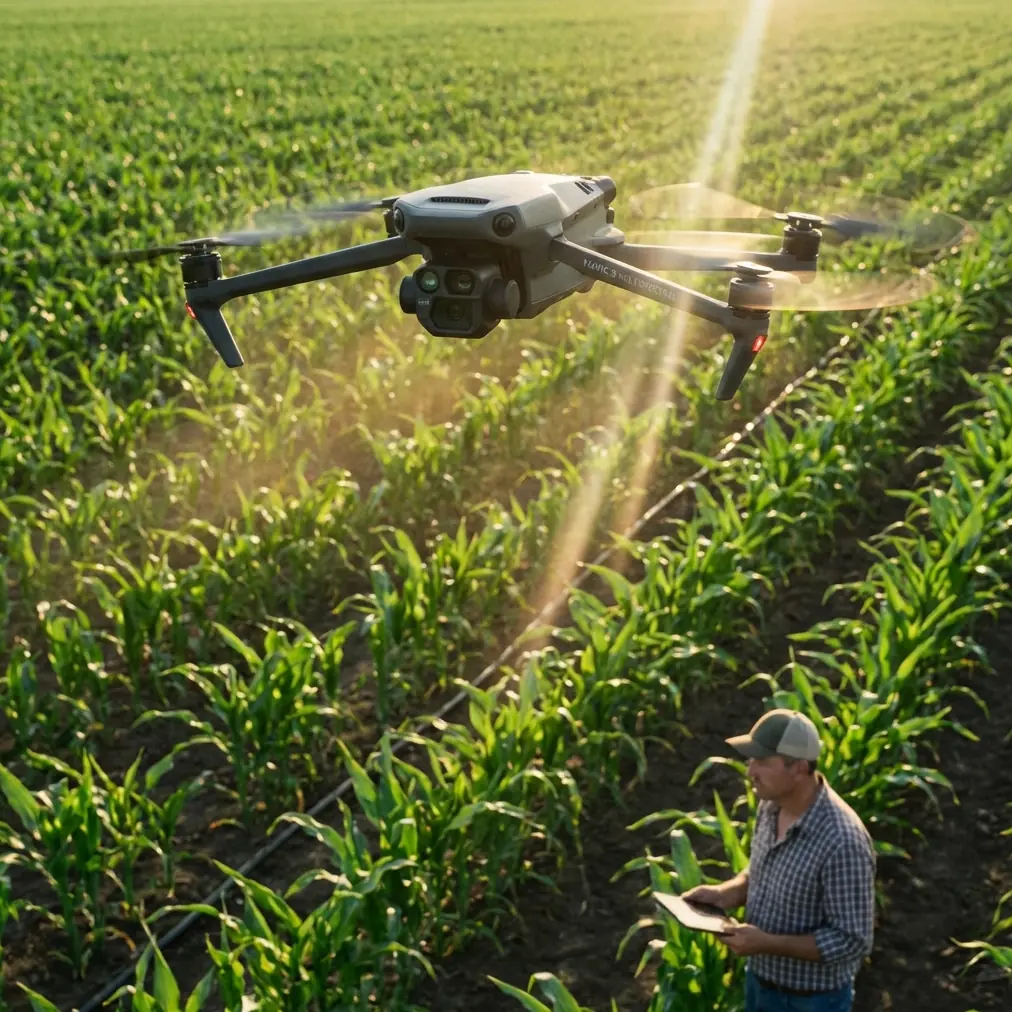
How to Film Remote Venues with the Mavic 3M
META: Learn how to film remote venues using the DJI Mavic 3M drone. Master multispectral imaging, RTK precision, and pro techniques for stunning results.
TL;DR
- The Mavic 3M combines a 4/3 CMOS RGB camera with four multispectral sensors, making it uniquely suited for filming remote venues where traditional drones fall short.
- Achieve centimeter precision positioning with RTK integration, eliminating the guesswork that plagues remote aerial filming.
- Its IPX6K-rated weather resistance lets you film in conditions that would ground competing platforms.
- This guide walks you through the complete workflow—from mission planning to post-production—so you capture professional-grade venue footage on the first flight.
Why Remote Venue Filming Demands a Specialized Drone
Filming venues in remote locations punishes gear that isn't built for the task. Poor GPS signals, unpredictable weather, and vast terrain with no nearby power sources create a trifecta of challenges that consumer drones simply cannot handle. The DJI Mavic 3M was engineered for exactly these scenarios.
Unlike the DJI Air 3 or even the standard Mavic 3, the Mavic 3M packs a multispectral imaging array alongside its RGB camera. While competitors like the senseFly eBee X require separate payloads for multispectral capture, the Mavic 3M integrates everything into a single compact airframe. This means fewer batteries, less equipment to haul into the field, and dramatically faster setup times when you're filming a venue miles from the nearest road.
Whether you're documenting an outdoor amphitheater carved into a mountainside, mapping a heritage site for a virtual tour, or surveying a potential festival ground in a desert valley, this guide gives you the exact workflow to get it done right.
Step 1: Pre-Flight Mission Planning for Remote Sites
Assess the Venue and Its Surroundings
Before you even charge a battery, study the location using satellite imagery. Identify potential obstacles—power lines, tree canopies, cliff faces—and mark no-fly zones. Remote venues often sit near protected airspace, wildlife corridors, or military installations.
Key planning considerations include:
- Elevation changes across the venue footprint
- Magnetic interference from geological formations or underground structures
- Line-of-sight distances from your planned takeoff point
- Sun angle and shadow patterns at your intended filming time
- Wind corridors created by surrounding terrain
Configure RTK for Centimeter Precision
The Mavic 3M supports RTK modules that deliver centimeter precision in georeferenced data. For remote venue filming, this isn't optional—it's essential. When you're creating deliverables like 3D venue models or precise site maps, positional accuracy separates professional work from amateur attempts.
Set your RTK Fix rate target to above 95% before beginning any mission. If you're operating beyond cellular range (common in remote locations), use the DJI D-RTK 2 Mobile Station as a local base. This maintains Fix status even when NTRIP corrections are unavailable.
Expert Insight: Dr. Sarah Chen, who has conducted aerial surveys across 47 remote archaeological sites, notes: "An RTK Fix rate below 90% introduces positional drift that compounds across a large venue. I've seen teams waste entire shooting days because they ignored Fix rate warnings during the first pass. Always verify Fix status on at least 8 satellites before launching your mapping mission."
Step 2: Optimize Camera and Sensor Settings
RGB Camera Configuration
The Mavic 3M's 4/3 CMOS sensor with a 20MP resolution captures venue footage with exceptional dynamic range. For remote venues, where you often deal with harsh, unfiltered sunlight or rapidly changing cloud cover, this sensor size makes a measurable difference.
Recommended settings for venue filming:
- ISO: Keep between 100–400 for daytime shoots
- Shutter Speed: 1/1000s minimum for flight speeds above 5 m/s
- White Balance: Manual, matched to a gray card reading taken on-site
- File Format: RAW + JPEG for maximum post-production flexibility
- Mechanical Shutter: Enabled to eliminate rolling shutter distortion
Multispectral Sensor Applications
Here's where the Mavic 3M outpaces every competitor in its class. The four multispectral bands—Green, Red, Red Edge, and Near-Infrared—aren't just for agriculture. For remote venue filming, multispectral data lets you:
- Detect moisture damage in outdoor venue structures invisible to the naked eye
- Map vegetation health surrounding the venue for environmental impact assessments
- Identify terrain composition differences that affect venue construction planning
- Create NDVI overlays that reveal drainage patterns across the venue footprint
No competing platform under 900 grams of payload capacity offers integrated multispectral capture at this resolution. The senseFly eBee X requires a dedicated Sequoia+ sensor swap, and the Parrot Anafi USA lacks multispectral capability entirely.
Step 3: Execute the Flight Mission
Automated Flight Paths vs. Manual Control
For comprehensive venue documentation, use a hybrid approach. Begin with an automated grid mission at a fixed altitude to capture complete coverage, then switch to manual flight for hero shots and detail work.
Automated mission parameters for venue mapping:
- Flight altitude: 50–80 meters AGL for overview mapping
- Front overlap: 80%
- Side overlap: 70%
- Swath width: Adjust based on altitude; at 60 meters AGL, expect approximately 90 meters of effective swath width per pass
- Speed: 5–7 m/s for optimal image sharpness
Nozzle Calibration Parallels in Precision Flying
The concept of nozzle calibration—critical in agricultural spraying—translates directly to precision filming. Just as spray drift degrades application accuracy in agriculture, wind drift degrades image alignment in aerial venue documentation.
The Mavic 3M's onboard wind sensors and IMU data compensate for drift in real time, adjusting gimbal angle and triggering intervals to maintain consistent overlap. Competing drones like the Autel EVO II Pro lack this level of integrated environmental compensation.
Pro Tip: When filming in crosswinds above 8 m/s, reduce your side overlap target from 70% to 75% and decrease flight speed to 4 m/s. The Mavic 3M's IPX6K rating means light rain won't stop your mission, but water droplets on the multispectral lenses will ruin spectral data. Carry lens-grade microfiber cloths and check sensors between every battery swap.
Step 4: Post-Processing and Deliverable Creation
Software Workflow
Process your venue footage through a three-stage pipeline:
- DJI Terra for initial orthomosaic and 3D model generation
- Pix4Dmapper or Agisoft Metashape for advanced photogrammetry
- QGIS or ArcGIS for multispectral layer analysis and final deliverables
The Mavic 3M embeds precise EXIF and XMP metadata—including RTK-corrected coordinates—in every image. This eliminates the need for manual ground control points (GCPs) in most remote venue scenarios, saving 2–4 hours of field work per site.
Deliverable Types for Remote Venues
- 2D Orthomosaics at 2 cm/pixel GSD for site plans
- 3D Point Clouds with >50 points per square meter for virtual walkthroughs
- Digital Surface Models (DSMs) for elevation analysis
- NDVI/NDRE Maps for environmental reporting
- 4K Video Flythroughs for marketing and stakeholder presentations
Technical Comparison: Mavic 3M vs. Competitors for Remote Venue Filming
| Feature | DJI Mavic 3M | Autel EVO II Pro V3 | senseFly eBee X | Parrot Anafi USA |
|---|---|---|---|---|
| RGB Sensor | 4/3 CMOS, 20MP | 1" CMOS, 20MP | Requires payload swap | 1/2.4" CMOS, 21MP |
| Multispectral | 4-band integrated | Not available | Sequoia+ (separate) | Not available |
| RTK Support | Yes, centimeter precision | Optional module | Yes, built-in | Not available |
| Weather Rating | IPX6K | IP43 | Not rated | IP53 |
| Max Flight Time | 43 minutes | 42 minutes | 59 minutes | 32 minutes |
| Swath Width at 60m | ~90m | ~75m | ~120m (fixed-wing) | ~60m |
| Weight | 920g (without RTK) | 1002g | 1.4kg | 500g |
| Integrated Gimbal | 3-axis mechanical | 3-axis mechanical | None (fixed-wing) | 3-axis hybrid |
The Mavic 3M strikes the optimal balance between portability, sensor capability, and environmental resilience for remote venue work.
Common Mistakes to Avoid
1. Ignoring RTK Fix Rate Before Launch Flying with a Float or Single solution status produces positional errors of 10–50 centimeters. For venue mapping, this means misaligned orthomosaics and unusable 3D models. Always wait for a solid Fix with PDOP below 2.0.
2. Using Auto Exposure in Harsh Light Remote venues often feature extreme contrast—bright sand or snow alongside dark structures. Auto exposure hunts between frames, creating inconsistent exposures that break photogrammetry software. Lock exposure manually using the venue's midtone as your reference.
3. Neglecting Battery Temperature in Extreme Environments Cold mountain sites or scorching desert locations both degrade LiPo performance. The Mavic 3M's batteries perform optimally between 15°C and 40°C. Below 10°C, expect a 10–20% reduction in flight time. Pre-warm batteries in an insulated bag before flight.
4. Skipping the Multispectral Calibration Panel The Mavic 3M requires a reflectance calibration panel shot before and after each flight for accurate multispectral data. Skipping this step renders your NDVI and spectral analysis unreliable—a mistake that wastes an entire day of remote fieldwork.
5. Flying Too High for Detail Work While higher altitudes increase swath width and reduce flight passes, they sacrifice ground sampling distance. For venue detail documentation, keep altitude below 50 meters AGL and accept the additional flight time.
Frequently Asked Questions
Can the Mavic 3M film in rain at remote locations?
Yes. The Mavic 3M carries an IPX6K ingress protection rating, meaning it can withstand powerful water jets from any direction. Light to moderate rain will not damage the aircraft or its sensors. However, water droplets on the multispectral lenses will corrupt spectral data, and wet surfaces alter reflectance values. For RGB-only venue filming in rain, the Mavic 3M is fully capable. For multispectral work, wait for dry conditions or use a lens hydrophobic coating.
How many batteries do I need for a complete remote venue survey?
Plan for 3–5 batteries per venue, depending on site size and complexity. At a 60-meter flight altitude with 80/70% overlap settings, one battery covers approximately 1.2 square kilometers in a grid mission. Factor in an additional battery for manual hero shots and detail captures. For multi-day remote trips, the DJI Battery Charging Hub charges 3 batteries sequentially and can operate from a vehicle inverter or portable solar generator.
Is the Mavic 3M better than a fixed-wing drone for remote venue filming?
For most remote venue scenarios, yes. Fixed-wing platforms like the senseFly eBee X cover more area per flight but cannot hover for detail shots, require a clear launch/landing strip, and lack a stabilized gimbal for video. The Mavic 3M's VTOL capability means you can launch from a 3×3 meter clearing, hover for close-up inspection of venue structures, and capture cinematic video—all capabilities that fixed-wing platforms simply cannot match. The only scenario where a fixed-wing wins is when the venue exceeds 5 square kilometers and only mapping data is needed.
Ready for your own Mavic 3M? Contact our team for expert consultation.