
Mavic 3M in Windy Forest Work: What Actually Matters
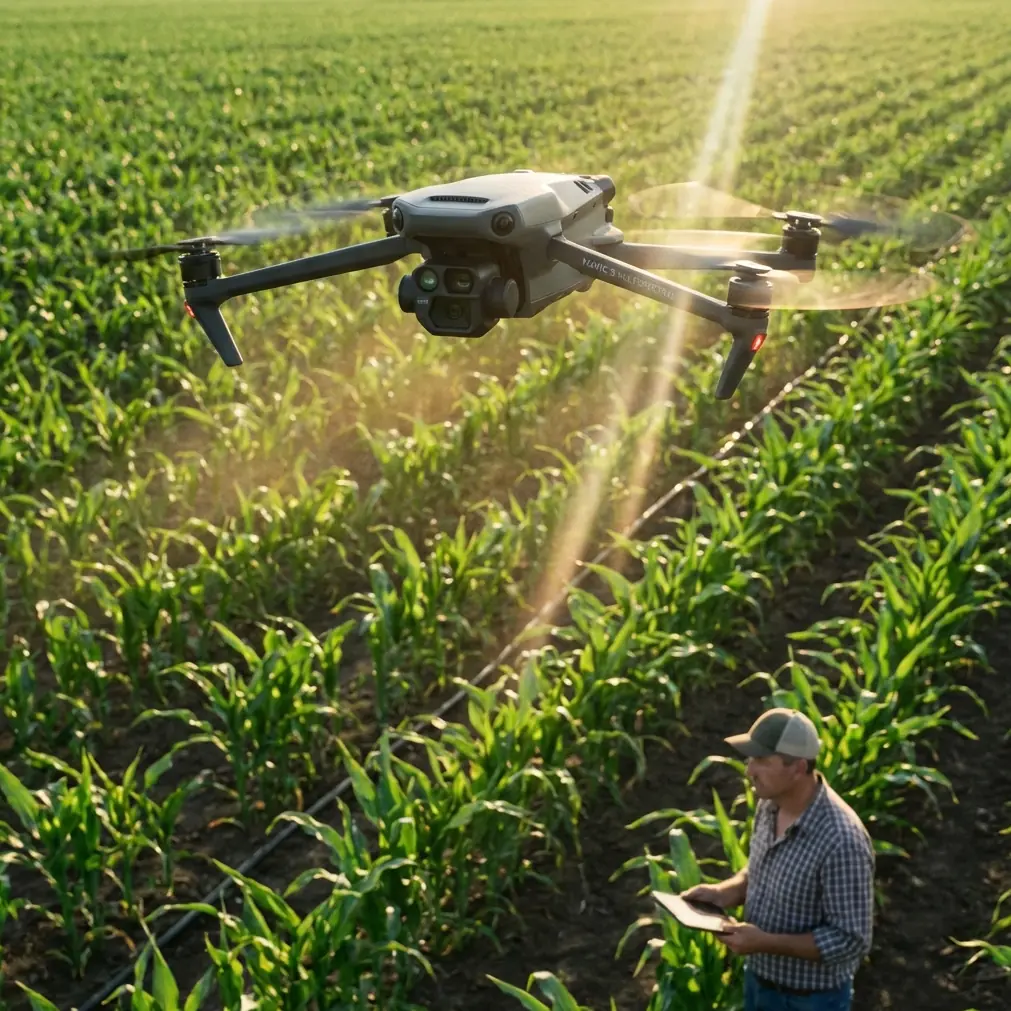
Mavic 3M in Windy Forest Work: What Actually Matters in the Field
META: A field-led case study on using the DJI Mavic 3M for forest imaging in windy conditions, with practical insight on light, canopy interpretation, mapping accuracy, and why workflow details matter.
Forest work exposes the difference between a drone that merely flies and a drone that delivers usable information. With the Mavic 3M, that difference shows up fast. Not in a spec-sheet fantasy, but in the realities of uneven canopy, shifting wind, patchy light, and the stubborn problem every forestry team runs into sooner or later: collecting imagery that is both readable to the human eye and reliable enough for mapping decisions.
I’ve spent enough time around UAV projects to know that “forest filming” usually means two different jobs tangled together. One is visual storytelling: documenting stand condition, species variation, access routes, and visible stress in a way stakeholders can understand immediately. The other is spatial work: producing images that can be classified, digitized, and turned into operational layers. The Mavic 3M sits right at that intersection, which is why it deserves a more serious discussion than the usual generic overview.
A practical case: windy forest imaging is not just a flight problem
Let’s start with the reader scenario directly: filming forests in windy conditions.
Wind in a forest environment is deceptive. At launch, things may look manageable. Once the aircraft climbs above the tree line, the airflow often becomes far less consistent. Over ridgelines and breaks in canopy, turbulence can introduce subtle motion and angle changes that affect more than pilot comfort. They affect image consistency, edge definition, overlap quality, and later, your confidence in the map.
This is where the Mavic 3M has a real operational advantage over more casual imaging platforms. It was built around data collection, not just attractive footage. That matters because forestry isn’t forgiving. If your imagery varies too much in angle, exposure, or positional consistency, the whole workflow becomes slower. You spend more time cleaning data and less time interpreting it.
A useful comparison to many competitor-grade prosumer drones is this: plenty of aircraft can capture a forest. Far fewer can support a workflow where that capture remains dependable enough for layered analysis. The Mavic 3M earns its place because it is not only about seeing trees. It is about producing an image set that can survive the next step.
Why the forest survey reference still matters
One of the most useful clues in the reference material came from a forest remote sensing workflow, not from a product brochure. In that document, analysts built forest compartment outputs by creating shapefiles in ArcCatalog, then bringing both imagery and shapefiles into ArcMap for editing and vectorization. That is old-school in the best sense. It reminds us that drone value is proven after the flight, when imagery gets translated into boundaries, classes, and area estimates.
The same source reported an overall accuracy of 88.7% for forest subcompartment interpretation from UAV aerial images. That number deserves attention. It does not mean every forest mission will hit the same result. It does mean UAV-derived imagery can be clear enough to distinguish contiguous species groups with relatively low misclassification, provided the workflow is disciplined.
For Mavic 3M users, the operational significance is straightforward: good forest drone work is not judged by how cinematic the footage looks in isolation. It is judged by whether the imagery is clean enough to support digitizing, stand delineation, and downstream decisions. If a platform helps you maintain consistency in difficult environments, your odds of achieving that kind of usable accuracy improve.
The same reference also flagged a limitation that every serious operator should respect: geometric correction remains a key challenge. The document specifically noted that real-time access to aircraft attitude data, GPS position during capture, and supporting terrain information could help improve geometric accuracy. That point lands directly in favor of a platform like the Mavic 3M, especially when the discussion turns to precision workflows rather than visual inspection alone. In rough terrain and forested slopes, positional discipline is not a luxury. It is the basis for trusting what you map.
The hidden enemy in forest missions: bad light, not just bad wind
Another reference looked unrelated at first glance. It discussed photographing flowers in a soft, ethereal style and gave two simple recommendations: avoid very bright light with strong contrast, and work in cloudy conditions or early morning when light is gentler. It also emphasized moving around the subject to find a better blurred background.
That advice transfers surprisingly well to forest imaging.
Harsh midday light in forests creates exactly the kind of contrast that causes headaches in both visual interpretation and multispectral review. Bright canopy tops, dark understory pockets, and blown highlights across reflective leaf surfaces can make one stand look more variable than it really is. In windy conditions, that gets worse because moving foliage catches changing sun angles from frame to frame.
So if you’re using the Mavic 3M in forest work, one of the best professional habits is scheduling around light rather than merely around availability. Overcast skies and early morning windows often produce more stable image sets. The result is not just prettier imagery. It is better interpretability. Species blocks can separate more cleanly. Stress patterns are easier to compare. Stitching outcomes often feel less erratic because exposure swings are reduced.
The reference’s point about background selection also has a direct analogue. In flower photography, the shooter changes position to control what sits behind the subject. In forest drone work, the operator changes altitude, angle, and flight line to manage visual clutter. That matters when documenting edges, regeneration gaps, riparian strips, and transitions between stand types. The best Mavic 3M operators do not simply launch and accept the scene. They shape the scene by choosing geometry that reduces confusion.
Why the Mavic 3M is especially useful in forestry
The strongest reason to consider the Mavic 3M for this work is right in its identity: multispectral capability with mapping intent. A conventional camera drone can show you that a stand looks uneven. A multispectral workflow can help explain where that unevenness may be concentrated and how consistently it appears across the block.
In forests, this becomes valuable for:
- stand vigor comparison
- canopy stress screening
- regeneration monitoring
- boundary confirmation before field visits
- post-treatment documentation
- terrain-aware planning for crews and follow-up surveys
That does not replace boots on the ground. It reduces blind spots before the boots arrive.
Competitor drones often force a compromise. You either get a visual aircraft that is easy to deploy but weak in analytical depth, or a heavier survey system that can be excessive for small to mid-sized forestry teams. The Mavic 3M stands out because it compresses serious data utility into a field-manageable package. For consultants, land managers, and forestry contractors, that changes deployment frequency. And deployment frequency matters. Data that is easy to collect tends to be collected on time.
Wind changes your mission design before takeoff
When forests are windy, mission planning should begin with what you are willing to discard.
That sounds harsh, but it is practical. Not every scene needs low-altitude oblique video. Not every block needs edge-hugging passes. In gusty conditions, prioritize the data that serves the decision. If the mission is stand delineation, consistency beats drama. If the mission is documenting visible crown damage, stable directional passes usually outperform creative flight paths.
With the Mavic 3M, I generally advise forestry teams to think through four things first:
1. Light window
The flower-photography reference got this exactly right. Softer light reduces contrast. In forestry, that means fewer false visual differences inside the canopy and cleaner interpretation later.
2. Canopy movement tolerance
Wind-blown foliage can affect overlap quality and image matching. Broadleaf stands with active leaf motion are a different challenge from denser conifer blocks. Accept that some conditions lower the ceiling for mapping quality.
3. Positional confidence
The forest survey reference underlined the value of attitude and GPS-linked precision for geometric improvement. In practical terms, if you care about repeatable boundaries or change detection, your mission design should favor positional consistency over speed.
4. Terrain context
A flat plantation and a mixed-elevation natural forest are different jobs. Terrain shifts alter line of sight, wind exposure, and image angle. Your aircraft may be the same, but your flight logic should not be.
The Mavic 3M’s real edge over competitors
Here is the simplest honest comparison: some competitor platforms are fine for forest visuals, but they begin to wobble in value when the customer asks for both attractive imagery and extractable GIS outputs from the same mission.
The Mavic 3M is stronger because it is built for that dual demand.
That matters in consulting. Clients rarely start by asking for shapefiles or classification-ready data. They ask for insight. Then, once they see a pattern in the imagery, they want measurable boundaries, area estimates, and repeatable documentation. If your aircraft can move from image capture to analytical workflow without changing the whole operating model, you save time and preserve consistency.
The ArcMap and shapefile workflow in the forestry reference is a reminder that useful drone work eventually becomes layers, not just pictures. The Mavic 3M is better aligned with that end state than many camera-first competitors.
A note on “centimeter precision” expectations
The context around this assignment mentions RTK fix rate and centimeter precision, which often appear in drone discussions as if they are magic words. In forest environments, they need to be treated with discipline.
Dense canopy, slope, and wind can all interfere with the clean field conditions people imagine when they hear precision claims. What matters is not repeating marketing language. What matters is understanding how improved positional control supports better geometric consistency, especially when you are mapping stand edges or returning to monitor the same block again.
The forest survey source was clear that geometry still needs work and benefits from real-time attitude and position information paired with supporting terrain data. That is the adult version of the precision conversation. It is not blind faith in one feature. It is an understanding that better aircraft data improves your chances of producing usable forestry outputs.
Small choices that improve Mavic 3M forest results
These are the kinds of adjustments that separate acceptable missions from valuable ones:
- Choose cloud cover or early light when possible. The reference on flower imaging may sound artistic, but in practice it reduces canopy contrast and helps interpretation.
- Avoid forcing dramatic oblique angles in gusts unless the mission specifically requires them.
- Plan passes with the end map in mind, not just the flight path.
- Use visual review immediately after capture to catch blur, exposure inconsistency, or canopy motion problems before leaving site.
- Treat edges carefully. Forest boundaries are often where interpretation errors begin.
- If the deliverable includes vectorized stand boundaries, fly for delineation first and storytelling second.
If you want to compare your planned workflow against a real deployment scenario, this is a useful place to start a field planning discussion for forestry missions: https://wa.me/85255379740
The bigger lesson from the logistics reference
One of the references described a 2016 commercial agreement involving 1,000 drones for rapid transport tied to artificial organ transplant logistics. Strip away the financing noise and one thing stands out: serious industries adopt drones when timing, repeatability, and operational value are undeniable.
Forestry is arriving at the same threshold, just with different stakes. The mission is not transporting medical cargo. It is reducing uncertainty across large, hard-to-access landscapes. The principle is identical. A drone becomes indispensable when it solves a workflow bottleneck better than legacy methods.
For forest teams, the bottleneck is rarely “we need prettier footage.” It is “we need a faster, clearer, more repeatable way to understand what is happening across this area before we commit people and time.” The Mavic 3M fits that need well because it can gather interpretable visual and multispectral data without dragging the team into a heavyweight survey operation every time.
What I would tell a forestry team considering the Mavic 3M
If your work involves windy sites, mixed canopy, and the need to extract more than visuals, the Mavic 3M is one of the strongest fits in its class. Not because every mission will be easy. Forest missions are rarely easy. It is a strong fit because it handles the transition from capture to analysis better than many alternatives.
The references behind this piece point to two truths that matter in the field.
First, image quality is heavily shaped by light discipline. Soft conditions such as cloudy weather or early morning produce gentler contrast and more readable canopy detail than harsh, bright conditions. That is not artistic trivia. It directly affects interpretation quality.
Second, usable forestry outputs depend on what happens after capture. A workflow that supports vectorization, stand mapping, and geometric improvement is where drone value becomes operational. The documented 88.7% overall accuracy from UAV forest interpretation is encouraging, but only if the imagery is collected with enough care to be worth processing.
That is the lens through which I view the Mavic 3M. Not as a generic forest drone. As a tool for teams who need imagery that still means something after the excitement of the flight is over.
Ready for your own Mavic 3M? Contact our team for expert consultation.