
Filming Forests with Mavic 3M | Expert Tips
Filming Forests with Mavic 3M | Expert Tips
META: Learn how to film forests in complex terrain with the DJI Mavic 3M. Expert tutorial covers optimal altitude, multispectral imaging, and flight planning tips.
TL;DR
- Optimal flight altitude of 50–80 meters balances canopy detail capture with terrain obstacle clearance in dense forest environments
- The Mavic 3M's multispectral imaging system with four discrete spectral bands enables NDVI analysis, canopy health assessment, and species differentiation in a single flight
- RTK Fix rate above 95% is achievable even under partial canopy cover when base station placement and flight planning follow the protocols outlined below
- Proper mission configuration can reduce total survey time by up to 45% compared to standard RGB-only workflows
Why Forest Filming in Complex Terrain Is Uniquely Challenging
Forest environments punish sloppy flight planning. Irregular canopy heights, GPS signal occlusion, magnetic interference from mineral-rich terrain, and unpredictable wind shear below ridgelines all converge to make woodland surveying one of the most demanding drone applications.
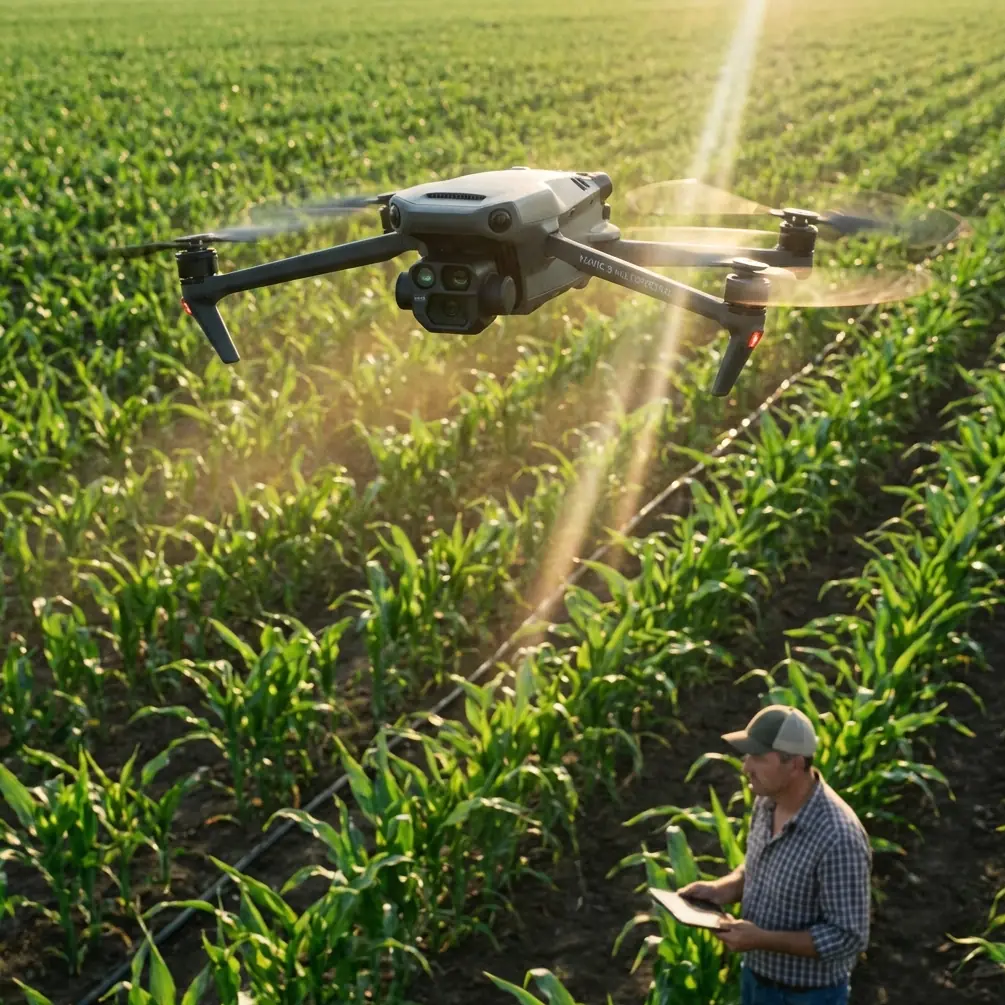
The DJI Mavic 3M was engineered with these exact challenges in mind. Its compact airframe pairs a 20 MP RGB camera with a 5-band multispectral sensor (Green, Red, Red Edge, NIR), giving forestry researchers and land managers the ability to capture both cinematic footage and scientifically rigorous spectral data in a single sortie.
This tutorial walks you through every step—from pre-flight calibration to post-processing—so you can extract maximum value from every battery cycle.
By Dr. Sarah Chen, Remote Sensing Research Fellow
Understanding the Mavic 3M's Sensor Suite for Forest Applications
Before you take off, you need to understand what's under the hood and how each sensor contributes to forest data collection.
RGB Camera Specifications
The primary RGB camera uses a 4/3 CMOS sensor with a mechanical shutter, eliminating rolling shutter distortion during forward flight. This matters enormously when you're capturing overlapping frames for photogrammetric reconstruction of irregular tree canopies.
Key specs include:
- 20 MP effective resolution
- Equivalent focal length of 24 mm
- Mechanical shutter speed range: 8s – 1/2000s
- Pixel size: 3.3 μm
Multispectral Sensor Array
The four multispectral cameras each deliver 5 MP resolution across carefully selected spectral bands:
- Green (G): 560 nm ± 16 nm
- Red (R): 650 nm ± 16 nm
- Red Edge (RE): 730 nm ± 16 nm
- Near-Infrared (NIR): 860 nm ± 26 nm
These bands allow computation of vegetation indices including NDVI, NDRE, GNDVI, and LCI—each revealing different aspects of forest health that are invisible to the naked eye.
Expert Insight: For species differentiation in mixed deciduous-coniferous forests, the Red Edge band at 730 nm is your most valuable asset. Chlorophyll absorption transitions sharply at this wavelength, creating spectral signatures that vary significantly between species—even when canopy color appears identical in RGB imagery.
Pre-Flight Planning: The Foundation of Successful Forest Surveys
Step 1: Terrain Analysis and Altitude Selection
This is where most operators get it wrong. The optimal flight altitude for forest filming depends on three competing variables:
- Ground Sample Distance (GSD): Lower altitude = finer resolution
- Obstacle clearance: Higher altitude = greater safety margin above canopy
- Swath width: Higher altitude = wider coverage per pass, fewer flight lines
The sweet spot for dense forest terrain is 50–80 meters above the canopy surface, not above ground level. This distinction is critical. A forest on a hillside with 30-meter trees and 200 meters of elevation change requires terrain-following mode, not a fixed altitude AGL.
At 60 meters above canopy, the Mavic 3M delivers:
- RGB GSD of approximately 1.57 cm/pixel
- Multispectral GSD of approximately 3.2 cm/pixel
- Effective swath width of roughly 85 meters at 80% side overlap
Pro Tip: Use DJI Terra or a compatible flight planning app to import a Digital Elevation Model (DEM) of your survey area before your first flight. Overlay your planned flight lines on the DEM and add the maximum tree height plus a 15-meter safety buffer to the terrain-following altitude. This accounts for emergent trees that exceed average canopy height.
Step 2: RTK Configuration for Centimeter Precision
Achieving centimeter precision under forest conditions requires deliberate RTK setup. The Mavic 3M supports both Network RTK (NTRIP) and D-RTK 2 base station connections.
For forest environments, a local D-RTK 2 base station is strongly recommended over network RTK. Here's why:
- Cellular coverage is often unreliable in remote forested areas
- A local base station within 5 km provides more consistent correction signals
- RTK Fix rate degrades rapidly when the drone flies below dense canopy edges—a local base station minimizes this effect
Base station placement guidelines:
- Position on the highest open ground within line of sight to the survey area
- Ensure the antenna has a clear sky view with no obstructions above 15 degrees elevation
- Allow a minimum 10-minute convergence period before launching
- Confirm that the RTK Fix rate displays above 95% in the DJI Pilot 2 interface before commencing the mission
Step 3: Nozzle Calibration of the Sunlight Sensor
Wait—nozzle calibration? Yes, this term comes from the Mavic 3M's agricultural heritage, but the underlying principle applies directly to multispectral forestry work.
The Mavic 3M features an integrated sunlight irradiance sensor on its upper surface. Before each flight, you must perform a radiometric calibration using the included reflectance calibration panel. Think of this as "nozzle calibration" for your light pipeline—ensuring that the spectral data entering each band is accurately normalized against known reflectance values.
Calibration protocol:
- Place the calibration panel on flat ground in direct, unobstructed sunlight
- Capture calibration images at 1 meter height directly above the panel
- Repeat calibration if cloud conditions change significantly during the mission
- Capture a post-flight calibration set for maximum radiometric accuracy
Flight Execution: Capturing Forest Data Efficiently
Mission Parameters Table
| Parameter | Dense Canopy | Mixed Forest | Open Woodland |
|---|---|---|---|
| Altitude (above canopy) | 80 m | 60 m | 50 m |
| Forward Overlap | 80% | 75% | 70% |
| Side Overlap | 75% | 70% | 65% |
| Flight Speed | 5 m/s | 7 m/s | 8 m/s |
| RGB GSD | 2.1 cm/px | 1.57 cm/px | 1.31 cm/px |
| Multispectral GSD | 4.3 cm/px | 3.2 cm/px | 2.7 cm/px |
| Effective Swath Width | 28 m | 38 m | 47 m |
| Approx. Coverage per Battery | 18 ha | 25 ha | 35 ha |
Managing Wind and Weather
The Mavic 3M carries an IPX6K ingress protection rating, meaning it can withstand high-pressure water jets. Light rain will not damage the aircraft. However, water droplets on the multispectral lenses will corrupt spectral data far before they threaten the hardware.
Weather decision matrix:
- Clear skies: Ideal. Fly within 2 hours of solar noon for consistent illumination
- Overcast (uniform cloud): Acceptable. Diffuse light actually reduces shadow artifacts in canopy imagery
- Broken cloud: Problematic. Rapidly changing illumination creates inconsistent radiometric data across flight lines
- Rain/fog: Abort. Lens moisture invalidates spectral measurements regardless of IPX6K protection
Handling Spray Drift in Agricultural-Forest Boundaries
If your forest survey area borders agricultural land where spray drift from aerial application is occurring, schedule your flight to avoid contamination. Chemical residue on leaves alters spectral reflectance signatures, particularly in the Red Edge and NIR bands, creating false positives for stress detection.
Maintain a minimum 200-meter buffer from active spray operations and ideally survey forest edges 24–48 hours after any nearby application event.
Post-Processing Workflow
Step 1: Data Organization
Each Mavic 3M flight generates five synchronized image sets (one RGB + four multispectral). A single 25-hectare forest survey at 75% overlap will produce approximately 3,500–4,000 individual images.
Organize by flight date, mission ID, and band. Use the EXIF-embedded RTK coordinates to verify positional consistency before processing.
Step 2: Radiometric Correction
Import your pre-flight and post-flight calibration panel images into your processing software (Pix4Dfields, DJI Terra, or Agisoft Metashape). The software will use these reference images to normalize all multispectral data against known reflectance values.
Step 3: Index Generation
Generate vegetation indices tailored to your research question:
- NDVI = (NIR – Red) / (NIR + Red) → Overall canopy vigor
- NDRE = (NIR – Red Edge) / (NIR + Red Edge) → Early stress detection, chlorophyll content
- GNDVI = (NIR – Green) / (NIR + Green) → Chlorophyll concentration in dense canopies
Expert Insight: NDRE consistently outperforms NDVI for detecting early-stage stress in mature forest canopies. NDVI saturates at LAI (Leaf Area Index) values above 3.0, which most healthy closed-canopy forests exceed. NDRE remains sensitive to chlorophyll variation at LAI values up to 6.0, making it the superior index for monitoring established forests.
Common Mistakes to Avoid
Flying at a fixed altitude AGL without terrain following. A survey at 120 m AGL over a ridge with 80 m of relief means your effective altitude above canopy varies from 40 m to 120 m, producing wildly inconsistent GSD and unusable spectral comparisons.
Skipping radiometric calibration. Without calibration panel data, your multispectral imagery is relative, not absolute. You cannot compare data across dates, seasons, or even flights on the same day if illumination changes.
Setting overlap too low to save battery. Forest canopies create poor visual texture for photogrammetric matching. Below 70% forward overlap, expect significant holes in your 3D reconstruction—especially in uniform conifer stands.
Ignoring the RTK Fix rate mid-flight. If the fix rate drops below 90%, positional accuracy degrades from centimeters to meters. Monitor the telemetry feed and pause the mission if the fix rate becomes unstable.
Processing RGB and multispectral data in the same project without band alignment. The RGB and multispectral cameras have different focal lengths and sensor positions. Process them as separate projects, then co-register in GIS software.
Frequently Asked Questions
What is the best time of day to survey forests with the Mavic 3M?
Fly within two hours of solar noon when the sun angle is highest. This minimizes shadow length beneath and within the canopy, reducing dark areas where the multispectral sensor cannot capture meaningful reflectance data. On overcast days with uniform cloud cover, timing is less critical since diffuse light penetrates canopy gaps more evenly.
Can the Mavic 3M operate safely in mountainous forest terrain with limited GPS?
Yes, but with precautions. The Mavic 3M uses a multi-constellation GNSS receiver (GPS, GLONASS, Galileo, BeiDou) which improves satellite availability in valleys and on slopes. Pair this with the onboard vision positioning system for low-altitude stability. However, always set a conservative return-to-home altitude that exceeds the highest terrain feature in your survey area by at least 30 meters, and use a local D-RTK 2 base station to maintain centimeter precision even when satellite geometry is suboptimal.
How many hectares can I realistically survey per day in forested terrain?
With proper planning, a single operator can cover 80–120 hectares per day using the Mavic 3M. This assumes four to five battery cycles (each covering approximately 20–25 hectares in mixed forest at 75% overlap), plus time for battery swaps, calibration panel captures, and base station setup. Steep terrain, long hikes to launch sites, and broken-cloud weather delays can reduce this to 50–60 hectares. Always plan conservatively and prioritize data quality over coverage area.
Ready for your own Mavic 3M? Contact our team for expert consultation.