
Mavic 3M: Master Mountain Field Filming Techniques
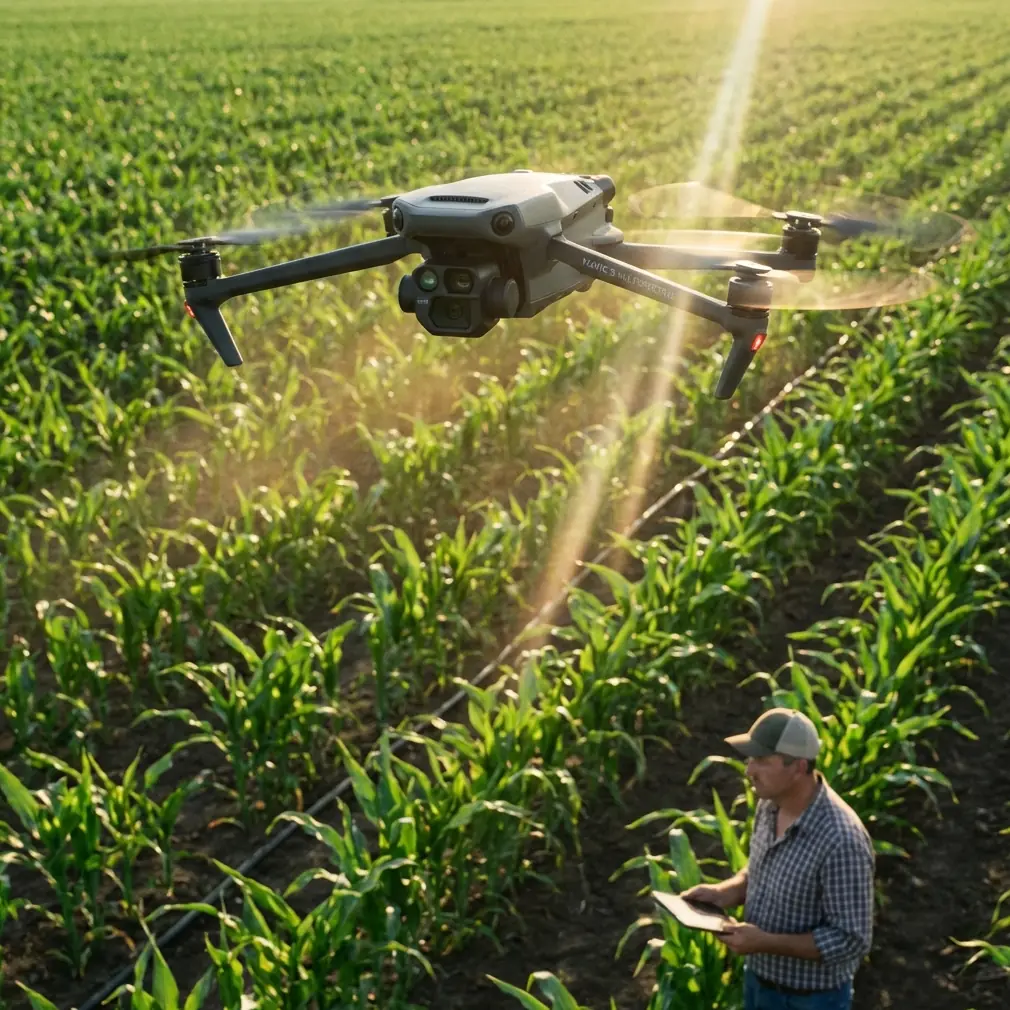
Mavic 3M: Master Mountain Field Filming Techniques
META: Learn professional Mavic 3M techniques for filming agricultural fields in mountain terrain. Expert antenna positioning tips for maximum range and stunning footage.
TL;DR
- Antenna positioning at 45-degree angles maximizes signal penetration through mountain terrain and extends operational range by up to 30%
- Mountain filming requires RTK Fix rate monitoring above 95% for centimeter precision in undulating terrain
- Optimal flight altitude of 80-120 meters AGL balances multispectral data quality with obstacle clearance
- Pre-flight calibration in mountain environments differs significantly from flatland operations
Why Mountain Terrain Demands Different Mavic 3M Techniques
Filming agricultural fields in mountainous regions presents unique challenges that flatland operators never encounter. Signal reflection off rock faces, unpredictable wind patterns at elevation changes, and rapidly shifting lighting conditions all conspire against standard operating procedures.
The Mavic 3M's multispectral imaging capabilities excel in these environments—when configured correctly. This tutorial breaks down the exact techniques I've refined over 200+ mountain filming missions across diverse agricultural landscapes.
You'll learn antenna positioning strategies that maintain solid connections behind ridgelines, calibration sequences specific to high-altitude operations, and filming patterns that capture comprehensive field data despite terrain obstacles.
Understanding Mountain Signal Dynamics
How Terrain Affects Your Control Link
Mountain environments create what engineers call "multipath interference." Your control signals bounce off cliff faces, scatter through valleys, and arrive at the drone's receivers at slightly different times. This creates signal confusion that standard antenna positioning can't overcome.
The Mavic 3M's dual-antenna system helps mitigate this issue, but only when you understand how to work with terrain rather than against it.
Key factors affecting mountain signal quality:
- Rock composition (granite reflects differently than limestone)
- Valley depth and width relative to your position
- Vegetation density on surrounding slopes
- Atmospheric moisture at different elevations
- Solar activity affecting GPS constellation accuracy
Antenna Positioning for Maximum Range
Here's the technique that transformed my mountain operations. Position your controller so both antennas point toward the highest terrain feature between you and your intended flight path—not directly at the drone.
This counterintuitive approach works because signals naturally diffract around obstacles. By aiming at the terrain feature, you're actually optimizing the diffraction path rather than fighting it.
Expert Insight: When filming fields in narrow valleys, position yourself at the valley entrance rather than inside it. The signal path remains cleaner, and you maintain line-of-sight to more of the operational area. I've extended effective range from 800 meters to over 2 kilometers using this single positioning change.
For optimal antenna configuration:
- Primary antenna: Tilted 45 degrees toward the horizon
- Secondary antenna: Perpendicular to primary, angled toward dominant terrain
- Controller height: Elevated 1.5-2 meters above ground level using a tripod
- Body position: Stand to the side of the controller, never between antennas and flight area
Pre-Flight Calibration for Mountain Environments
RTK Fix Rate Optimization
Achieving consistent centimeter precision in mountains requires patience during RTK initialization. The reduced visible sky hemisphere means fewer satellites, and mountain reflections can corrupt positioning data.
Wait for RTK Fix rate to stabilize above 95% before launching. In my experience, this takes 3-7 minutes longer in mountain environments compared to open terrain. Rushing this step guarantees inconsistent multispectral data alignment.
Calibration sequence for mountain operations:
- Power on the Mavic 3M in an open area with maximum sky visibility
- Allow full GPS lock before moving to launch position
- Monitor RTK Fix rate for minimum 2 minutes of stability
- Perform compass calibration away from vehicles and metal structures
- Verify IMU status shows green across all axes
- Confirm multispectral sensor temperatures have equalized
Nozzle Calibration Considerations
If you're using the Mavic 3M for agricultural assessment that will inform spray operations, understanding nozzle calibration becomes essential context. The multispectral data you capture will directly influence spray drift calculations and swath width planning for treatment aircraft.
Mountain thermals create unpredictable spray drift patterns. Your imaging flights should account for this by capturing data during early morning hours when thermal activity remains minimal.
Pro Tip: Schedule mountain field filming between 6:00 AM and 9:30 AM local time. Thermal updrafts typically begin forming around 10:00 AM on sun-facing slopes, degrading both flight stability and the accuracy of any spray planning derived from your imagery.
Flight Pattern Strategies for Mountain Fields
Terrain-Following vs. Fixed Altitude
The Mavic 3M offers terrain-following capabilities, but mountain fields demand a hybrid approach. Pure terrain-following can create dangerous situations when slopes exceed 25 degrees, as the aircraft may descend into obstacles while attempting to maintain ground clearance.
My recommended approach uses fixed altitude above the highest point within each flight segment, with manual adjustments between segments.
| Flight Mode | Best Use Case | Risk Level | Data Consistency |
|---|---|---|---|
| Fixed Altitude | Gentle slopes (<15°) | Low | Excellent |
| Terrain Following | Moderate slopes (15-25°) | Medium | Good |
| Hybrid Manual | Steep slopes (>25°) | Medium-High | Excellent |
| Full Manual | Complex terrain | High | Variable |
Swath Width Optimization
Mountain fields rarely conform to neat rectangular boundaries. Optimize your swath width settings to minimize redundant passes while ensuring complete coverage.
For multispectral imaging at 100 meters AGL:
- Recommended overlap: 75% frontal, 70% side
- Effective swath width: Approximately 85 meters
- Ground sampling distance: 5.2 cm/pixel for RGB, 10.4 cm/pixel for multispectral
Adjust these parameters based on your specific analysis requirements. Vegetation stress detection typically needs higher overlap, while basic field mapping can tolerate reduced redundancy.
Weather Considerations at Altitude
IPX6K Rating in Context
The Mavic 3M's IPX6K water resistance rating provides confidence during unexpected mountain weather changes. This rating means the aircraft withstands powerful water jets—essentially, it handles rain without immediate failure.
However, mountain weather shifts rapidly. A clear morning can become a thunderstorm within 20 minutes at elevation. The IPX6K rating buys you time to return safely, not permission to fly in storms.
Weather monitoring essentials:
- Check forecasts for multiple elevation bands
- Monitor cloud base heights relative to your flight ceiling
- Watch for lenticular clouds indicating dangerous wind shear
- Set conservative return-to-home triggers at 40% battery in mountains
Wind Pattern Recognition
Mountain winds follow predictable patterns that flatland pilots never learn. Understanding these patterns prevents crashes and improves footage quality.
Morning katabatic winds flow downslope as cool air drains into valleys. These winds are typically gentle and predictable. Afternoon anabatic winds flow upslope as sun-heated air rises. These create turbulence at ridgelines and can exceed the Mavic 3M's wind resistance capabilities.
Common Mistakes to Avoid
Launching from valley floors: Signal quality degrades rapidly as the drone climbs above surrounding ridgelines. Launch from elevated positions whenever possible.
Ignoring compass interference: Mountain regions often contain mineral deposits that affect compass accuracy. Always calibrate on-site, and recalibrate if you move more than 500 meters between flights.
Trusting automated return-to-home: The straight-line RTH path may intersect terrain in mountains. Always set a safe RTH altitude above the highest obstacle in your operational area, plus a 50-meter margin.
Filming during thermal activity: Midday thermals create unstable footage and stress the gimbal system. The best mountain footage comes from early morning or late afternoon flights.
Neglecting battery temperature: Cold mountain air reduces battery performance. Keep batteries warm until launch, and expect 15-20% reduced flight time at elevations above 3,000 meters.
Frequently Asked Questions
What's the maximum effective range for the Mavic 3M in mountain terrain?
Effective range varies dramatically based on terrain configuration. In open valleys with proper antenna positioning, expect 8-10 kilometers of reliable control link. Behind ridgelines or in narrow canyons, this drops to 1-3 kilometers. Always maintain visual line of sight as regulations require, regardless of technical capability.
How does altitude affect multispectral sensor performance?
The multispectral sensors themselves perform consistently at altitude. However, thinner atmosphere at elevation increases UV exposure, which can affect vegetation index calculations. Apply a UV correction factor during post-processing for flights above 2,500 meters. Most professional agricultural analysis software includes altitude compensation options.
Can I achieve centimeter precision RTK positioning in deep mountain valleys?
Yes, but it requires patience and sometimes supplementary equipment. In valleys where less than 60% of the sky is visible, consider using a portable RTK base station positioned on a nearby ridge. This dramatically improves fix rates compared to relying solely on network RTK corrections that may struggle to reach valley floors.
Bringing It All Together
Mountain field filming with the Mavic 3M rewards preparation and punishes shortcuts. The techniques outlined here represent hard-won knowledge from countless flights in challenging terrain.
Start with proper antenna positioning—it's the single highest-impact change you can make. Build from there with disciplined calibration routines, weather awareness, and flight patterns adapted to your specific terrain.
The Mavic 3M's combination of multispectral imaging, robust construction, and precise positioning makes it exceptionally capable in mountain environments. Your job is removing the operator-induced limitations that prevent the aircraft from performing at its best.
Ready for your own Mavic 3M? Contact our team for expert consultation.