
Mavic 3M on the Coast: A Technical Review of Precision
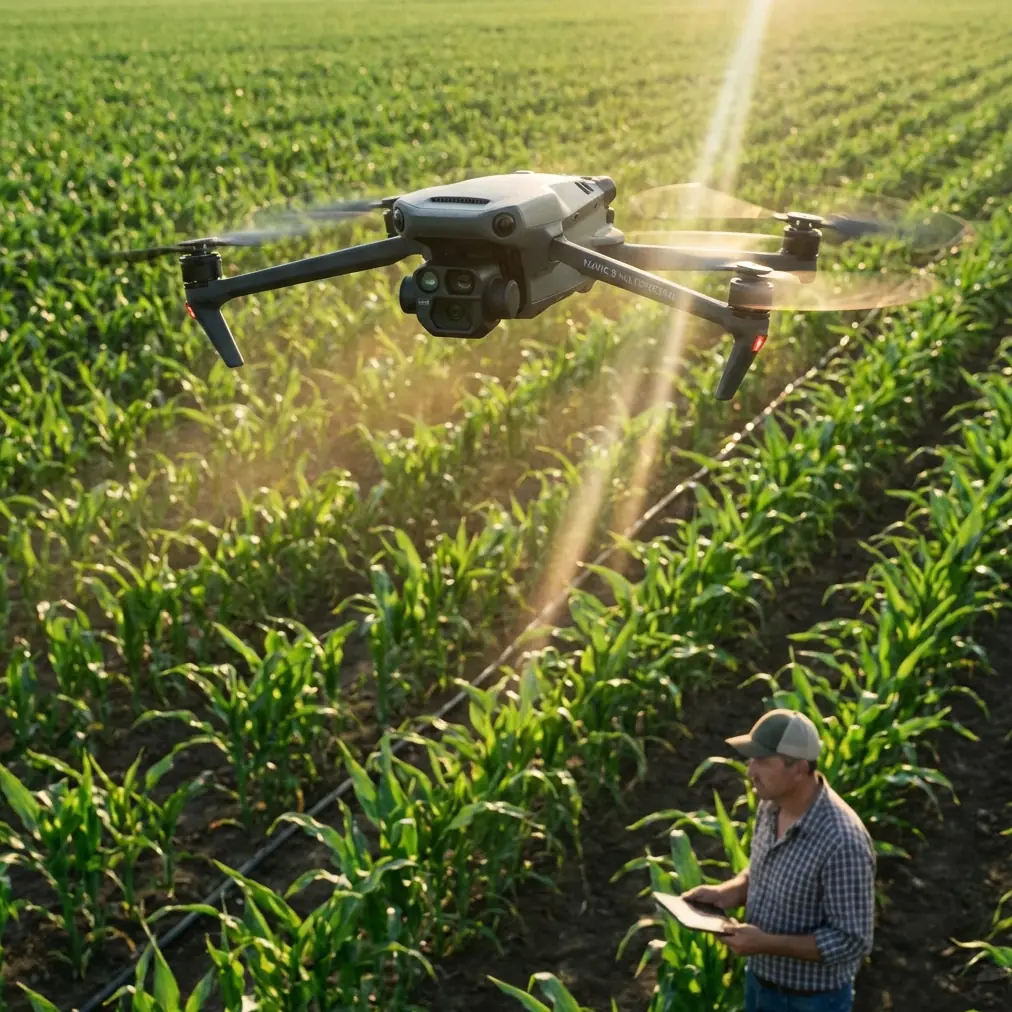
Mavic 3M on the Coast: A Technical Review of Precision Imaging, Composition Discipline, and EMI Control
META: A technical review of using the DJI Mavic 3M for coastline work, with practical insight on multispectral operations, RTK precision, composition discipline, and handling electromagnetic interference through antenna adjustment.
Coastlines punish weak workflows.
They compress almost every hard variable into one operating environment: reflective water, broken cliffs, wind shear, patchy GNSS conditions, salt exposure, and long visual lines that tempt pilots into sloppy framing. If the aircraft is a Mavic 3M, the conversation gets even more interesting, because this platform is usually discussed through the lens of agriculture and multispectral analysis, not cinematic or technical shoreline documentation. That is a mistake. In complex coastal terrain, the Mavic 3M becomes less of a “farm drone” and more of a precision data instrument that rewards disciplined operators.
This review looks at the Mavic 3M from that angle: not as a generic UAV overview, but as a working tool for coastline imaging where centimeter precision, multispectral capture, and stable composition matter more than marketing labels.
Why the Mavic 3M makes sense on coastlines
The first reason is straightforward: coastlines are not just scenic. They are dynamic survey subjects. Sand movement, vegetation stress, salt intrusion, drainage paths, cliff-edge erosion, and access route condition all change over time. A conventional RGB drone can document appearance. The Mavic 3M can document condition.
That distinction matters.
The Mavic 3M’s multispectral capability gives operators a way to detect patterns that are hard to read from visible imagery alone. In a coastal management context, that may include vegetation health variation on dunes, runoff signatures near developed edges, or stress bands across restoration zones. If you are filming or mapping a shoreline corridor for environmental monitoring, land stewardship, infrastructure planning, or training, multispectral is not a bonus feature. It changes the type of answer you can extract from the mission.
The second reason is positioning. Coastline missions often involve repeatable flights over narrow strips of land with irregular boundaries. Here, RTK fix rate and centimeter precision are not abstract specs; they determine whether your change detection is trustworthy. If a bluff edge appears to shift by a small margin, you need confidence that the variation is real and not a positioning artifact. A platform built around precise geospatial capture earns its place quickly in that setting.
The hidden challenge: composition still matters on a technical mission
One of the stranger habits in industrial drone work is pretending that framing is only for photographers. It is not. Good composition improves interpretation speed, stakeholder confidence, and reporting clarity.
A recent photography tip article in the reference material highlighted a simple principle: enable the camera’s grid lines and place the subject near the four grid intersections rather than dead center. That is the classic rule of thirds, but the operational value goes beyond aesthetics. The article’s key point was stability in the frame—avoiding images that feel crooked or awkwardly centered.
That matters with the Mavic 3M over coastlines.
When you are documenting rock shelves, sea walls, dune breaks, vegetation boundaries, or drainage outlets, a disciplined grid-based composition habit helps reduce apparent skew and makes image review easier later. If the shoreline horizon is drifting and the main subject sits awkwardly in the middle, you create unnecessary ambiguity for anyone comparing flights over time. Turning on grid lines sounds almost too basic for a technical review, yet it is one of those zero-cost habits that consistently improves field output. The source article described it as a no-extra-equipment technique, and that is exactly why it belongs in a serious Mavic 3M workflow: it raises quality without changing the aircraft, payload, or mission time.
On a coastal job, I would go further. Use the grid not only for visual balance, but for repeatability. If a drainage cut, dune toe, or cliff feature is consistently framed near a grid intersection in each mission pass, your visual archive becomes easier to compare across dates. Better framing becomes better evidence.
Multispectral on the shoreline: where it stops being an agriculture story
The industry often introduces multispectral with crop examples, then leaves it there. Coastal work deserves its own interpretation.
On dunes and transitional coastal ground, multispectral capture can reveal uneven vegetation vigor, which may point to salt stress, foot traffic pressure, waterlogging, or early destabilization. Along access corridors, it can help identify disturbance patterns before they become obvious in RGB imagery. Near outfalls or low-lying runoff channels, spectral contrast can support more targeted inspection planning.
This is where terms like swath width and RTK fix rate stop sounding like checklist jargon. Swath width governs coverage efficiency in long, linear shoreline corridors. A wider effective pass strategy can reduce total mission count, but only if overlap and terrain response remain reliable in uneven coastal relief. RTK fix rate then determines whether those multispectral data layers align well enough to support serious analysis. If the aircraft is drifting in and out of a robust fix near cliffs, structures, or interference sources, your mosaics and derived maps can lose the precision that makes Mavic 3M valuable in the first place.
The shoreline also introduces a practical issue many operators underestimate: reflected light and surface uniformity can make visible assessment deceptively simple while hiding subtle condition changes. Multispectral gives you another layer of truth. Not always dramatic. Often decisive.
Electromagnetic interference near the coast: antenna adjustment is not a minor skill
The narrative spark in the brief pointed to electromagnetic interference and antenna adjustment, and that deserves direct treatment.
Coastal environments are full of EMI trouble spots. Marinas, communication towers, utility lines near sea defenses, resort infrastructure, parked vehicles with active electronics, metal railings on lookouts, and even ad hoc field stations can all complicate signal quality. Add terrain masking from cliffs and you have a recipe for unstable link behavior or degraded positioning confidence if the operator gets casual.
The answer is not panic. It is aircraft discipline.
Antenna adjustment is often taught as a beginner topic, then ignored by experienced pilots who assume they can “feel” their way through a flight. On a Mavic 3M mission that depends on clean telemetry and consistent positioning, that attitude can cost data quality. Proper antenna orientation to maintain the strongest possible signal path is one of the simplest ways to reduce avoidable link degradation. Near a rocky headland or elevated coastal path, even small body movements by the pilot can change the geometry between controller antennas and aircraft. If you are working near EMI sources, check orientation before launch, then reassess as the aircraft transitions along the shoreline.
The operational significance is substantial. Better antenna alignment can help preserve control stability, video reliability, and mission continuity in areas where electromagnetic clutter might otherwise force a reshoot. And on Mavic 3M, a reshoot is not just lost time. It can break temporal consistency in lighting, tide stage, or wind conditions.
If your team is planning shoreline workflows and wants to compare field setups or signal-management habits, this direct WhatsApp line can be useful: message a drone specialist.
Precision flight is not only about software
One of the more interesting reference documents was not about Mavic 3M at all. It described an educational drone exercise where students plan a route and deliver a small gift by removing an upper module and placing the item on the aircraft. At first glance, that seems unrelated to coastal imaging. It is not.
The core lesson is route planning for precision.
That training example asks the operator to design a flight path carefully enough to deliver something small, and even suggests placing challenge cards on the ground to improve flying accuracy. Strip away the classroom framing and you get a principle that applies directly to the Mavic 3M: precise missions are built, not improvised.
On a coastline, that means preplanning entry points, altitude transitions, shoreline offsets, and turnaround geometry before the props spin. It means identifying where terrain may degrade line of sight, where reflective water may complicate visual judgment, and where interference sources may require antenna repositioning. It also means understanding that repeatable data capture depends on repeatable path design. The educational source framed accuracy as a game-like challenge. In professional coastline work, it becomes a data integrity requirement.
That is also why centimeter precision should be respected as part of a system, not treated as a magic outcome of the aircraft alone. RTK can deliver exceptional positional confidence, but only if the operator supports it with disciplined mission structure.
What coastal operators can borrow from a throttle-control document
Another reference document covered ESC input behavior, with details such as a default PPM throttle range of 1150us to 1830us, calibration limits from 1000us to 2000us, and a requirement that minimum-to-maximum throttle difference exceed 520us. It also mentioned motor power limiting to 75% above 140°C.
None of that is a Mavic 3M spec sheet item, and it should not be misrepresented as one. But as background engineering context, it highlights a useful truth for coastal drone operations: control systems depend on calibrated ranges, and thermal limits are real.
Operationally, this matters in two ways.
First, smooth, predictable flight comes from respecting calibration logic and control response, not from overcorrecting every gust. Coastal air is messy. Pilots who make abrupt stick inputs while fighting terrain-induced turbulence often degrade image quality more than the wind itself does. The ESC reference reminds us that flight systems are built around defined signal behavior. Good operators work with that behavior. They do not jab at the controls and hope stabilization hides the mistake.
Second, thermal protection in power systems is worth remembering around salt, sun, and extended low-altitude work over reflective surfaces. A figure like 140°C triggering power limitation to 75% in one ESC context is a reminder that heat management is not theoretical. Long missions on bright coastlines can load systems in ways that are easy to overlook. Even if the exact thresholds differ by platform, the principle stands: thermal margin should be part of mission planning, especially when repeated passes, low airflow maneuvers, or hot launch surfaces are involved.
Spray drift, nozzle calibration, and why agriculture terms still belong here
The context list included spray drift and nozzle calibration, terms that normally belong to application drones rather than the Mavic 3M. But they are relevant if your coastline work overlaps with vegetation management, buffer-zone assessment, or comparative planning between scouting and treatment operations.
Mavic 3M is not there to apply material. It is there to inform the decision.
For example, a coastal estate, wetland edge, or erosion-control planting zone may need a scouting mission before any treatment planning is considered. Multispectral capture can help identify uneven vigor or stress patterns first. That upstream intelligence helps downstream teams think more carefully about spray drift risk, treatment boundaries, and nozzle calibration requirements on separate application platforms. In other words, the Mavic 3M can become the reconnaissance layer that makes later field decisions more defensible.
That is an underappreciated role. Not glamorous. Very useful.
What this platform does best in difficult shoreline terrain
The Mavic 3M is strongest when the mission calls for repeatable, georeferenced environmental intelligence rather than pure visual spectacle. On complex coastlines, that usually means three things happening together:
- precise route execution,
- stable positional performance,
- and image discipline that supports interpretation later.
The first is a pilot skill. The second depends on RTK quality, antenna management, and local interference awareness. The third can be improved by surprisingly simple habits like enabling grid lines and using off-center composition intentionally, exactly as the photography reference advised.
That combination is what separates a pretty flight from a useful one.
A shoreline dataset captured with multispectral layers, consistent framing, and solid centimeter-level positioning can support restoration monitoring, infrastructure inspection, training exercises, and environmental reporting. A loosely flown mission with poor composition and ignored EMI cues may still look dramatic on a screen, but it will not hold up when someone asks what changed, where, and by how much.
Final assessment
For coastline work in complex terrain, the Mavic 3M is best understood as a precision observer. Its real strength is not that it can fly along the sea and produce attractive imagery. Many drones can do that. Its value lies in combining multispectral insight with repeatable positioning and mission-grade documentation discipline.
Two small details from the source materials actually capture that ethos well. One is the phone-photography advice to switch on grid lines and use the rule of thirds to avoid unstable, awkward framing. The other is the educational drone exercise that emphasizes planning a flight route carefully enough to deliver a small object accurately. Together, they point to the same operating philosophy: quality in the air starts long before the shutter clicks.
Apply that to the Mavic 3M, add careful antenna adjustment in EMI-prone coastal zones, and the aircraft becomes far more than a niche mapping tool. It becomes a reliable platform for seeing coastal terrain clearly, repeatedly, and with the kind of structure that makes the data worth trusting.
Ready for your own Mavic 3M? Contact our team for expert consultation.