
Mavic 3M Field Report for High-Altitude Wildlife Delivery
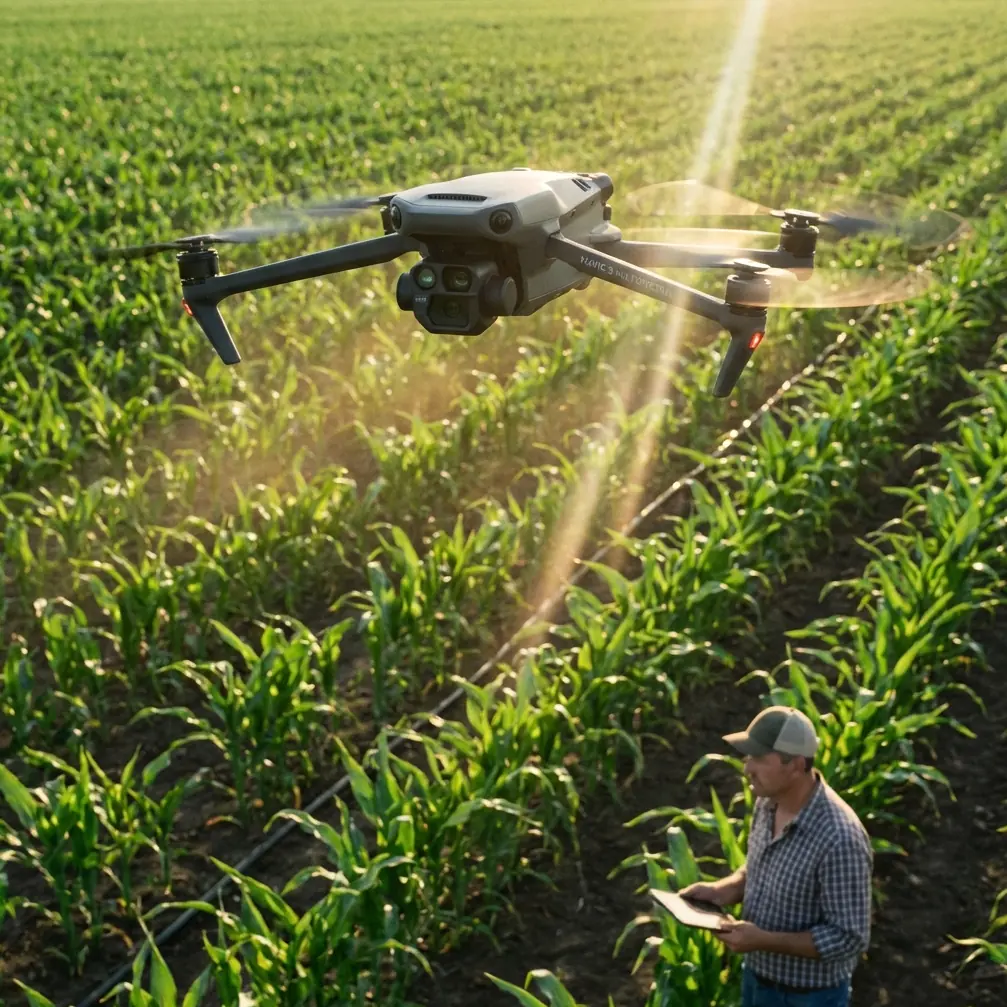
Mavic 3M Field Report for High-Altitude Wildlife Delivery: Why Redundancy and Height Discipline Matter More Than Speed
META: A field-style expert article on using the Mavic 3M in high-altitude wildlife support missions, with practical insight on flight altitude, sensor cross-checking, and fault-tolerant planning drawn from recent drone healthcare logistics news and UAV redundancy references.
High-altitude wildlife support pushes drone planning into a different category. Thin air changes aircraft behavior. Terrain confuses visual judgment. Wind can be local, abrupt, and unforgiving. And when the mission involves delivering critical items for wildlife management, veterinary support, or remote habitat intervention, the usual drone conversation about convenience stops being useful.
This is where the Mavic 3M deserves a more careful reading.
I am not treating the aircraft here as a generic mapping platform. The more interesting question is how a Mavic 3M fits into a real-world delivery-adjacent workflow for wildlife teams operating in elevated terrain, where flight altitude discipline, sensor logic, and failure tolerance become operational priorities. Recent developments elsewhere in the drone sector help frame that discussion. At XPONENTIAL 2026 in Detroit, CVS Health outlined “CVS Air Response,” an emerging drone-enabled network for healthcare logistics and emergency response, with SkyfireAI and Thales emphasizing healthcare logistics, emergency response, and disaster resilience. That announcement was not about wildlife. Still, the signal is obvious: the serious end of drone operations is moving toward time-sensitive transport ecosystems where reliability matters as much as airframe capability.
For wildlife work in high-altitude areas, that same reliability mindset should shape how operators use the Mavic 3M.
The hidden challenge in “delivery” with a Mavic 3M
Let’s be clear: the Mavic 3M is primarily associated with multispectral data capture, vegetation analysis, and precision mission planning. Its strengths are usually discussed in terms like multispectral output, RTK-supported positioning, and centimeter precision. Those matter here too, but not in the obvious way.
In high-altitude wildlife missions, the first value of the Mavic 3M is often not the payload itself. It is the aircraft’s ability to validate conditions before any direct intervention happens. A wildlife team may need to move medical supplies, feed supplements, monitoring tags, or sampling materials to a remote point. The Mavic 3M can serve as the intelligence platform that confirms terrain access, landing viability, route exposure, and habitat condition. In some workflows, it may support the delivery chain rather than act as the heavy-lift endpoint.
That distinction matters because altitude strategy becomes less about “how high can it go” and more about “how low can it safely and consistently operate over uneven ground while preserving positional confidence.”
The 250 cm lesson that scales up surprisingly well
One of the most useful reference points in the source material comes from an educational DJI drone programming example, not from a glamorous field deployment. In that example, the aircraft is programmed so its maximum height above ground does not exceed 250 centimeters. Two independent measurements are cross-checked: a TOF height sensor and a barometric reading. The sample baseline barometric height at takeoff is -56.92 meters, and the corresponding upper threshold for a 2.5-meter climb becomes -54.42 meters. The logic is simple: if either sensor indicates excessive height, the aircraft stops climbing, hovers, and then lands.
That indoor training example may sound small compared with mountain wildlife operations, but the principle is exactly the one experienced field teams need at altitude.
Why? Because high-altitude missions are often compromised by bad assumptions about vertical separation. In sloped or broken terrain, “safe height” is not a single number. It is a relationship between terrain rise, wind exposure, downdraft risk, and sensor reliability. The takeaway from the 250 cm example is not the literal altitude. It is the control philosophy: do not trust one source of truth when altitude errors have consequences.
For Mavic 3M operators, this means building flight plans around layered height awareness:
- terrain-following logic where appropriate,
- visual margin above vegetation or rock outcrops,
- barometric sanity checks,
- and mission abort thresholds that are conservative rather than optimistic.
In wildlife support, especially near ridgelines or elevated nesting zones, that discipline protects both the aircraft and the habitat. Flying unnecessarily high can increase drift, reduce observation detail, and make route corrections sloppier. Flying too low without a sensor cross-check can put the aircraft into rising terrain or rotor wash from cliff edges. The sweet spot is rarely intuitive.
Optimal flight altitude: lower than many teams think, but more structured
For this scenario, the best operational altitude is usually not “as high as practical.” It is “as low as conditions allow while preserving stable navigation, obstacle clearance, and mission visibility.” With the Mavic 3M, that often means using a stepped altitude profile rather than one fixed cruise height.
Here is the reasoning.
At high altitude, wind gradients can change dramatically over short vertical distances. Climbing an extra few meters above a ridge shoulder may move the drone from a manageable airflow layer into a far more turbulent one. A lower pass can improve route stability and visual control, especially when the mission includes locating a precise drop zone, inspecting a feeding station, or verifying that wildlife is clear of the approach path.
The source document’s dual-threshold logic is useful here. In practical Mavic 3M terms, teams should define altitude not just by a mission planner value but by at least two operational references:
- clearance above the local surface or canopy;
- a second independent indicator tied to expected aircraft behavior or terrain model.
That is the same underlying idea as using TOF plus barometric height in the training reference. In mountain wildlife operations, the exact sensors and software stack differ, but the principle survives intact: altitude control should be verified, not assumed.
If you are planning repeated missions to the same wildlife corridor, a smart method is to begin with a reconnaissance grid using the Mavic 3M’s imaging strengths, then derive a route with tightly bounded vertical envelopes. This is where centimeter precision and RTK Fix rate become more than marketing terms. A strong RTK lock reduces uncertainty when revisiting a drop point or a narrow access shelf. In steep terrain, a few meters of horizontal drift can become a major vertical safety problem because the ground beneath the aircraft may rise quickly.
Redundancy is not a luxury feature. It is a mission philosophy.
Another source document makes a point that many operators skip until they have a close call: redundancy exists for the moments when something does not behave as planned. The example is direct. If one motor fails, the others may still allow a controlled descent. If a power circuit fails, another circuit can maintain operation. The same logic is extended to two power batteries and two flight control systems, so that one failure does not immediately end the flight.
Now, the Mavic 3M is not being described here as a dual-flight-controller platform in the literal configuration outlined in that educational text. That would be inaccurate. The operational value lies in the concept behind the reference: wildlife support missions in harsh terrain should be built around redundancy at the system level, even when the airframe itself is compact.
For Mavic 3M teams, redundancy should show up in at least four places:
1. Redundant decision-making on altitude
Do not rely on one telemetry stream. Compare mission-planned height, live visual cues, and terrain expectation. If one does not make sense, pause.
2. Redundant navigation confidence
A route should still be recoverable if RTK degrades. If your fix rate drops in a mountain valley, the pilot should already know the fallback corridor and return criteria.
3. Redundant communications workflow
Wildlife delivery missions often involve a remote field team, a visual observer, and a receiving crew. Every critical action should be confirmed through a second channel or explicit verbal protocol.
4. Redundant mission purpose
The flight should still produce useful data even if the delivery component is postponed. This is one reason the Mavic 3M is especially valuable. If weather closes the transport window, multispectral and visual reconnaissance can still inform habitat health, access routes, and surface conditions.
That final point is overlooked. In the best commercial drone programs, one sortie can support several outcomes. The healthcare logistics sector appears to understand this already. The significance of CVS Air Response is not only that drones may move items. It is that a broader response network is being designed around resilience. Wildlife programs in remote, high-altitude regions should think the same way.
Why multispectral intelligence matters before the drop
The Mavic 3M’s multispectral capability may seem peripheral to a wildlife delivery discussion, but in elevated terrain it can be surprisingly practical.
A drop zone that looks acceptable in RGB imagery may be saturated, unstable, or densely vegetated in ways that create rotor interference or snag risk. Multispectral data can help teams evaluate vegetation density, moisture-related stress patterns, and seasonal changes in landing or staging areas. If the mission is linked to feeding support, habitat restoration, or veterinary intervention around grazing animals, the aircraft can also provide better context on forage conditions before field crews commit to a route.
This is one place where the agriculture language around swath width, spray drift, and nozzle calibration can be translated carefully into wildlife operations. Not literally for spraying, but as planning concepts. Drift awareness teaches the same lesson as mountain wind management: the atmosphere moves your mission off target faster than your screen suggests. Coverage planning through swath width logic reminds operators to design repeatable, gap-free observation patterns rather than improvising over complex ground.
With the Mavic 3M, precision is most valuable when it reduces guesswork.
High altitude changes failure consequences
The BLHeli technical reference in the source set is a reminder that motor control behavior is never abstract. Parameters such as startup power, commutation timing, throttle change rate, damping force, and demagnetization compensation all exist because rotorcraft stability depends on how power is delivered, not merely that it is available. The table includes startup power values ranging from 0.031 up to 1.50, and throttle change rate options from 2 to 255. While Mavic 3M operators are not tuning it like a custom-built craft, the operational lesson is still relevant: aggressive throttle transitions and marginal power behavior become more consequential when air density drops and terrain leaves less room for recovery.
This matters in wildlife delivery support because high-altitude sorties often tempt pilots into abrupt corrections. They see a gust. They overreact. They climb too quickly or brake too hard near a slope. The right answer is usually smoother control inputs, wider buffers, and route geometry that minimizes the need for sharp power changes in the first place.
In other words, the mission should be designed to avoid stressing the aircraft, not to prove it can survive stress.
A practical field profile for the Mavic 3M
If I were advising a conservation or wildlife health team using a Mavic 3M in elevated terrain, I would structure the operation like this:
- First sortie: reconnaissance only, with multispectral and visible imaging to validate surface conditions, vegetation, and access corridors.
- Second step: establish a conservative altitude envelope tied to terrain features, not a single blanket height.
- Third step: use RTK-supported repeatability where available, but define fallback behavior for degraded positioning.
- Fourth step: maintain a short final approach profile to the target area, minimizing unnecessary exposure above ridgelines.
- Fifth step: treat every flight as a resilience exercise, with a clear abort path, alternate landing area, and communications redundancy.
If your team wants to discuss route logic or altitude planning for this kind of mission profile, this direct WhatsApp line is the most practical starting point: https://wa.me/85255379740
The bigger lesson from healthcare logistics
The XPONENTIAL 2026 discussion around CVS Air Response points to a broader maturity in drone operations. The industry is moving beyond aircraft fascination and toward network thinking: who receives the payload, what happens if one leg fails, how the system adapts during disruption, and how reliability is demonstrated rather than claimed.
That is exactly the lens wildlife operators should bring to the Mavic 3M.
Not “Can it fly there?” A better question is, “Can it produce a safe, repeatable, altitude-disciplined mission outcome there, even when conditions are imperfect?”
The references in this brief, taken together, suggest a very specific answer. Use cross-checked altitude logic. Respect redundancy as a planning principle. Build smoother, lower, more deliberate profiles in high terrain. And let the Mavic 3M do what it does best: convert uncertainty into actionable field intelligence before risk compounds.
For wildlife delivery support at altitude, that is often the difference between a successful operation and an avoidable incident.
Ready for your own Mavic 3M? Contact our team for expert consultation.