
Mavic 3M in Extreme-Temperature Wildlife Operations
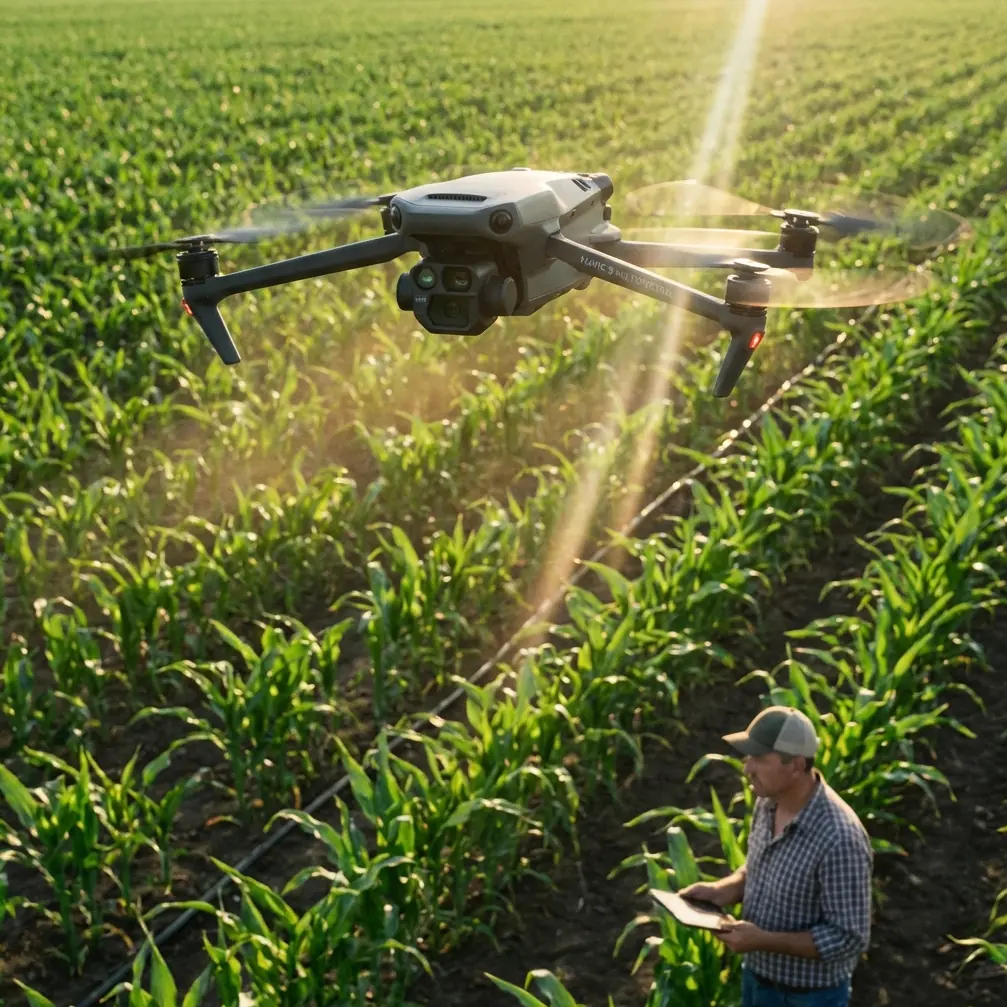
Mavic 3M in Extreme-Temperature Wildlife Operations: A Technical Review Built Around Safety, Mapping Fidelity, and Pre-Flight Discipline
META: A technical review of Mavic 3M best practices for wildlife delivery and field mapping in extreme temperatures, with practical guidance on safety checks, multispectral workflow value, and mission planning.
The Mavic 3M is usually discussed through the lens of crop intelligence. That is too narrow for serious field teams. In wildlife operations, especially in harsh temperature bands, the aircraft’s value is less about farming as a category and more about something more fundamental: repeatable low-altitude data capture when people cannot afford delays, misidentification, or unstable workflows.
That last point matters more than most operators admit.
A recent aviation-related publicity mistake, where a defense poster reportedly used the image of the wrong aircraft and identified a non-domestic platform incorrectly, is a reminder that visual systems fail when teams trust appearances more than verification. The operational lesson for Mavic 3M users is simple and civilian: in wildlife work, don’t assume the image, label, or field note is correct just because it looks plausible. Verify every layer of information before the aircraft leaves the ground, and verify the collected outputs again before any habitat or delivery decision is made.
For teams using the Mavic 3M to support wildlife delivery in extreme temperatures, that mindset is not academic. It affects route confidence, landing zone choice, habitat disturbance, and whether your multispectral interpretation is useful or misleading.
Why Mavic 3M Fits This Niche Better Than a Generic Drone
The Mavic 3M earns attention because it sits at the intersection of portability and actionable data. For wildlife support missions, that matters more than raw airframe size. Field crews often work in areas where access is restricted by terrain, weather windows, or conservation protocols. A platform that can be deployed quickly, produce structured imagery, and return consistent geospatial outputs has an obvious advantage.
That aligns closely with what mature civil UAV practice has already proven in another demanding sector: water management and flood-related survey work. One technical review on UAV use in that field noted that the most mature and widely adopted civilian use case is aerial surveying, using onboard cameras and LiDAR to quickly acquire data and convert it into products such as DEM, DOM, and DLG. Those three outputs are not just mapping jargon. In wildlife logistics, they translate into terrain understanding, route context, and reliable base layers for repeated missions.
A DEM helps the operator understand elevation shifts that can alter wind behavior and energy use in hot or cold conditions. A DOM provides corrected image context that is far more dependable than raw visual impressions. A DLG-style linework layer can support planning around fences, streams, ridges, staging points, and exclusion areas.
The same source also highlighted why UAV survey became attractive in the first place: short implementation cycles, lower cost, and access to high-precision surface data that avoids the discontinuity and inefficiency of manual measurement. For wildlife teams delivering supplies, veterinary payloads, or monitoring support in extreme conditions, those advantages carry over directly. The faster a mission can be prepared without sacrificing precision, the lower the stress on both the aircraft and the habitat.
The Best Pre-Flight Step Is the One Most Teams Rush
The prompt for this review asked for a pre-flight cleaning step tied to safety features. That is the right place to start.
Before any cold-weather dawn launch or heat-stressed midday sortie, clean the aircraft deliberately. Not cosmetically. Operationally.
Focus on the vision sensors, landing gear contact surfaces, camera windows, battery contacts, and cooling vents. Dust, condensation residue, salt, dried mud, insect strikes, pollen film, and transport lint all change how the aircraft interprets the world. On a platform used for precision imaging, a dirty sensor is not a minor maintenance issue. It is a data integrity problem.
This is where a lesson from another branch of unmanned aviation becomes surprisingly relevant. A technical profile of a passenger-capable drone project described several embedded safety concepts, including built-in safety systems, automatic descent to a safe location after loss of contact, and centralized fine-control oversight. While the Mavic 3M is a different class of aircraft entirely, the principle carries over: safety automation only works as intended when the hardware can sense properly and respond predictably. If the optical path is fouled or the airframe is carrying residue that affects thermal behavior, you are asking software to compensate for preventable neglect.
In extreme temperatures, cleaning also becomes a performance check. Frost film around sensors, cracked grime on folding joints, or heat-softened debris near vents should trigger a pause. The safest mission is sometimes the one delayed by eight minutes for a proper wipe-down.
My recommendation is to formalize this step in the checklist:
- Remove battery and inspect contacts.
- Clean visible sensors with approved lens material.
- Check camera glass for streaking under angled light.
- Inspect vent openings for dust or vegetation fibers.
- Examine landing surfaces for mud, ice, or salt crust.
- Power on and confirm sensor status before takeoff.
That sequence sounds basic until it saves an afternoon of unusable data.
Extreme Temperatures Change More Than Battery Life
Operators often reduce temperature planning to one issue: endurance. Endurance matters, but it is only part of the picture. In wildlife delivery scenarios, extreme heat and cold affect at least four mission variables that should shape how a Mavic 3M is flown.
1. Image reliability
Multispectral work depends on consistency. Low-angle winter light, high reflectance from dry ground, and thermal shimmer over hot surfaces can all distort interpretation. If you are using Mavic 3M outputs to identify forage stress, water access patterns, vegetation condition, or animal-use corridors, environmental extremes can produce false signals unless your capture window is controlled.
2. Terrain-induced risk
Aerial survey literature repeatedly emphasizes the value of rapid topographic products like DEMs. That matters because extreme temperatures often amplify microclimate behavior. Cold air pools in low zones. Hot air rises off rock and bare ground. Wind shear near escarpments can be more noticeable than a flat-map plan suggests. Centimeter precision is useful only if it feeds practical route judgment.
3. Recovery margin
A mission flown near the edge of endurance in mild weather may become irresponsible in severe conditions. Wildlife support teams should reserve a larger landing margin than they would for a standard visual mapping job, particularly if the route includes uneven terrain or difficult retrieval access.
4. Human decision quality
Cold hands, heat stress, and time pressure degrade crew discipline. This is where a structured Mavic 3M workflow is worth more than improvisation. Predefined flight envelopes, launch criteria, and abort thresholds reduce error.
Mapping for Wildlife Delivery Is Not the Same as Mapping for Agriculture
The Mavic 3M’s multispectral capability invites an agricultural mindset, but wildlife operations need a different interpretation framework.
In crop work, the goal is often to measure vigor variations within a managed field. In wildlife work, the same sensor logic can help identify habitat transitions, stressed vegetation around water sources, changes in browse condition, or disturbance patterns along a route. The aircraft becomes a decision-support tool for where to stage, where to avoid, and where a delivery may cause the least disruption.
This is why the mapping workflow described in civil UAV surveying literature is so relevant. Rapid image capture followed by structured processing into DEM, DOM, and derived products gives teams a repeatable reference system rather than anecdotal impressions. If a remote conservation site is being serviced across a hot month and then again during a cold snap, you need comparable data layers, not just separate flights.
That same literature also described the use of UAV-based LiDAR and aerial data in mountain catchments across regions including Beijing, Jiangxi, Hunan, Henan, Anhui, Guizhou, Guangxi, Heilongjiang, and Guangdong. The operational significance is not the province list itself. It is the fact that UAV methods were tested across varied terrains and conditions to improve field investigation efficiency. That broad regional experience reinforces a key point for Mavic 3M users: rugged geography is exactly where disciplined UAV workflows prove their value.
Accuracy Is Meaningless Without Verification
The industry likes phrases like RTK fix rate and centimeter precision. Those metrics matter, but they should never become a substitute for quality control.
The earlier misidentification case involving an incorrect aircraft image in a public-facing visual asset is a useful cautionary tale. Even large organizations can publish confident errors when review chains break down. In civilian drone operations, the same problem appears in smaller forms: mislabeled orthomosaics, wrong mission folders, unverified habitat annotations, or spectral interpretations accepted without ground truth.
For a Mavic 3M wildlife mission, verification should happen at three levels:
- Before flight: Confirm mission objective, payload relevance, expected lighting conditions, and sensor cleanliness.
- During flight: Monitor aircraft behavior, overlap consistency, and environmental changes rather than just progress bars.
- After flight: Validate outputs against known ground features and field observations before acting on them.
If your team uses RTK, fix rate should be treated as one confidence indicator, not a guarantee. If the map is misregistered by process error or interpreted without context, precision on paper will not rescue the decision.
Where “Delivery” and “Observation” Intersect
The reader scenario here is “delivering wildlife in extreme temps,” which likely means transporting support items to remote locations linked to conservation, rehabilitation, or monitoring operations. In these missions, the Mavic 3M can play two roles.
First, it can support route intelligence. Multispectral and visual data can reveal whether the selected path crosses stressed vegetation, soggy ground, newly eroded channels, or high-disturbance zones. In difficult temperature conditions, avoiding a poor landing or release area is often more valuable than shaving a few minutes off flight time.
Second, it can support post-delivery verification. Did the drop or placement occur where intended? Has the nearby vegetation changed between missions? Has water access shifted enough to require a new staging strategy? Repeated, structured captures answer those questions far better than ad hoc visual checks.
This is also where LSI ideas like swath width and nozzle calibration deserve careful handling. The Mavic 3M is not a spraying platform, so terms like spray drift and nozzle calibration only become relevant if your wildlife project interfaces with broader land-management operations nearby. For example, if habitat support zones border agricultural treatment areas, knowing where drift risk exists can affect timing and route design, even if the Mavic 3M itself is only surveying. Context matters more than jargon.
Standards and Safety Still Limit Good Technology
One of the strongest points in the water-management UAV reference was not about capability but about constraint. It noted that UAV growth is still affected by gaps in industry standards, regulatory systems, safety management, the broader supply chain, and core technologies such as flight control, batteries, communication and navigation, and data processing.
That observation from 2016 still has operational relevance. For Mavic 3M teams in wildlife work, especially in extreme temperatures, good outcomes depend on more than the aircraft. You need documented crew procedures, battery handling rules, environmental thresholds, and data review standards. A well-equipped team without those controls can still generate poor maps and risky flights.
This is one reason I advise organizations to write mission SOPs around environmental triggers rather than generic model-based checklists. The aircraft may be capable; the mission may still be unsuitable.
If your team is building or auditing that kind of workflow, a direct field discussion is often faster than a long email chain—use this technical coordination channel when timing and deployment details need to be clarified quickly.
Practical Mavic 3M Best Practices for Extreme-Temperature Wildlife Work
Here is the condensed field logic I would use:
- Clean first, not last. Safety and mapping quality both depend on uncontaminated sensors.
- Plan around terrain, not just distance. DEM-informed route logic is more useful than straight-line assumptions.
- Capture at consistent times when possible. Multispectral comparison suffers when environmental conditions drift too far between missions.
- Leave recovery margin. Extreme temperatures reduce operational forgiveness.
- Verify your outputs. A visually convincing map can still be wrong.
- Document anomalies. Wind shifts, condensation, glare, and unexpected reflectance should be logged for future interpretation.
- Respect workflow discipline. A compact, advanced aircraft is still part of a larger system involving people, software, and site conditions.
The Mavic 3M is not valuable because it is popular. It is valuable because, in the right hands, it turns difficult field environments into measurable, reviewable, and repeatable operations. That is exactly what wildlife support teams need when temperature stress narrows the margin for error.
Ready for your own Mavic 3M? Contact our team for expert consultation.