
How I’d Use the Mavic 3M for Delivering Venue Planning in Re
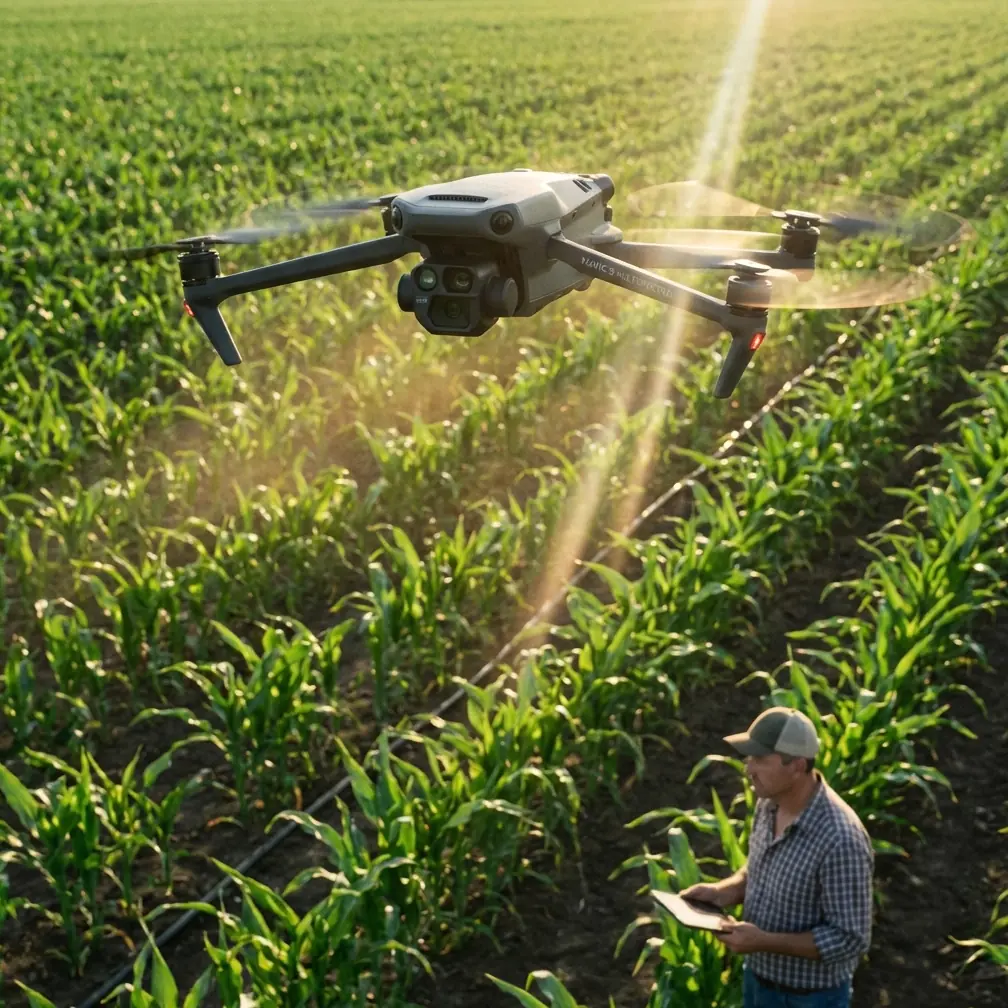
How I’d Use the Mavic 3M for Delivering Venue Planning in Remote Areas
META: A field-focused guide to using the DJI Mavic 3M for remote venue delivery planning, route scouting, RTK alignment, multispectral interpretation, and range-minded flight setup.
Remote venue work exposes every weak assumption in a drone workflow.
A site can look straightforward on a desktop map, then turn awkward the moment you arrive: uneven access roads, unreliable mobile signal, trees blocking line-of-sight, wet ground that changes vehicle approach, and no obvious staging area for crews or supplies. If your brief involves planning deliveries or supporting venue logistics in a remote area, the Mavic 3M can be more useful than people expect—but only if you stop treating it like a generic camera drone.
I’m writing this from the perspective of someone who cares less about brochure claims and more about whether a flight actually helps a team make decisions on the ground. For remote venue delivery planning, the Mavic 3M earns its place because it can turn a broad site visit into measurable spatial data. The real value is not just imagery. It’s confidence in where vehicles can go, where people should unload, where temporary paths may fail, and which areas need protection before operations begin.
There’s also a bigger industry context worth paying attention to. On May 13, ePropelled announced a new integrated propulsion and power system aimed specifically at agricultural UAVs, a sign that purpose-built drone power architectures are becoming more specialized as precision field operations expand worldwide. That matters even if you are flying a Mavic 3M rather than a spray platform. Why? Because it shows where professional drone operations are heading: less improvisation, more mission-specific reliability. Remote venue support sits in that same trend line. Clients increasingly expect aircraft, workflows, and outputs tailored to the operational task, not hobby habits dressed up as commercial practice.
Why the Mavic 3M fits remote venue delivery planning
The Mavic 3M is often discussed through an agriculture lens because of its multispectral capability. Fair enough. But for remote venues, that same sensor package can help identify surface variability, vegetation stress, water accumulation patterns, and route-side conditions that ordinary RGB alone may understate.
If you’re trying to deliver equipment, temporary structures, catering supplies, medical support gear, or event infrastructure into a remote venue, you need answers to practical questions:
- Which approach path stays usable after rain?
- Where can heavier loads be staged without rutting the ground?
- Which corridor offers the cleanest, safest access for repeated trips?
- Where are the hidden choke points near treelines, embankments, or drainage lines?
- Which open areas look acceptable from above but are actually compromised by surface moisture or unstable vegetation?
This is where multispectral data matters operationally. It doesn’t replace common sense or boots-on-ground inspection. It sharpens it. Healthy, dense vegetation and stressed vegetation do not behave the same under foot or under vehicle pressure. Surface patterns around a venue can signal drainage behavior, compaction differences, and recurring soft-ground risk. That can influence delivery timing, vehicle selection, and route segregation.
For remote sites, centimeter precision also changes the conversation. If you are building a logistics map that several contractors will use, “roughly there” is not enough. A strong RTK fix rate gives your orthomosaic and route references much more practical value when teams need to agree on exact staging points, temporary fencing lines, access corridors, or landing zones for support operations.
Start with a logistics-first mission plan, not a photo-first one
One mistake I see too often is launching the Mavic 3M as if the goal is simply to “capture the site.” That creates attractive images and weak decisions.
For delivery venue planning, I structure the mission around three output layers:
Primary access model
This maps the main route from public road or trailhead to the active venue footprint.Contingency route model
This identifies a backup path if weather, crowd flow, or ground degradation blocks the primary route.Operational zones model
This marks unloading areas, turning radii, pedestrian separation lines, temporary storage zones, and no-go surfaces.
The Mavic 3M’s multispectral capability becomes most useful when the site has mixed terrain—grass, scrub, compacted soil, gravel, wet transitions, irrigation remnants, or low-lying areas. In those environments, the contrast between what looks navigable and what is repeatedly unreliable becomes much clearer when you compare spectral behavior with standard visual imagery.
This is also where swath width affects field efficiency. A wider effective coverage pattern lets you survey more of the venue perimeter and route network in fewer passes, which matters when you are working in remote locations with limited setup windows or changing weather.
My field setup for maximum range and cleaner link stability
The most overlooked range issue is not the aircraft. It’s antenna positioning.
If you want the best possible transmission performance during remote venue work, keep the controller antennas oriented so their broad sides face the aircraft rather than pointing the tips directly at it. A surprising number of pilots still do the opposite. The result is weaker link quality exactly when they need stable telemetry for mapping lines farther from the takeoff point.
A few practical habits help:
- Stand where the first third of the mission has clean line-of-sight.
- Avoid parking yourself next to metal vehicles, temporary fencing, or generators.
- Don’t launch from a depression if the route climbs behind trees or terrain.
- Reposition the pilot station if needed between sorties instead of forcing one bad takeoff location to serve the whole site.
- Keep antennas aligned deliberately as the aircraft changes bearing.
In remote areas, people assume there is less interference, so range will automatically be excellent. Sometimes yes. Sometimes no. Terrain, vegetation mass, and your own body position can degrade the link long before urban RF congestion would have. For long venue corridors, I prefer to think in terms of preserving link geometry rather than chasing theoretical maximum distance.
If you want a second opinion on field layout or control-point planning before a remote deployment, I sometimes recommend sending a draft site sketch through this direct project chat so the route logic can be reviewed before the flight day.
Use RTK discipline or don’t pretend the map is precise
Centimeter precision is one of those phrases that gets repeated so often it loses meaning. In practice, it matters only when the workflow supports it.
For venue delivery planning, the RTK fix rate is not a vanity metric. It directly affects whether your extracted route widths, staging boundaries, and obstacle offsets are trustworthy enough to hand over to operations teams. If your fix is inconsistent, small errors become expensive misunderstandings. A truck path that appears comfortably clear may not be. A pedestrian buffer that seems adequate may drift into active unloading space.
My rule is simple: before flying the full mapping mission, verify stable correction performance in the actual site conditions. Remote venues may suffer from terrain shielding, patchy network support, or setup delays that make people rush this step. Don’t.
If the RTK environment is compromised, acknowledge it early and adapt the deliverable. It is better to provide a clearly qualified site model than a falsely precise one.
What multispectral actually adds for delivery planning
A lot of people hear “multispectral” and immediately think crop vigor. That is too narrow.
For remote venues, multispectral can help reveal:
- areas holding moisture longer than surrounding ground
- vegetated corridors likely to break down under repeated foot traffic
- stressed edges near drainage or compacted transition zones
- differences between visually similar surfaces with different load tolerance
- route-side vegetation density that could complicate temporary widening or equipment movement
This is where the Mavic 3M starts to feel less like a standard aerial camera and more like a site interpretation tool.
And yes, some of the agriculture vocabulary still applies. Spray drift and nozzle calibration are not relevant because you are not treating a field, but the discipline behind them is instructive. Agricultural pilots learn quickly that mission quality depends on controlling variables, not just flying lines. For remote venue logistics, substitute route reliability, surface condition, and repeatable geospatial accuracy for spray quality, and the operating mindset is almost identical.
Weather resistance matters more than people admit
Remote work punishes delicate planning. If the site involves damp mornings, dust, vehicle movement, and frequent handling, durability matters. An IPX6K-rated system is the sort of specification professionals pay attention to because it signals a higher tolerance for tough environmental conditions.
Even if your exact configuration and accessories vary, the bigger takeaway is this: for remote venue support, you should build the workflow around resilience. Cases get set down in mud. Crews rush battery changes. Light rain can interrupt the day without fully stopping operations. Equipment that performs well only in perfect conditions tends to create more rescheduling than insight.
The reason I mention the ePropelled agricultural launch again here is that the industry is steadily moving toward integrated systems that acknowledge hard field realities. Power, propulsion, endurance, and uptime are no longer secondary engineering concerns. They are central to whether professional drone operations scale beyond controlled demonstrations.
Borrow a lesson from training platforms: repeatability wins
One of the more useful lessons in UAV operations comes from education rather than enterprise hardware. DJI’s TT educational drone was designed for young learners, but the underlying idea is valuable for professionals: stable flight, layered sensors, and programmable logic help people understand systems rather than just control sticks.
The TT platform combines a high-definition camera with TOF ranging, attitude measurement, acceleration sensing, visual sensing, and barometric altitude data, alongside open hardware based on ESP32 and programming support such as Python. That is obviously a different category of aircraft from the Mavic 3M. Still, the operational lesson carries over cleanly. Good field results come from sensor awareness and repeatable procedures, not improvisation.
For remote venue delivery planning, that means:
- use the same preflight checklist every sortie
- standardize altitude and overlap for comparable map outputs
- record route assumptions before launch
- validate unusual spectral findings on foot
- maintain consistent naming and export structure for handoff files
People often think expertise looks like spontaneity. In professional drone work, it usually looks like disciplined repetition.
Be careful with stop-start flight habits
A technical detail from ESC behavior is worth translating into practical flight discipline. In one documented startup method, a stopped motor system may require a 3 second delay before a new start can begin, while certain bailout behavior can shorten spool-up to around 2 seconds. Those figures come from a different rotorcraft control context, but the operational principle is universal enough: stop-start assumptions can punish the pilot who treats propulsion response casually.
For Mavic 3M venue work, the takeaway is not about copying helicopter ESC logic. It is about respecting aircraft state changes, especially during tight launch and recovery areas. Remote venues are full of distractions—crew radios, vehicles arriving, clients asking questions. Don’t let that pull you into rushed takeoffs, hasty repositioning, or sloppy restart decisions. Smooth, predictable aircraft handling protects data quality and site safety.
A practical workflow I’d use on a remote venue project
Here’s the sequence I’d follow.
1. Define the delivery problem
Not “map the site.” Define the movement problem. What is being delivered, by what vehicle, how often, in what surface conditions?
2. Establish the pilot station
Choose a control point with clean line-of-sight and enough elevation advantage to preserve signal quality over the key route sections.
3. Confirm RTK performance
Check correction status before committing to the full mapping run. If the fix rate is unstable, document that immediately.
4. Fly RGB and multispectral passes with the same operational intent
Capture the route, venue perimeter, staging areas, drainage features, and likely contingency corridors.
5. Compare visual access with spectral surface behavior
Flag places where an apparently good route crosses ground that may degrade under repeated use.
6. Validate on foot
A drone should narrow the search, not replace inspection. Walk the suspicious zones.
7. Deliver an operations-ready map
Mark primary route, backup route, unloading zone, equipment laydown area, pedestrian separation line, and soft-ground exclusions.
That final step is where many otherwise competent drone operators fall short. A beautiful orthomosaic is not yet an operational deliverable. The map becomes valuable when it answers the client’s next decision clearly.
The real role of the Mavic 3M here
For remote venue delivery planning, the Mavic 3M is most useful when you treat it as a field analysis instrument rather than a flying camera.
Its strength is not just collecting imagery. It is helping operations teams reduce uncertainty: where to drive, where to unload, where not to trust appearances, and how to build repeatable access into a site that may change by the hour. Add disciplined antenna positioning, attention to RTK fix rate, and smart use of multispectral interpretation, and the aircraft becomes far more than a documentation tool.
That is the level remote projects demand now. Not noise. Not generic promises. Clean data, practical interpretation, and decisions that hold up when the first truck actually arrives.
Ready for your own Mavic 3M? Contact our team for expert consultation.