
Mavic 3M for Coastal Highway Delivery Work
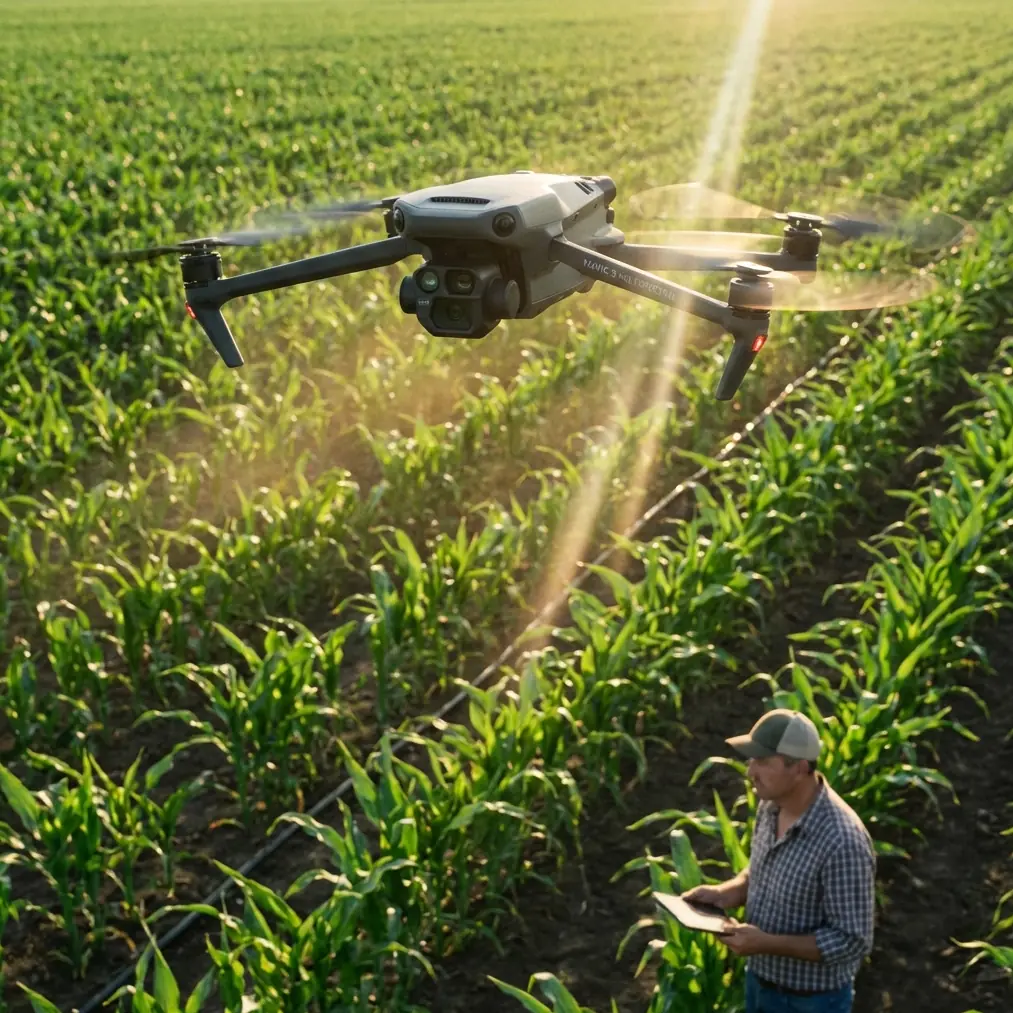
Mavic 3M for Coastal Highway Delivery Work: A 2026 Compliance Playbook That Actually Holds Up
META: Learn how to use the Mavic 3M in coastal highway projects under China’s 2026 drone rules, with practical compliance steps, field workflow advice, and battery management tips from real operations.
Coastal highway work exposes every weakness in a drone program. Salt air creeps into connectors. Wind funnels across bridge approaches. Launch areas are often narrow, busy, and shared with multiple contractors. In that environment, the Mavic 3M is not just a flying camera. It becomes part of a traceable work system, one that now has to satisfy tighter operating controls as China moves into a more rigorous unmanned aircraft regulatory phase in 2026.
For teams planning to use the Mavic 3M on highway delivery, progress checks, corridor mapping, vegetation assessment, or multispectral condition documentation, the bigger story is no longer only flight performance. It is operational legitimacy. The reference facts point to a clear shift: regulation is moving toward full compliance, full-network connection, and real-time traceability. That matters because coastal infrastructure jobs are usually high-visibility projects. They attract oversight, they involve multiple stakeholders, and they leave very little room for informal flight habits.
The key threshold in the new framework is simple but consequential: any civil drone with a takeoff weight of 250 grams or more must complete four compliance steps before lawful flight. The Mavic 3M sits well inside the category of aircraft that operators need to treat as fully regulated tools rather than casual field devices. If your team is flying a coastal highway corridor in 2026, the practical question is not “Can the drone do the job?” It is “Can the job stand up to inspection before, during, and after the flight?”
That is where most articles stop at summary. That is not useful for field teams. What matters is how these rules change the actual workflow around a Mavic 3M deployment.
Why the 2026 change matters specifically for Mavic 3M operations
The source material highlights three regulatory drivers arriving together: the revised public security administration law, two mandatory national drone standards, and the full rollout of the UOM civil unmanned aircraft management platform. This combination changes the operating logic for commercial drone teams.
Before, a strong pilot could often rescue a weak process. If the mission was urgent and the aircraft was ready, teams might improvise paperwork, patch communication gaps later, and rely on operator experience to smooth things out. Under the 2026 model, that kind of culture becomes a liability. The system is designed around traceability from beginning to end.
For a Mavic 3M crew on a coastal highway project, traceability has real operational significance:
- It creates a documented chain between aircraft identity, operator identity, network activation, flight status, and declared mission.
- It reduces ambiguity when several contractors are working in the same corridor.
- It helps project owners distinguish compliant surveying or monitoring flights from unauthorized operations.
- It forces planning discipline before the aircraft leaves the case.
The Mavic 3M is often selected because multispectral capture can reveal vegetation stress, drainage-edge growth patterns, and land disturbance that a standard RGB-only workflow might miss. On a coastal highway, that can be valuable for slope management, greenbelt maintenance, runoff observation, and post-construction ecological checks. But the aircraft’s sensor advantages only matter if the mission is legally flyable. The new rules place compliance at the front of the workflow, not as an administrative afterthought.
The four-step sequence that now defines lawful flight
The reference data names four required steps for civil drones at or above the 250 g threshold:
- Real-name registration
- Network activation
- Operational identification
- Flight declaration
Those four points are more than a checklist. They form the backbone of a defendable field process for Mavic 3M operators.
1. Real-name registration
This is the basic identity layer. It ties the aircraft to a responsible operator or entity. For highway work, that matters because projects often involve subcontractors, consultants, and temporary crews. If the registration layer is weak, accountability becomes fuzzy the moment a question arises about where, why, or by whom a flight was conducted.
For project managers, the practical takeaway is to stop treating drone assignment casually. Do not let the Mavic 3M circulate between teams without a clear responsibility matrix. If one survey group uses it on Monday and an environmental team uses it on Wednesday, the governance around operator identity has to be explicit.
2. Network activation
This is one of the most significant details in the source because it signals the shift toward connected operation. A drone program that lives partly offline and partly on memory cards is no longer enough. Network activation means the aircraft has to exist inside the regulatory ecosystem, not merely inside your company inventory.
On coastal highway jobs, this changes deployment planning. Some launch points have inconsistent signal conditions due to terrain, bridge structures, sea-edge weather, or project staging zones. If your workflow depends on “we’ll sort the connectivity later,” you are building delay into the mission. The right approach is to verify connectivity readiness before mobilization, not after the drone is already on site and the traffic control window is ticking down.
3. Operational identification
This element directly supports real-time traceability. It is not just bureaucracy. In a corridor with overlapping activity, operational identification makes it easier for the drone to be recognized as a declared, accountable aircraft rather than an unknown object in controlled project airspace.
For a Mavic 3M team, this helps in stakeholder coordination. Highway authorities, EPC contractors, environmental supervisors, and safety managers all want confidence that flights over embankments, interchanges, or coastal retaining sections are planned and attributable. Operational identification strengthens that confidence.
4. Flight declaration
This is where field operations either become orderly or unravel. A flight declaration forces the mission to exist on paper, or within the platform, before it exists in the air. For corridor work, that is healthy pressure. It encourages crews to define route segments, objectives, location boundaries, timing, and responsible personnel in advance.
With Mavic 3M missions, that level of planning is especially valuable because multispectral data quality depends on consistency. If the team is rushing, changing launch points ad hoc, or compressing mission windows without proper prep, the captured dataset may be less useful for comparing vegetation condition or land-surface changes across the route.
The date that should already be on your operations calendar
One detail from the reference is non-negotiable: part of the updated regime, tied to the revised public security administration law, takes effect on January 1, 2026.
That date matters because organizations tend to misunderstand compliance deadlines. They assume the rule becomes relevant when the first audit happens. In reality, the operational burden begins earlier. Teams need time to align aircraft records, standardize personnel authorization, train pilots on platform workflow, and test mission preparation under the new sequence.
If your Mavic 3M program supports coastal highway delivery milestones, waiting until 2026 to react is too late. By then, every urgent mobilization becomes harder. The smarter move is to treat 2025 as the year to harden the process: define ownership, confirm registration status, map the UOM-related workflow, and rehearse field declarations under real project conditions.
A practical how-to workflow for coastal highway teams using Mavic 3M
Here is the model I recommend for engineering and environmental crews who need repeatable, low-friction deployment.
Step 1: Build a mission file before battery charging starts
Do not begin with aircraft prep. Begin with mission legitimacy.
Your mission file should identify:
- The coastal highway section to be flown
- The project purpose, such as vegetation monitoring, drainage inspection support, progress documentation, or corridor mapping
- The accountable pilot and backup contact
- The intended launch and recovery zones
- The expected operating window
- The status of registration, network activation, operational identification, and declaration
This order matters. It prevents a common field mistake: a fully charged Mavic 3M sitting ready to launch while the administrative side is still unresolved.
Step 2: Confirm UOM workflow before the vehicle leaves base
The source points to the full operation of the UOM platform as a central part of the new regime. For highway teams, that means platform familiarity is no longer optional admin work for the office. It is operational readiness.
If your pilot or coordinator cannot move smoothly through the platform flow, the drone may become the least of your project delays. Assign one person to own this process. Better yet, assign a primary and a backup so the workflow does not depend on a single staff member being present.
If your team needs a quick field-side discussion on setup logic or handoff between pilot and project coordinator, use this direct line for practical coordination: message our UAV operations desk.
Step 3: Match flight objectives to sensor value
The Mavic 3M earns its place when the data supports decisions. On coastal highways, multispectral collection can help teams examine vegetation vigor near slopes, median strips, drainage channels, and revegetated sections after construction. That is not a decorative dataset. It can indicate where maintenance attention is drifting behind schedule, where runoff conditions may be affecting plant health, or where land stabilization efforts are uneven.
The operational significance here is easy to miss: when flights are properly declared and repeatable, multispectral datasets become comparable over time. That turns the Mavic 3M from a one-off imaging device into a monitoring instrument.
Step 4: Use a battery discipline designed for salty, windy sites
This is where field reality bites. On coastal projects, battery management is often the hidden difference between clean execution and avoidable disruption.
A tip from experience: never take a battery from an air-conditioned vehicle, install it immediately, and rush to launch in humid coastal air. Give the pack a few minutes to acclimate while you complete final checks. That small pause helps reduce condensation risk around the battery bay and connectors, especially during early morning operations.
I also recommend labeling batteries by performance behavior, not only by number. For example, note which pack tends to show voltage drop sooner in stronger sea breeze conditions. On a coastal highway route, wind load can vary dramatically between sheltered cut sections and exposed bridge approaches. A battery that behaves perfectly inland may feel different when the aircraft is holding position over a gusty embankment edge.
The goal is simple: use your strongest-performing packs for the most exposed segments, and reserve average packs for shorter or more sheltered runs. That is not glamorous advice, but it keeps the Mavic 3M flying inside a safer and more predictable envelope.
Step 5: Close the traceability loop after landing
A compliant mission does not end when the props stop. Since the regulatory direction is toward real-time traceability and whole-process oversight, post-flight record discipline matters.
Your team should archive:
- The declared mission reference
- Aircraft and operator identity used on the task
- Flight time and location
- Data objective
- Any deviation from the original plan
- Environmental notes relevant to data quality
That last point matters for multispectral work. Coastal haze, rapidly shifting cloud cover, and sea-edge glare can influence interpretation. If the data is later reviewed by an engineering or environmental team, these field notes provide context that raw imagery alone cannot supply.
What “black flight” risk means for legitimate commercial teams
The original headline language is blunt about unauthorized flying being pushed out by the new framework. For responsible commercial operators, that is a positive development.
On coastal highway projects, unauthorized flights create more than legal exposure. They create confusion, delay, and reputational damage. If an unidentified aircraft appears near a project zone, every legitimate operator gets drawn into the resulting scrutiny. Stronger compliance infrastructure helps separate professional Mavic 3M operations from opportunistic or careless flying.
That separation is good for clients as well. It gives infrastructure owners a stronger basis for contractor selection. A team that can demonstrate disciplined UOM workflow, clear registration status, and orderly declaration procedures is simply easier to trust on sensitive or high-profile corridor work.
The bigger shift: Mavic 3M success now depends on process maturity
The most useful way to read the source material is not as a warning, but as a filter. The 2026 regime rewards teams that already behave like aviation operators rather than gadget users.
For the Mavic 3M, that is especially relevant. It is often deployed in projects where decision-makers care about repeatability, documentation, and defensible outputs. Coastal highway delivery work sits squarely in that category. You may be supporting environmental compliance, construction verification, right-of-way observation, or corridor condition assessment. In all of those cases, the aircraft’s value is tied to whether the data and the operation can stand up to external review.
The practical lesson is straightforward:
- If your team treats compliance as a side task, the new framework will slow you down.
- If your team builds compliance into mission design, the Mavic 3M becomes easier to deploy, easier to defend, and more useful to the client.
January 1, 2026 is not just a regulatory date. It is a dividing line between informal drone use and professionalized, platform-linked operations. For coastal highway projects, that line arrives fast. The teams that prepare early will spend less time untangling permissions and more time extracting meaningful value from the aircraft’s multispectral capability.
That is the standard the Mavic 3M deserves, and increasingly, it is the standard the market will expect.
Ready for your own Mavic 3M? Contact our team for expert consultation.