
Mavic 3M in Windy Field Deliveries: What Low
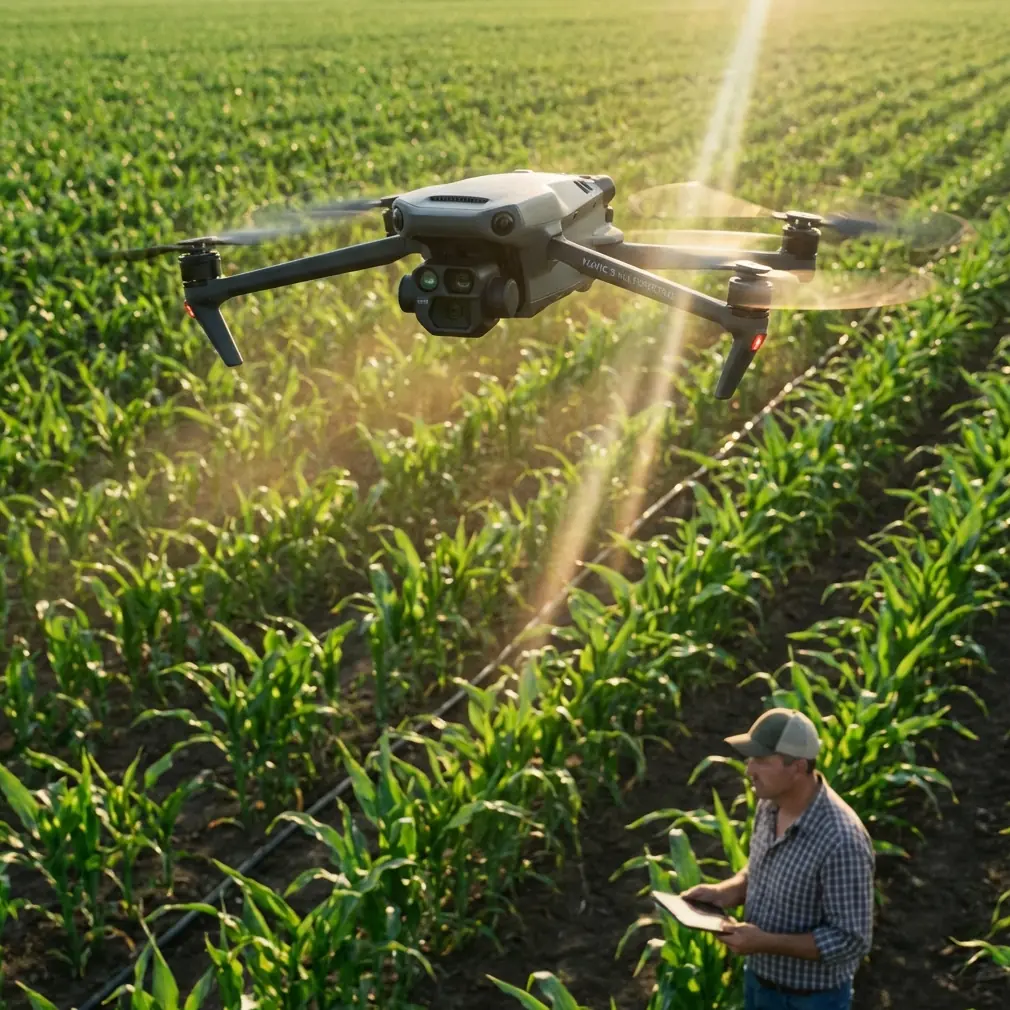
Mavic 3M in Windy Field Deliveries: What Low-Altitude Economics Means for Real Farm Operations
META: A field-focused expert analysis of using the Mavic 3M in windy agricultural delivery and mapping scenarios, with practical insight on multispectral sensing, RTK precision, drift-aware planning, and China’s fast-growing low-altitude economy.
Wind changes everything in the field.
Not in an abstract way. In a practical, expensive, crop-level way. A calm morning mission that looks routine on paper can become a very different operation once gusts begin pushing the aircraft off line, widening margins of error, and forcing the pilot to rethink route density, landing choices, and data confidence. For teams working with the Mavic 3M, that matters doubly: this is not just about keeping a drone airborne. It is about whether the data and delivery outcome still support agronomic decisions when conditions stop cooperating.
That question sits inside a much bigger shift. China’s low-altitude economy is no longer a niche policy phrase. It was first folded into national development planning in 2021 through the National Comprehensive Three-Dimensional Transportation Network Planning Outline, which formally brought low-altitude economic activity into the broader development map. Then, during the 2024 national “Two Sessions,” “low-altitude economy” entered the government work report for the first time as a new growth engine. That policy progression matters for anyone evaluating the Mavic 3M today, because it signals that agricultural UAV operations are not developing in isolation. They are part of a national infrastructure and productivity story.
The scale confirms it. According to data cited from the CCID Research Institute under the Ministry of Industry and Information Technology, China’s low-altitude economy reached 506 billion yuan in 2023, up 33.8% year over year. Those are not decorative numbers. They help explain why field operators, agronomy teams, cooperatives, and service providers are under pressure to move from experimental drone use to dependable operating systems.
And that is exactly where the Mavic 3M becomes interesting for windy field delivery scenarios.
The real problem is not wind alone
When people say they need a drone for “delivering fields in windy” conditions, the phrase often hides several different jobs under one label.
Sometimes they mean carrying small critical items to remote plots: sample kits, lightweight tools, replacement sensors, memory cards, plant tissue bags, or field markers. Sometimes they mean reaching parcels where road access is muddy, slow, or fragmented. Often, though, the delivery question is inseparable from reconnaissance. Before anything gets moved, the operator needs to know where the crop stress zones are, whether the access path is clear, whether standing water has changed the route, and whether the target point is still suitable.
This is where the Mavic 3M earns its place. Its value in a windy agricultural environment is not that it brute-forces weather. Sensible operators do not pretend wind does not exist. Its value is that it combines mobility with multispectral intelligence and high-accuracy positioning, allowing a team to make better go/no-go and where-to-go decisions before committing people, vehicles, or heavier UAV assets.
That distinction is operationally significant. In a breezy field, bad judgment compounds quickly. A few meters of positional uncertainty at the edge of a parcel can mean landing near irrigation hardware instead of the intended drop zone. In crops with narrow safe approach corridors, a modest crosswind can turn a routine path into a crop-contact risk. If the objective includes follow-up treatment planning, the consequences widen further: spray drift, nozzle calibration decisions, swath width assumptions, and treatment timing all depend on a map you trust.
Why multispectral changes delivery planning
The Mavic 3M is often discussed as a mapping platform, and that is correct, but too narrow. In windy field logistics, multispectral capability changes what “delivery support” actually means.
A visual image may show a field boundary. Multispectral data can reveal whether the route into that boundary is passing over stressed vegetation, uneven emergence, or saturated areas that are likely to worsen under vehicle traffic. That can determine whether a team sends a person on foot, reroutes a utility vehicle, delays entry, or stages materials at a different edge.
In one field assessment last season, a roe deer emerged from a hedgerow just as the aircraft was working along a boundary transect. The operator paused, adjusted the line, and used the drone’s situational awareness to maintain separation rather than forcing the route. That may sound like a small anecdote, but it illustrates something larger: good agricultural drone work is not just about data capture. It is about reading the environment as a live operating space, including wildlife movement, crop sensitivity, and terrain change. In windy conditions, that awareness becomes more important because the aircraft has less slack for last-second corrections.
For Mavic 3M users, multispectral imaging also helps prioritize which parts of a field deserve immediate attention when wind narrows the workable window. If a gusty afternoon means only one section can be safely or efficiently reached, the drone can support that decision with evidence rather than intuition. That saves battery cycles, cuts unnecessary field entries, and reduces the temptation to “just finish the whole block” when conditions no longer justify it.
RTK precision is not a luxury in crosswind work
If there is one detail many buyers underestimate, it is RTK fix rate and the practical meaning of centimeter precision.
In windy operations, positional quality is not simply a mapping metric for the office. It affects route repeatability, confidence in edge definition, and the usefulness of comparisons over time. A field service team returning to the same parcel after a weather shift needs to know whether apparent change is real crop response or just geometric inconsistency between flights.
Centimeter-level precision matters here because wind exaggerates every small navigation compromise. If the aircraft is being nudged through each leg, a robust RTK workflow helps preserve spatial integrity across the mission. That means more reliable stand counts, cleaner zoning, and better alignment with previous maps or ground observations. For operators supporting variable-rate decisions later in the season, that consistency carries forward into treatment planning.
It also matters for lightweight delivery coordination. If the purpose of the flight is to verify or support handoff at a specific field point, centimeter-grade location confidence reduces ambiguity. In large parcels with repeating visual features, “near the south edge” is not enough. Precision shortens search time and limits unnecessary movement through crop rows.
Teams that ignore this often discover the problem downstream. They think they are losing time to wind, when in fact they are losing time to rework caused by inconsistent geospatial quality.
Windy fields expose workflow weakness fast
A calm-day demo can flatter any drone system. Wind reveals the operator.
With the Mavic 3M, the smartest field teams build a workflow around constraints rather than around ideal conditions. That means predefining acceptable wind thresholds for each task, not just for aircraft safety but for data utility. It means deciding before launch how much overlap is needed to protect map quality if the aircraft experiences lateral displacement. It means checking whether the intended handoff area has enough clearance if approach angles tighten. And it means understanding when the mission objective should shift from full-field capture to targeted scouting.
Even related topics like spray drift and nozzle calibration belong in this conversation, though the Mavic 3M is not a spraying platform. Why? Because windy delivery and windy mapping often happen in the same operational ecosystem. The Mavic 3M may be the aircraft used to diagnose a problem before a separate application drone is sent in. If the map is compromised, treatment setup suffers. If the stress zone is mislocated, swath width planning can be inefficient. If the boundary margin is uncertain, drift-sensitive areas may not be buffered correctly.
That is the hidden cost of poor reconnaissance in wind: mistakes propagate from sensing into execution.
The broader low-altitude economy is shaping field expectations
The upcoming Shanghai International Low-Altitude Economy Expo, scheduled for July 22 to 25, 2026 at the National Exhibition and Convention Center in Shanghai, is more than another industry gathering. It reflects how quickly expectations around low-altitude operations are changing.
For agricultural users, this matters because events like this are where policy momentum, platform capability, service models, and operational standards begin to align. The Mavic 3M sits in a category that benefits directly from that convergence. As low-altitude infrastructure develops and commercial UAV workflows become more normalized, farm operators will expect more than isolated flights. They will expect dependable field intelligence, accurate parcel-level records, and better integration between scouting, logistics, and intervention.
That expectation is justified. A sector growing at 33.8% in a single year does not reward casual workflows for long. It favors operators who can translate technology into repeatable field outcomes.
For growers and ag service providers, the takeaway is simple: the Mavic 3M should not be evaluated only by sensor specifications or flight time claims. It should be judged by how well it fits an operating model in which windy conditions, fragmented access, and narrow decision windows are normal.
A practical problem-solution view for Mavic 3M users
The problem: windy field conditions compress the margin for error. They complicate route planning, obscure weak crop zones, and reduce confidence in visual-only assessments. They also make it harder to support field deliveries, whether that means guiding personnel, identifying a safe drop area, or confirming the best point of access.
The solution: use the Mavic 3M as the decision layer, not just the camera in the sky.
Its multispectral capability helps identify where conditions are deteriorating first. Its RTK-supported precision improves confidence in repeat surveys and field-point verification. Its compact deployment profile makes it useful when the weather offers only a short working interval. Most importantly, it allows teams to separate urgent work from merely planned work.
That is the difference between drone ownership and drone operations.
For academic programs, cooperatives, and commercial agronomy teams, the best Mavic 3M workflows are usually the ones that acknowledge wind early. They define thresholds, preserve positional quality, document edge cases, and use the aircraft to reduce unnecessary field movement. They also keep a close eye on practical details such as overlap strategy, battery staging, wildlife disturbance, and the agronomic consequences of delayed intervention.
If you need to compare your own windy-field workflow assumptions with an experienced team, this direct field coordination link can help: https://wa.me/85255379740
What serious buyers should pay attention to
Anyone considering the Mavic 3M for field delivery support in windy agricultural settings should focus on four things.
First, map reliability under less-than-ideal conditions. Not every mission happens in textbook weather, so ask whether your operating method still produces trustworthy agronomic outputs when wind increases.
Second, RTK consistency. Centimeter precision only matters if the workflow achieves and maintains a dependable fix. In field operations, this affects everything from repeatability to confidence at parcel edges.
Third, mission role clarity. The Mavic 3M is strongest when used to inform movement, prioritization, and intervention. It is not a substitute for every heavier agricultural task, but it can prevent expensive mistakes before those tasks begin.
Fourth, environmental awareness. Wind, wildlife, standing water, hedgerows, and crop height all shape the real mission. The best operators treat those as active variables, not background scenery.
China’s policy trajectory has made one thing clear: low-altitude operations are becoming part of mainstream economic planning, not a side experiment. The 2021 national planning inclusion, the 2024 government work report language, and the 506 billion yuan market size in 2023 all point in the same direction. Agriculture will be expected to use airspace more intelligently.
In that environment, the Mavic 3M stands out not because it promises magic in wind, but because it gives disciplined operators the information needed to work intelligently when the field is messy, time is short, and every unnecessary pass costs money.
Ready for your own Mavic 3M? Contact our team for expert consultation.