
Mavic 3M Delivering Tips for Remote Construction Sites
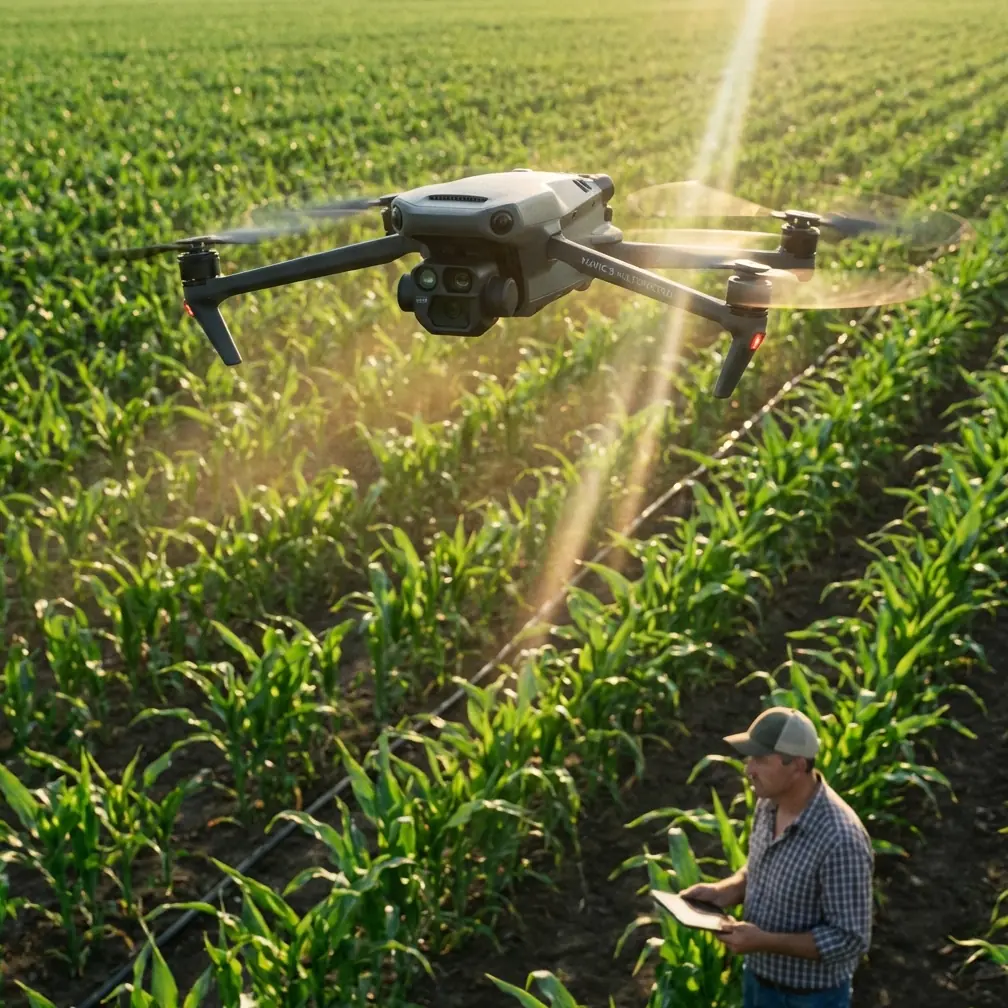
Mavic 3M Delivering Tips for Remote Construction Sites: What Actually Matters in the Field
META: Practical Mavic 3M delivery and site workflow tips for remote construction environments, with expert guidance on low-altitude sensing, antenna setup, interference handling, and precision operations.
Remote construction sites expose a drone operation’s weak points fast.
You can have a capable aircraft, a trained pilot, and a clear mission plan, yet the moment you move beyond paved urban corridors and into unfinished terrain, steel structures, temporary power systems, and inconsistent landing zones, every small technical detail starts to matter. For teams looking at the Mavic 3M in site support roles, the useful conversation is not about broad drone hype. It is about control, reliability, and how to work inside the limits of the aircraft’s sensing and link performance.
That is especially relevant now, as China’s low-altitude logistics ecosystem keeps moving from concept toward deployment. A recent industry development saw 闪送 receive investment from a Hangzhou low-altitude company to jointly build out drone delivery operations. The significance is bigger than a single partnership. It shows that organizations with years of same-city dispatch experience, order orchestration, and fulfillment know-how are now pushing from ground delivery into low-altitude logistics. For construction readers, that shift matters because the same operational logic applies on job sites: successful drone delivery is not just about flight. It is about integrating aircraft movement with dispatch timing, landing discipline, handoff procedures, and site-level execution.
The Mavic 3M fits into that story in a very practical way. It is often discussed for multispectral and mapping work, but on remote construction sites, its value can also show up in short-range site support, quick document or small-part transport between isolated work zones, progress capture, and precision situational awareness around delivery routes and landing points. The real question is how to make those operations repeatable.
Start with the truth about low-altitude sensing
One of the most overlooked facts in practical drone operations comes from DJI’s own educational material around TOF height sensing. The published exploration results show a TOF height sensor working range of roughly 30 to 900 centimeters. Below 30 cm, the sensor can return a fixed value of 10. Above 900 cm, it can return a fixed value of 6553.
That kind of detail sounds academic until you try to deliver into a rough construction environment.
If your landing zone is improvised on gravel, rebar mats, plywood, or mixed materials, the final approach phase is where crews often assume the aircraft “will just sort it out.” That is the wrong mindset. Low-altitude positioning systems depend on both height sensing and visual reference. The same source explains that the lower camera, acting as an optical flow sensor, works with the TOF sensor as part of the drone’s visual positioning system. It also states that stability improves when the aircraft remains within that 30–900 cm relative height window, with good lighting and a surface rich in texture below.
Operationally, this means three things for Mavic 3M delivery support on a remote construction site:
Do not treat every landing surface as equal.
Fresh concrete forms, dust-covered tarps, uniform metal sheets, and puddled mud can all reduce visual confidence. A textured landing pad or marked delivery zone can materially improve low-altitude stability.Do not rush the last meter.
If the aircraft is descending into a surface environment with poor optical features, your precision can degrade at exactly the phase where everyone expects the highest control.Train around sensor limits, not assumptions.
Teams should know that a low-altitude system has a usable envelope. Once you understand that, you design your delivery workflow around it rather than fighting physics and sensor behavior.
On remote projects, I usually advise teams to standardize drop or handoff zones with visible texture and contrast. Even a simple portable mat with strong visual patterning can help the aircraft maintain cleaner positional behavior near the ground. This is not glamorous, but it is the kind of adjustment that reduces aborted approaches and awkward manual corrections.
Delivery is a workflow problem disguised as a flight problem
The news about 闪送’s low-altitude expansion highlights something many construction firms still underestimate: logistics performance comes from network design and fulfillment discipline, not aircraft specs alone.
闪送’s edge was described as years of accumulated transport network resources, order operations capability, and urban fulfillment experience. Translate that into a construction environment and the lesson becomes obvious. A drone mission between a remote site office and an elevated workfront only works when the handoff process is clean:
- who requests the item
- who authorizes the launch
- what payload type is acceptable
- where the landing or release point is
- how receipt is confirmed
- what the fallback is if weather or signal conditions shift
The Mavic 3M can be a highly efficient site platform, but only if it is inserted into a disciplined dispatch chain. If your team still relies on radio chatter and informal “send it over here” requests, then even a technically successful flight can create confusion at the destination.
This is why low-altitude logistics is becoming an ecosystem conversation. Aircraft are only one layer. Construction firms that want to use Mavic 3M effectively for site delivery support should borrow from courier logic: standardize routes, standardize request formats, and standardize receiving points.
Handling electromagnetic interference: antenna adjustment is not optional
The single most common field mistake I see around remote construction drone work is assuming “remote” means “clean RF environment.”
In reality, many remote construction sites are full of interference sources: portable generators, temporary communications gear, steel-framed structures, tower cranes, container offices, solar equipment, repeaters, and improvised power distribution. Add terrain and partial line-of-sight blockage, and your link quality can become inconsistent very quickly.
This is where antenna handling becomes more than a basic preflight note.
When the Mavic 3M is operating near steel assemblies or energized equipment, pilots should actively adjust controller orientation to maintain the strongest possible signal geometry rather than locking themselves into one stance. Small changes in controller angle can help the antennas present a more effective profile toward the aircraft. Just as important, the pilot should physically reposition if needed. Taking five steps sideways to recover a cleaner line past a container stack or scaffold edge can do more than endlessly staring at the screen.
A few practical habits help:
Launch from a RF-clean position whenever possible.
Avoid standing directly beside generators, vehicles with active electronics, or metal walls.Face the aircraft with deliberate antenna orientation.
Don’t let the controller hang at an awkward angle while you focus only on the display.Use altitude strategically, not lazily.
If signal quality degrades near cluttered structures, a modest altitude change may restore line integrity. But avoid climbing just because it feels safer; your route still needs to respect site conditions and mission purpose.Pause early when interference appears.
The worst response is to continue pressing forward while the link is already unstable.
If your site regularly struggles with interference pockets, it helps to log where they occur. Over time, patterns emerge. Certain staging yards, crane corridors, and steel stockpile zones will repeatedly affect command and video link consistency. Once identified, those areas can be baked into route planning or designated as no-hover transit sectors.
If you need a second set of eyes on route setup or antenna positioning strategy for your site, I often tell teams to share a quick operation outline first through this field-support chat line.
Why controlled flying technique still matters, even with smart stabilization
One of the more interesting reference materials here is not about modern multirotors at all. It is a training text on aerobatic model aircraft, discussing how flight path errors can emerge when control inputs are poorly sequenced and when speed decays too much during a maneuver. The aircraft begins to wander or wobble not because of magic, but because energy management and control timing were wrong.
Now, the Mavic 3M is not an aerobatic plane, and no construction team should treat it like one. But the training principle transfers cleanly: pilot input discipline determines flight quality.
The source explains that when a maneuver starts well but the aircraft later drifts off direction, one likely cause is excessive radius in the earlier phase, which leaves the aircraft too slow and unstable in the transition. The broader operational takeaway for Mavic 3M users is simple. If a delivery approach becomes messy, do not only blame wind or automation. Review the sequence that led into the problem.
On remote construction routes, poor outcomes usually begin earlier than crews think:
- approach speed was too high
- descent started too late
- the aircraft arrived over the target with weak alignment
- the pilot made layered corrections instead of resetting the approach
- signal quality had already degraded before the final segment
That last point matters a lot. Bad delivery approaches are often the result of cumulative compromise. A smooth mission is built from small, correct inputs well before touchdown.
For training, I recommend this pattern:
- rehearse approach lines without payload pressure
- establish a fixed altitude gate before descent
- define a go-around rule
- abort early if the aircraft is not stable and centered
The best site pilots are rarely the flashiest. They are the ones who recognize instability before everyone else does and reset without ego.
Use the Mavic 3M for more than transport decisions
Although this article centers on delivery support, the Mavic 3M becomes more valuable on remote construction projects when delivery planning is combined with site intelligence.
Its multispectral identity may seem more agricultural at first glance, but the larger lesson is that this aircraft belongs in data-driven workflows. Construction teams can use mapping passes to evaluate temporary access corridors, identify surface condition changes, monitor drainage issues after weather events, and refine delivery path selection based on actual terrain rather than assumption.
That matters because remote sites are dynamic. Yesterday’s clear landing patch becomes today’s stockpile area. A route that worked in the morning can be partially blocked by machinery in the afternoon. If you are already flying the Mavic 3M for spatial awareness, folding delivery support into that operational rhythm becomes much easier.
This is where terms like RTK fix rate and centimeter precision enter the conversation. Not because every site mission demands maximum geospatial rigor, but because repeatability matters. If you want consistent delivery points, repeatable survey overlays, and dependable route references, precision becomes an operations issue, not just a mapping specification.
Build the landing zone like a tool, not an afterthought
Construction teams tend to spend more time discussing aircraft settings than receiving conditions. That is backwards.
A reliable remote delivery setup should include:
- a clearly defined zone
- textured surface or pad material
- visual contrast
- enough open clearance for approach and departure
- protection from loose debris
- a receiving protocol with one responsible person
Remember the visual-positioning requirement from the DJI education material: adequate lighting and a texture-rich surface under the aircraft improve stability. That is not a minor detail. It is a direct design input for your site receiving area.
If the receiving point sits in deep shadow, beside reflective sheet material, or over a uniform dusty panel, you are asking the aircraft to solve a problem you could have removed in five minutes with better setup.
The bigger shift: low-altitude logistics is becoming operationally normal
The Hangzhou investment story is useful because it shows where the market is going. Companies rooted in dispatch and fulfillment are stepping into low-altitude logistics because the model is becoming operationally plausible, not just technically interesting.
Remote construction sites are one of the clearest civilian use cases. Ground transport inside large or fragmented projects is often slow, wasteful, and vulnerable to terrain delays. A small drone-supported movement of tools, samples, documents, sensors, or urgent consumables can cut dead time dramatically. But those wins appear only when crews respect the details: sensor envelopes, landing zone quality, pilot discipline, signal management, and logistics structure.
That is the real Mavic 3M lesson here.
Not that the aircraft can fly. Plenty of aircraft can fly.
The question is whether your site can support precise, repeatable low-altitude operations under real-world conditions. If you understand how low-altitude sensing behaves between 30 and 900 cm, if you build textured and well-lit handoff zones, if you train pilots to manage interference with active antenna adjustment and physical repositioning, and if you run the mission like a logistics system rather than a novelty, the Mavic 3M becomes a serious field asset.
That is where remote construction drone work starts to look less experimental and more useful.
Ready for your own Mavic 3M? Contact our team for expert consultation.