
Mavic 3M in Harsh Construction Conditions: A Practical Low
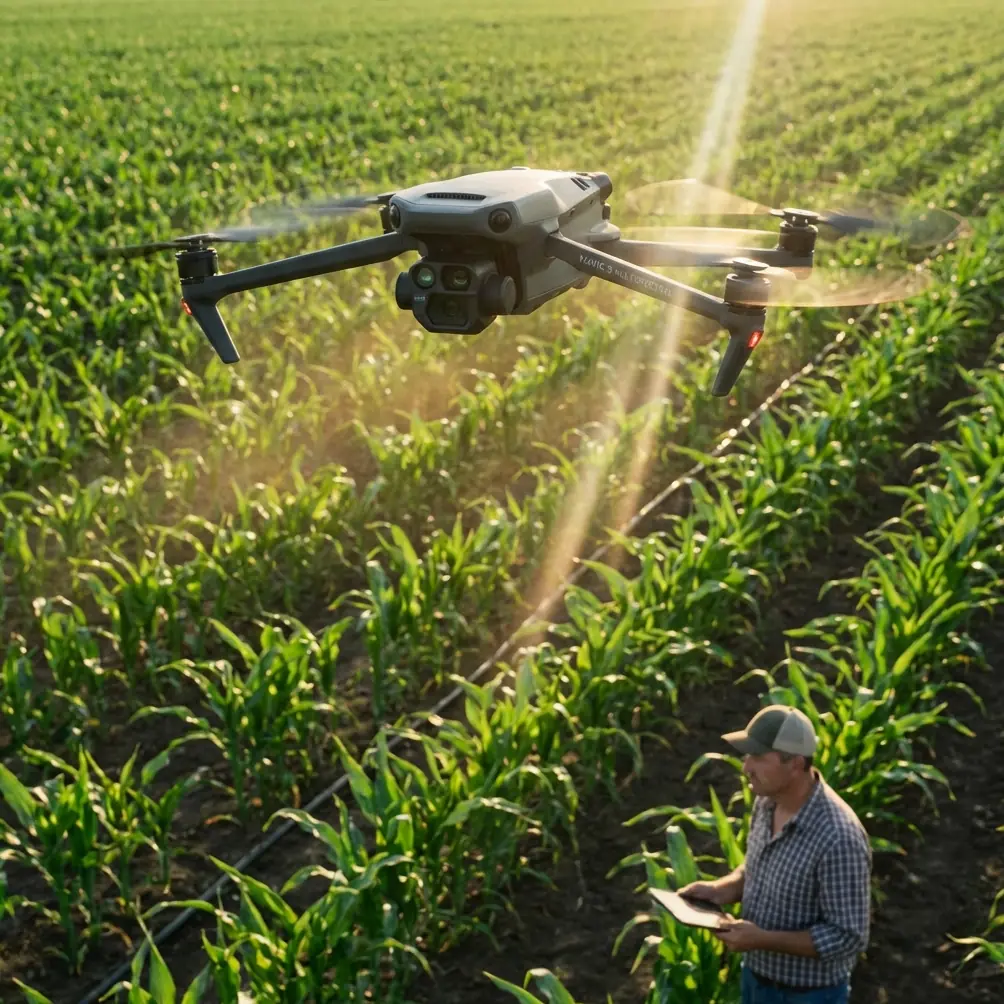
Mavic 3M in Harsh Construction Conditions: A Practical Low-Altitude Workflow That Stays Safe
META: A field-tested Mavic 3M guide for construction teams working in extreme temperatures, focused on low-altitude safety, multispectral capture strategy, and smarter sample collection without wasting battery or risking collisions.
Construction teams tend to obsess over payloads, battery cycles, and wind limits. Fair enough. But when a Mavic 3M is flying low over active sites in extreme temperatures, the real operational bottleneck is often something less glamorous: how to gather the detail you need without turning every mission into a slow, risky, battery-hungry crawl.
That problem shows up clearly in the reference material. One ArcGIS-based crop survey workflow compared two very different flight heights: roughly 100 meters for high-resolution orthomosaic capture, and about 15 meters for low-altitude interpretation sample images. The lower pass produced richer visual detail, but at a cost. Coverage per image shrank, flight speed had to drop, photo counts climbed, and both field time and processing time expanded sharply. In uneven terrain, where elevation changes can reach tens of meters, automatic low-altitude collection also raised the odds of striking hillsides, trees, or power lines.
Those facts come from agriculture, but the operational lesson maps cleanly to construction delivery and documentation work with the Mavic 3M. If your team is supporting sites in heat, cold, or variable topography, flying lower is not automatically smarter. The better workflow is selective low-altitude capture backed by disciplined planning, careful obstacle management, and a clean, fully functioning vision system before takeoff.
This article lays out that workflow.
Why the Mavic 3M Matters on Construction Sites
The Mavic 3M is usually discussed through the lens of multispectral data. On farms, that means crop vigor and plant interpretation. On construction sites, the same sensing philosophy supports a different set of questions: moisture behavior, disturbed soil consistency, revegetation compliance, drainage anomalies, stockpile boundary checks, and progress mapping across broad areas where conventional ground walks are slow and incomplete.
That does not mean every job should be flown inches above the ground just because the aircraft can produce precise, highly detailed data. In fact, the source material shows why that instinct causes trouble. At 15 meters, image detail improves, but each frame covers far less ground than a pass at 100 meters. On a sprawling site, that means more turns, more overlap, more battery consumption, and more time with the aircraft exposed to environmental stress.
In extreme temperatures, those penalties grow. Cold can compress available battery performance. Heat can shorten the margin you thought you had. So the mission design itself becomes a safety tool.
The Core Rule: Separate Wide-Area Mapping From Close-Range Verification
The most useful takeaway from the ArcGIS workflow is not the exact altitude numbers. It is the logic behind them.
Use a higher-altitude mission to build broad situational awareness. Then use low-altitude flights only where the larger dataset leaves unanswered questions.
That approach matters because low-level capture is expensive in three ways:
- It consumes more battery and time because the aircraft must fly slower and collect more photos.
- It increases processing load because a larger photo set takes longer to turn into usable outputs.
- It raises collision risk because low-altitude routes expose the aircraft to terrain variation, wires, vegetation, and temporary site obstructions.
For construction readers, think of it this way. If you are documenting haul roads, drainage trenches, temporary laydown yards, material stockpiles, and perimeter vegetation, you do not need every acre at ultra-low altitude. Start with a structured site-wide map. Then send the Mavic 3M down only to verify specific anomalies or collect close reference imagery in areas where multispectral signatures, texture changes, or visible-light mosaics suggest something needs a second look.
That is the same efficiency principle reflected in the source example where data from plot 69 was sufficient to help identify the crop type in plots 51 and 52. Operationally, that means one well-chosen reference area can reduce the need to manually capture every similar zone. On a construction site, a small set of verified reference surfaces can help interpret larger areas with matching conditions.
Before You Fly: Clean the Safety Features First
This is the pre-flight step many crews skip when conditions are ugly.
Dust, dried mud, salt residue, condensation marks, and fine grit can all interfere with obstacle sensing and visual positioning behavior. On construction sites in extreme heat or cold, these contaminants build up quickly. Before any low-altitude mission, especially around temporary structures or uneven terrain, clean the aircraft’s external sensors and camera surfaces carefully.
That includes:
- Forward, rear, and lateral vision sensors
- Downward sensing surfaces
- Main imaging optics
- Multispectral sensor windows
- Navigation lights if operating near dawn or dusk
- Airframe crevices where dust can migrate onto sensor faces during takeoff
Use non-abrasive materials and avoid rushing the process. The point is not cosmetic. It is to preserve the aircraft’s low-altitude decision-making. If the mission depends on autonomous assistance, a dirty sensing suite can quietly degrade the very protection you are counting on.
This point connects directly to the recent Tianjin test noted in the reference data. That test validated a method combining a real aircraft with simulated intruder aircraft to improve autonomous low-altitude avoidance capability. Why does that matter to a Mavic 3M operator on a civilian construction site? Because the industry direction is clear: safer scaled low-altitude operations will depend on better autonomous hazard recognition and avoidance logic. But those systems only help when the aircraft’s perception hardware can do its job. Clean sensors are not housekeeping. They are part of flight safety.
A Practical Mavic 3M Workflow for Extreme-Temperature Site Operations
1. Build the baseline map from a safer working altitude
Begin with a site-wide mapping mission designed for consistency rather than maximum closeness. The source workflow used about 100 meters for high-definition orthographic capture. Your exact altitude will depend on local rules, site geometry, and required resolution, but the principle stands: give the aircraft enough height to cover ground efficiently while preserving a margin from cranes, cable runs, spoil piles, berms, and abrupt elevation changes.
For Mavic 3M users, this pass is where broad multispectral context becomes valuable. You are not just collecting pretty imagery. You are generating a structured layer that can reveal patterns impossible to spot from a truck window.
2. Identify where low-altitude capture is truly necessary
Do not send the drone low across the entire site by default. Review the first-pass outputs and mark target zones:
- Suspected drainage accumulation
- Areas with unusual spectral contrast
- Revegetation patches that appear inconsistent
- Soil disturbance boundaries
- Temporary access roads with uneven compaction signatures
- Perimeter zones near utility lines or vegetation where visual confirmation matters
The source documents make a strong case here. Low-altitude collection requires manual attention and real-time video checking for nearby hazards such as terrain, tall vegetation, and power lines. That transfers directly to construction. Every extra low pass increases pilot workload.
3. Fly low only in short, deliberate segments
At around 15 meters, the source workflow achieved richer interpretation detail, but also paid in time and battery. For a Mavic 3M construction mission, low-altitude verification should be broken into short segments with defined objectives.
One segment might confirm surface moisture patterns in a drainage swale. Another could verify the condition of installed erosion controls. Another could inspect transition zones between cut and fill areas. Finish the task, climb out, reassess, and continue only if the next segment justifies the cost.
This segmented method is safer than trying to run one long autonomous low-altitude route through a changing site.
4. Respect vertical variability more than horizontal distance
The source documents warn that terrain relief can vary by dozens of meters, creating a real collision hazard during automatic low-altitude flights. On construction projects, vertical surprises are often man-made rather than natural: newly raised stockpiles, excavated pits, scaffold changes, parked equipment booms, partially erected steel, or fresh utility crossings.
A site that looked clear yesterday can become a trap today.
That is why you should review the latest site condition before every flight and avoid assuming a previous route remains safe. If your operation relies on repeatable mapping, update your launch brief to account for new obstacles, temporary works, and changed access corridors.
5. Use reference areas instead of oversampling the whole site
The source example where 69 informed 51 and 52 captures an underappreciated efficiency strategy: create a trustworthy reference library, then infer the rest when conditions are comparable.
For construction applications, a Mavic 3M team can build a site-specific reference set of known surfaces and conditions:
- Stable compacted road base
- Recently wetted soil
- Established vegetation
- Bare disturbed earth
- Sediment-laden runoff margins
- Protected revegetation areas
Once those reference signatures are tied to ground truth, you do not need to descend over every matching patch on every mission. That saves time, reduces battery demand, and limits low-altitude exposure in difficult temperatures.
What the Tianjin Autonomous Avoidance Test Means for Civil Operators
The Tianjin flight test was aimed at improving low-altitude autonomous conflict avoidance. The notable detail is the testing method: a blend of real aircraft and simulated intruder aircraft. That matters because low-altitude operations are notoriously hard to model cleanly. Real environments are cluttered, dynamic, and hard to reproduce.
For commercial drone users, the significance is straightforward. The sector is moving toward safer, more scalable low-altitude operations not by relying on pilot skill alone, but by validating how autonomous systems behave when confronted with realistic intrusions and conflict scenarios.
For a Mavic 3M crew serving construction sites, this trend reinforces two things:
- Autonomous assistance will keep getting better, especially for low-level risk management.
- You still need disciplined mission design because no avoidance logic erases the penalties of unnecessary low flying.
Better autonomy is a force multiplier, not a license to be careless.
Extreme Temperature Adjustments That Actually Matter
When teams talk about harsh weather operations, they often focus narrowly on whether the aircraft can take off. A better question is whether the mission profile still makes sense under the day’s conditions.
In heat or cold:
- Keep low-altitude segments shorter than you would in mild weather.
- Minimize hover time while deciding what to do next.
- Avoid collecting ultra-dense imagery unless it serves a clear analytical purpose.
- Review battery margin with extra conservatism, because low, slow flights are inefficient.
- Recheck sensor cleanliness after transport and before relaunch if dust or condensation is likely.
If your crew is refining a site workflow and wants a second opinion on route structure, sensor use, or multispectral interpretation strategy, it can help to compare notes with operators who live in this space every day: message a Mavic workflow specialist here.
The Smarter Mavic 3M Mindset
The references point to one simple truth: the best low-altitude mission is often the one you do not fully fly.
A broad pass at around 100 meters can handle the heavy lifting. A short, intentional set of low checks near 15 meters can answer the few questions that remain. That combination reduces battery waste, limits exposure to hidden hazards, and shortens processing time without sacrificing decision quality.
Pair that with clean sensors, updated site hazard awareness, and a growing library of reference surfaces, and the Mavic 3M becomes far more than a flying camera. It becomes a disciplined site intelligence tool—especially valuable when extreme temperatures and changing terrain make every unnecessary minute in the air count.
Ready for your own Mavic 3M? Contact our team for expert consultation.