
Mavic 3M in Low-Light Coastal Operations
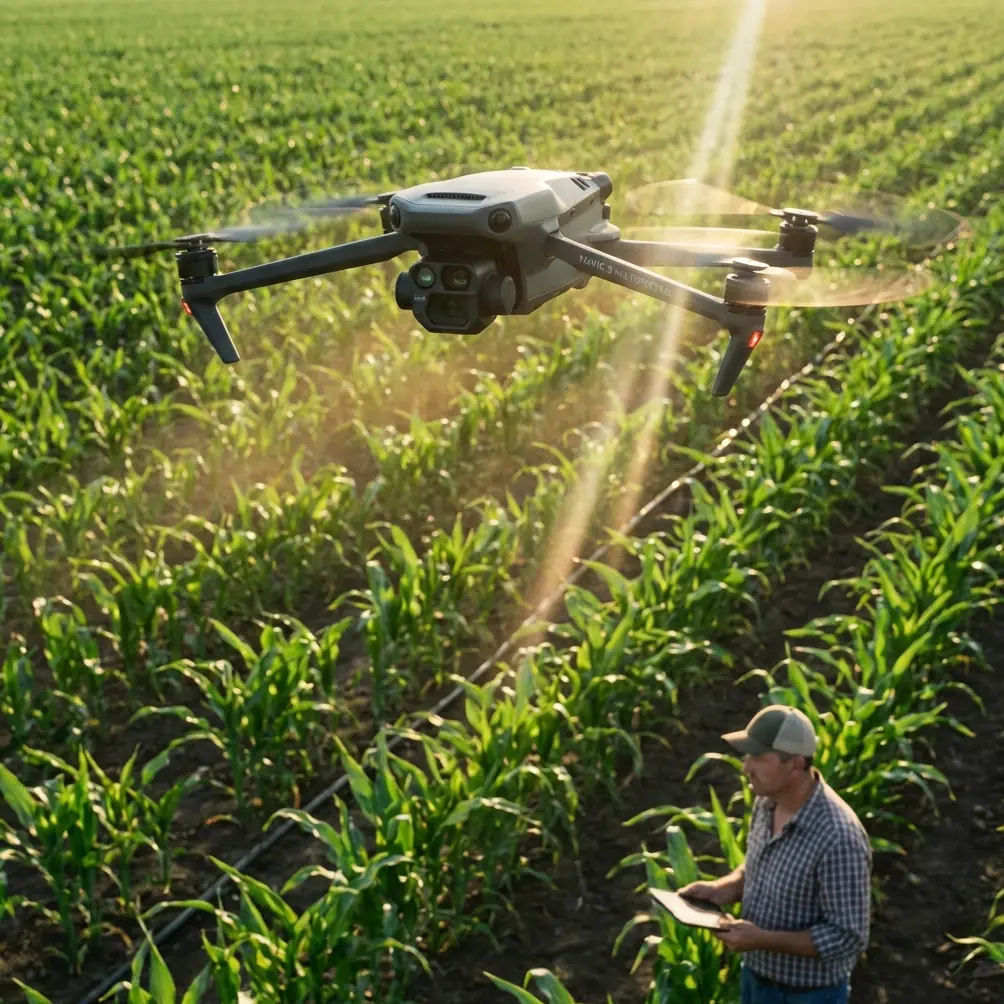
Mavic 3M in Low-Light Coastal Operations: A Practical Field Tutorial for Better Data and Better Decisions
META: Expert tutorial on using the Mavic 3M for low-light coastal missions, with practical guidance on multispectral workflow, RTK discipline, field observation, and smart accessory choices.
Low-light coastal work exposes every weakness in a drone workflow. Wind shifts fast, reflective water confuses exposure judgment, and feature-poor terrain can punish sloppy positioning. For teams flying the Mavic 3M near shorelines, that means one thing: success depends less on the aircraft alone and more on how well the operator sees, plans, and adapts.
That is why a recent photography essay from Chinese drone media struck a deeper nerve than its soft tone might suggest. Its core claim was simple: the real constraint is not the camera or the scene, but the operator’s ability to notice what matters. It framed image-making not as button pressing, but as observation. That idea sounds artistic at first. In reality, it has direct operational value for Mavic 3M users working on coastlines in dim conditions.
At nearly the same moment, a separate UAV education development pointed in the same direction from a very different angle. A China-Italy short-term drone study program has now opened in Tianjin, bringing 14 Italian students into hands-on UAV application training. That detail matters. It signals that drone competence is becoming more standardized, more international, and more skill-centered. In other words, the market is moving toward operators who can combine technical procedure with trained visual judgment.
For Mavic 3M crews, especially those tasked with coastal delivery support, shoreline inspection support, habitat mapping, or low-light environmental observation, these two news items tell the same story: hardware is no longer enough. You need a method.
Why this matters specifically for the Mavic 3M
The Mavic 3M sits in an unusual category. It is often discussed through the lens of agriculture because of its multispectral payload, but that framing can be too narrow. On a coastline, multispectral data can support vegetation edge analysis, water-adjacent land condition assessment, and repeatable geospatial comparison. The challenge is that low light compresses your margin for error.
A bright inland field gives you visual contrast and predictable surfaces. A pre-dawn or late-evening shoreline gives you wet sand, dark rock, tidal gloss, shadow pooling, and intermittent signal obstruction from terrain or built structures. If your RTK Fix rate is unstable, if your mission overlaps are loose, or if your visual references are weak, the resulting map can look acceptable on a quick screen review and still fail when someone tries to make decisions from it later.
This is where the “photographic eye” message becomes practical rather than philosophical. In the original photography piece, the point was that interesting images are not hiding only in dramatic locations. The operational version of that lesson is sharper: critical data cues are often sitting in ordinary-looking areas that inexperienced pilots ignore. A drainage line cutting through dune grass. A subtle moisture boundary. A patch of stressed vegetation near a path. A low-contrast edge where swath width planning breaks down because the terrain gives the camera very little to lock onto visually.
The Mavic 3M can record the data. But the operator still has to recognize where the mission will succeed or fail.
Step 1: Reframe the mission before you launch
If you are delivering along coastlines in low light, stop thinking in terms of “Can the drone fly this?” and start with “What do I need the data to prove?”
That single shift changes everything.
For a Mavic 3M mission, define the objective in one sentence before batteries go in. Examples:
- verify shoreline corridor condition before delivery route activation
- document vegetation stress near a coastal access line
- compare repeat-flight changes across a tidal boundary
- establish a georeferenced multispectral baseline for follow-up intervention
Without that clarity, pilots tend to collect too much of the wrong data. They fly wider than necessary, accept inconsistent angles, and assume the software will sort it out later. Low-light coastal environments punish that habit.
This is also the point where field observation matters. The photography article emphasized that seeing well is learned, not gifted. Applied to the Mavic 3M, that means walking the takeoff area for a few extra minutes and identifying the non-obvious factors: reflective pools, wind funneling, moving surf spray, sparse texture zones, and potential RTK interruptions.
Those details affect mission design more than many operators admit.
Step 2: Treat low light as a mapping problem, not just a visibility problem
Most pilots think low light mainly affects image brightness. For Mavic 3M work, the bigger issue is data consistency.
Coastal scenes can contain dark organic surfaces, bright foam, wet reflective flats, and abrupt transitions between land cover types. That can degrade your confidence in repeatability if you do not control for it. Multispectral work depends on disciplined capture conditions. The lower the light, the less forgiving the mission becomes.
A strong practice is to reduce improvisation. Build your route for repeatability:
- keep altitude consistent over the full block
- maintain overlap margins conservatively when the terrain has low contrast
- avoid mixing ad hoc oblique passes into a mission intended for analysis
- document cloud movement, tide stage, and wind direction in your field log
Centimeter precision is only useful when the rest of the workflow is stable enough to support it. An RTK-enabled aircraft can place data accurately, but if lighting conditions shift mid-mission and you fail to record those changes, your interpretation layer becomes weaker.
For shoreline work, I also recommend paying close attention to the edge zones where land meets water or saturated substrate. These margins are where operators often misread the scene. The human eye tends to flatten them in poor light. Multispectral outputs can reveal meaningful differences there, but only if the flight is clean.
Step 3: Watch RTK discipline like a hawk
The context around the Mavic 3M often includes phrases like RTK Fix rate and centimeter precision for good reason. On coastlines, they are not marketing terms. They are operational thresholds.
Open shore can be helpful for satellite visibility, but harbors, cliff edges, sea walls, low buildings, and vegetation bands can introduce inconsistency. If your RTK status drops during a critical segment, the problem may not be obvious until processing or comparison.
So build a simple rule: do not treat RTK as “on” or “off.” Treat it as a live quality condition that needs active monitoring.
Before and during the mission:
- confirm the correction link is stable before the first leg
- note whether fix performance changes as the aircraft moves along the coastline
- pause if status degrades near high-value data areas
- rerun short segments rather than trusting marginal capture
The academic side of UAV training is becoming more visible globally, and the Tianjin program with 14 Italian students is a useful sign of that trend. Programs like this are not just producing pilots who can complete flights. They are building operators who understand why measurement quality, positional integrity, and post-flight interpretation belong in the same conversation. Mavic 3M users who adopt that mindset now will outperform crews still relying on habit and luck.
Step 4: Accessorize for the coastline you actually fly
One of the most overlooked parts of a Mavic 3M setup is the ecosystem around the aircraft. The drone may be fixed, but the mission capability is not.
A third-party high-visibility strobe is one of the most practical upgrades for low-light coastal work. Not because it improves multispectral capture directly, but because it improves aircraft awareness during shoreline operations where background contrast can collapse. Against dark water, wet rock, or a fading horizon, maintaining visual orientation matters. A compact aftermarket strobe can make return-leg monitoring much cleaner, particularly when the aircraft is operating near complex edges or during handoff moments in delivery support scenarios.
That is the kind of enhancement that sounds minor until the day it saves time, reduces pilot hesitation, and helps keep mission execution crisp. Accessories should not be added for novelty. They should remove friction from real field conditions.
You can apply the same thinking to landing surfaces, weather shielding for the ground station, and transport organization. Salt, moisture, and blowing grit are not abstract risks on the coast. They are routine degraders of performance. A tidy system helps preserve the aircraft and your concentration.
Step 5: Borrow one lesson from spraying, even if you never spray
At first glance, terms like spray drift and nozzle calibration seem unrelated to the Mavic 3M. They are more at home in agricultural drone discussions. Yet they offer a useful mental model.
Professional spray work succeeds through calibrated variables. You do not guess at coverage. You define swath width, tune flow behavior, and control drift risk. Coastal Mavic 3M missions deserve the same discipline.
Think of your image collection plan the way a spray operator thinks about application consistency:
- your overlap strategy is your coverage control
- your route spacing functions like swath width management
- your environmental awareness serves the role of drift prevention
- your RTK checks are part of calibration discipline
That framework is surprisingly helpful for operators transitioning from basic drone flying into data-grade coastal missions. It turns “getting some usable images” into a repeatable process.
Step 6: Train your eye before you trust your software
The strongest insight from the photography article is not romantic. It is procedural. If you do not notice the meaningful details on site, your software cannot rescue your judgment later.
A well-trained eye catches things that flight apps do not explain:
- a slick tidal zone that will create inconsistent reflectance
- a shadow line that will split a survey block into two different visual conditions
- a dune edge that deserves tighter attention than the broad flat around it
- a repetitive surface pattern likely to complicate alignment confidence
This is also why formal and cross-border training matters. The new China-Italy short-term UAV study program shows that drone education is expanding beyond airframe familiarity into structured application knowledge. That is healthy for the whole sector. The Mavic 3M community benefits when more operators think like analysts instead of hobbyists with better batteries.
If your team wants to compare notes on mission setup for these conditions, a quick field-workflow discussion can save real time later—use this direct operations chat: https://wa.me/example
A practical low-light coastal checklist for Mavic 3M crews
Here is the workflow I recommend in the field:
Arrive early enough to observe the coastline before launch. Do not use setup time only for unpacking. Use it to read the surface and the light.
Confirm your actual mission objective in writing. A vague objective creates messy data.
Verify RTK performance before committing to the full route. If the fix is unstable, solve that first.
Plan conservative coverage where terrain texture is weak. Low-contrast coastal surfaces are rarely as easy as they look.
Use a third-party strobe if aircraft visibility is likely to suffer against water or dark shoreline features.
Log environmental conditions with discipline. Tide stage, wind direction, cloud movement, and glare conditions all affect interpretation.
After landing, review not just image quantity but image logic. Ask whether the dataset can support the decision it was meant to support.
That final question is where many operations improve fastest.
The broader signal behind these news items
One story argued that better seeing matters more than chasing the perfect subject. Another announced a formal drone training initiative involving 14 international students in Tianjin. They seem unrelated. They are not.
Together, they point to the next stage of professional UAV work: observation plus method.
For Mavic 3M operators in low-light coastal scenarios, that combination is the difference between flying a capable platform and producing reliable outcomes. Multispectral tools, RTK-supported positioning, and careful mission structure can generate excellent results, but only when the pilot notices subtle field conditions and responds intentionally.
The shoreline is a demanding teacher. It hides problems in plain sight. It also rewards crews who slow down, observe harder, and treat every mission as both a technical exercise and a seeing exercise.
That is the real takeaway here. Better coastal Mavic 3M work does not begin in the air. It begins when the operator learns to notice what the casual eye skips.
Ready for your own Mavic 3M? Contact our team for expert consultation.