
Mavic 3M in the Mountains: What Matters When Conditions
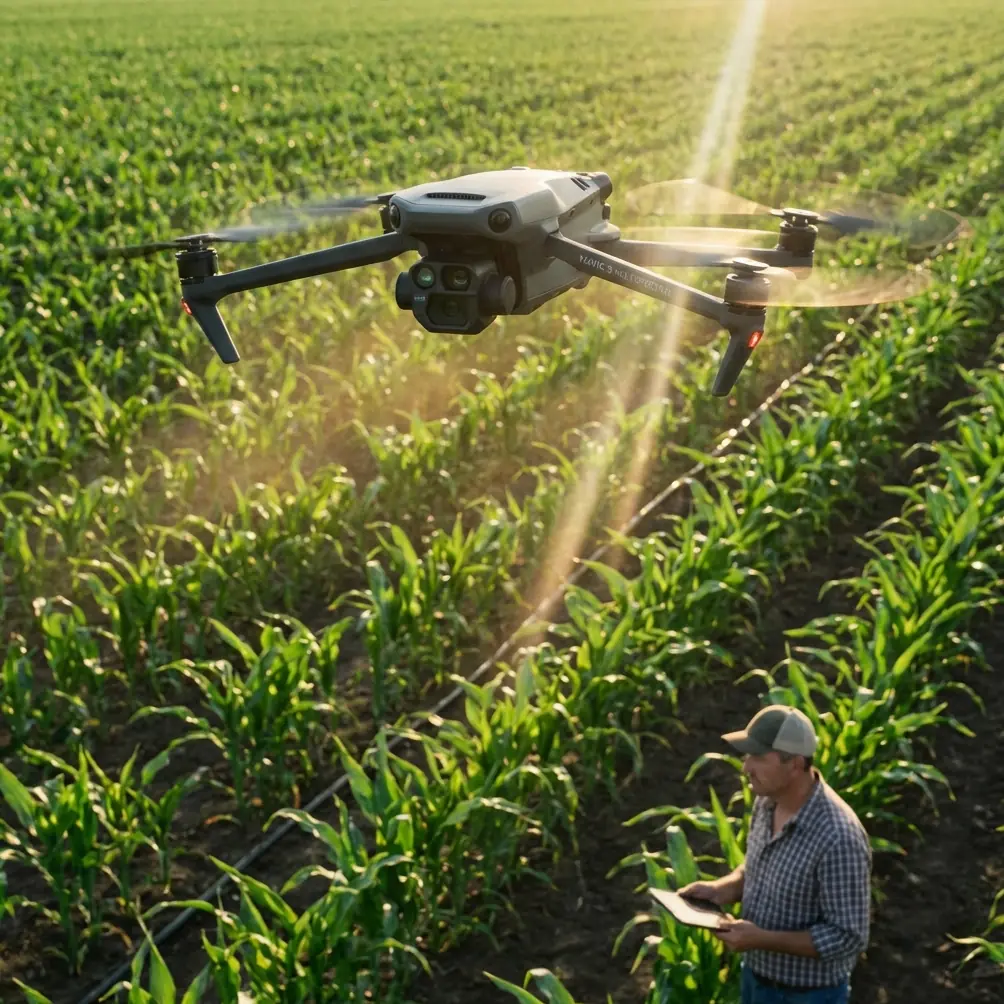
Mavic 3M in the Mountains: What Matters When Conditions Shift Mid-Flight
META: A field-focused look at using the DJI Mavic 3M in mountain wildlife work, through the lens of 2025 drone industry shifts toward AI, safer operations, and infrastructure-grade aerial data.
Mountain wildlife work exposes every weak assumption you can make about drones.
What looks manageable from the trailhead changes fast once you gain altitude. Wind funnels through ridgelines. Light drops behind a cloud bank and the terrain loses contrast. Moisture rises from forest canopies. A route that felt straightforward on a planning screen becomes a test of signal stability, flight discipline, and data quality. For operators using the Mavic 3M in these environments, the question is not whether the aircraft can fly. The real question is whether it can keep delivering usable environmental information when the mountain stops cooperating.
That is why the broader drone industry context in 2025 matters, even for a platform like the Mavic 3M that many readers may already know. One of the clearest industry signals this year came from the first quarter: industrial drones are becoming smarter, not just stronger. A recent industry roundup described 2025 Q1 with three defining traits: consumer drones becoming more accessible, industrial systems becoming more intelligent, and cross-sector integration going deeper. That may sound abstract until you put it in a mountain scenario. Then it becomes very practical. Smarter aircraft and smarter workflows mean less pilot workload when conditions tighten, better decisions in the air, and more confidence that the data captured will still support ecology, land management, and habitat analysis after the flight is over.
The same report also pointed to a larger structural shift. With low-altitude economy policies advancing in cities such as Shenzhen and Hefei, and with AI and lidar becoming more common, drones are moving from isolated tools toward infrastructure. That phrase deserves attention. If a drone is treated as infrastructure, the standard changes. It is no longer enough to fly and record something interesting. It has to fit into repeatable, accountable field operations. For wildlife teams working in mountains, that means consistent geospatial output, predictable mission execution, and the ability to operate safely despite unstable weather and terrain complexity.
This is where the Mavic 3M becomes especially interesting.
The Mavic 3M is often discussed through its multispectral capability, and rightly so. In mountain wildlife and habitat work, multispectral data is not a decorative extra. It is the difference between looking at a slope and understanding it. Standard RGB imagery can show a meadow edge, a disturbed patch, or a tree line. Multispectral sensing helps reveal plant vigor, stress patterns, moisture-related variation, and habitat transitions that are easy to miss in visible light alone. If you are documenting forage quality for herbivores, tracking post-disturbance vegetation recovery, or identifying ecological corridors across elevation bands, those layers matter.
Still, the aircraft itself is only half the story. The other half is operational resilience.
A recent release from DJI’s industrial side helps explain the direction of travel. On January 8, DJI introduced the Matrice 4 series, including the Matrice 4T and 4E, with upgrades spanning transmission, flight safety, accessories, AI, night vision, and thermal imaging. The significance is not that the Mavic 3M suddenly became a Matrice. It did not. The significance is that DJI is clearly pushing industrial operations toward AI-assisted, safer, more context-aware work. That shift affects expectations across the lineup. Buyers and field teams are no longer evaluating drones only by raw camera specs or endurance. They are asking how aircraft behavior, transmission reliability, and intelligent support features reduce uncertainty during real missions.
In a mountain wildlife context, that expectation is entirely justified.
Let me frame it through a common field problem.
A research team heads out before sunrise to document habitat conditions along a mid-elevation corridor used by ungulates moving between forest cover and open feeding ground. The goal is not cinematic footage. The goal is repeatable, georeferenced multispectral capture before direct sunlight creates harder contrast across the slope. Early conditions are calm. The valley floor is cool, the ridge line clear. The Mavic 3M launches cleanly and begins a planned route.
Ten minutes later, the mountain changes its mind.
Clouds drift across one face of the ridge. Wind starts to shear along the contour. Moisture thickens and visibility becomes less consistent as light shifts between bright and flat. This is the moment when workflow quality shows. A capable aircraft is not just one that stays airborne. It is one that helps the operator preserve mission value as weather changes mid-flight.
In these conditions, transmission stability is not a luxury. It is a control variable. The 2025 industry emphasis on upgraded image transmission in newer industrial platforms signals a broader truth: in difficult terrain, situational awareness depends on a trustworthy link. Mountain operations often involve uneven line of sight, changing reflectivity from rock and vegetation, and topographic interference that can erode confidence. When a pilot has to split attention between aircraft position, local obstacles, animal disturbance risk, and weather changes, weak transmission compounds every problem. Stronger operational design lowers the chance that a minor environmental change becomes an aborted mission or, worse, a preventable safety event.
Flight safety upgrades matter for the same reason. In flat farmland, a route correction may be trivial. On a mountain slope, a correction can put the aircraft closer to trees, terrain, or gust boundaries. Wildlife professionals also have an added constraint: they must minimize disturbance. A drone that can help maintain stable, deliberate flight paths is not just easier to operate; it is better aligned with ethical field practice.
That is why I see the Mavic 3M less as a standalone gadget and more as part of a changing professional standard. The industry is converging on systems that support decision-making under imperfect conditions. For mountain wildlife imaging, that means the operator should build missions around three priorities: data integrity, environmental adaptability, and disturbance control.
Data integrity comes first. Multispectral output is only useful if the flight can be completed with enough consistency to compare one mission against another. In mountain terrain, that requires disciplined route planning around slope exposure, wind channels, and shadow timing. The Mavic 3M’s value is not merely that it collects multispectral data. Its value is that it can make hard-to-read habitat patterns measurable across repeated surveys. If a meadow shows stress signatures after a dry spell, or if vegetation vigor changes along an elevation gradient where animals feed, you want to trust that the differences come from the landscape, not from a sloppy mission design.
Environmental adaptability comes next. The 2025 Q1 industry picture makes this point clearly: industrial drones are moving toward smarter operations, with AI becoming part of the equation. In the field, “smart” should not mean flashy automation for its own sake. It should mean reducing cognitive load. When weather changes in the middle of a mission, the best systems preserve pilot attention for what matters: terrain, animal movement, changing air, and mission purpose. Anything that improves aircraft awareness, transmission confidence, or flight security has direct operational significance.
Then there is disturbance control, which is often discussed too casually. Wildlife capture, in the observational sense, is not about getting as close as possible. It is about collecting useful information while respecting animal behavior and habitat sensitivity. In mountain settings, that usually means thoughtful stand-off distances, careful route geometry, and avoiding noisy repositioning over shelter zones or known movement corridors. A multispectral mission can often answer ecological questions without the aircraft pressing too close to the subject area. That matters when species are already responding to weather stress, seasonal movement, or human presence.
Some readers may notice the contextual terms that often surround drone agriculture and industrial workflows: RTK fix rate, centimeter precision, swath width, spray drift, nozzle calibration, IPX6K. Not all of these apply directly to the Mavic 3M’s mountain wildlife role, but they reveal the maturity of the professional drone conversation. The market is no longer satisfied by generic “high performance” claims. It wants measurable field behavior. In agriculture, operators ask about spray drift and nozzle calibration because outcomes depend on precision under changing conditions. In mapping and environmental work, the equivalent questions concern geospatial consistency, route reliability, and whether the aircraft can maintain useful output when the environment turns against the plan. The vocabulary changes by sector, but the underlying demand is the same: less guesswork, more operational confidence.
That is exactly why the “tool to infrastructure” shift from the 2025 industry report is so relevant. In mountain wildlife programs, drones increasingly support recurring surveys rather than one-off flights. A conservation group may revisit the same valley each month. A research team may compare post-storm vegetation recovery across a season. A land manager may use aerial data to understand habitat pressure near trails or restoration sites. Once those routines become institutional, the drone stops being a novelty. It becomes part of how the landscape is monitored.
And infrastructure has to be dependable.
For the Mavic 3M operator, that means creating missions that respect the mountain rather than trying to overpower it. Launch windows should be tied to slope light behavior, not just staff convenience. Routes should avoid unnecessary contour crossings when winds are building. Recovery plans should assume that weather can shift faster at elevation than on the valley floor. Multispectral surveys should be designed around ecological questions, not around the temptation to collect everything at once.
When weather changed during the flight in the scenario above, the drone “handled it” not through magic, but through a combination of platform capability and operator discipline. Stable mission logic, strong situational awareness, and the broader evolution of industrial drone design all played a role. That is the deeper lesson of 2025’s first-quarter trends. The best drone operations are becoming less about dramatic hardware leaps in isolation and more about intelligent systems that make field outcomes more reliable.
If you are using the Mavic 3M in the mountains, that should be encouraging. The platform sits inside an industry that is clearly moving toward safer transmission, stronger flight assurance, and AI-supported workflows. Even when your mission is as specific as documenting wildlife habitat across a cloud-shadowed ridge, you benefit from that wider shift.
The mountain will still change mid-flight. It always does.
What matters is whether your aircraft, your mission design, and your expectations are aligned with that reality. The Mavic 3M earns its place when it helps turn unstable field conditions into stable, interpretable environmental data. That is a higher bar than simply getting airborne. It is also the bar that serious wildlife and land-monitoring work now demands.
If you are comparing workflow options for mountain habitat surveys, this direct WhatsApp line can help clarify field-fit questions: https://wa.me/85255379740
Ready for your own Mavic 3M? Contact our team for expert consultation.