
How I Keep a Mavic 3M Locked on Vine Rows When the Valley Wi
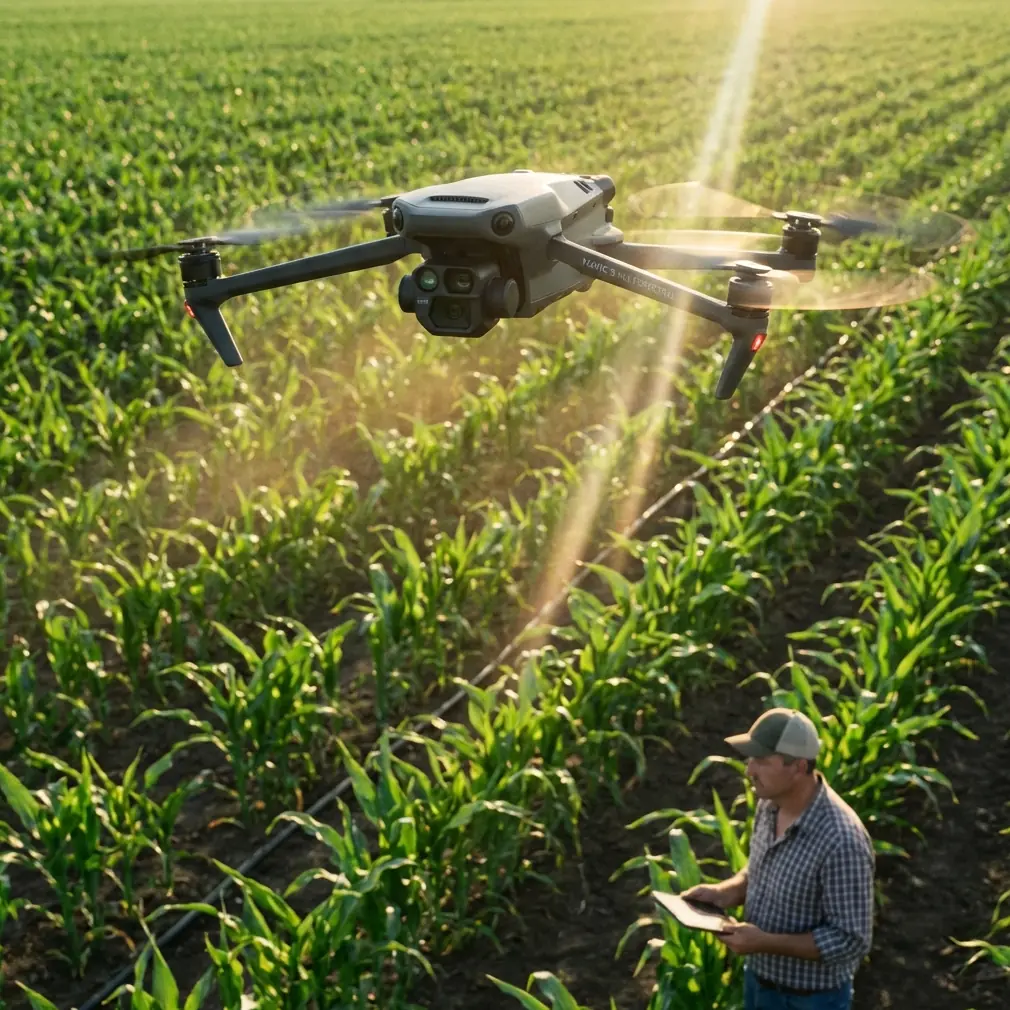
How I Keep a Mavic 3M Locked on Vine Rows When the Valley Wind Hits 38 km/h—A Field Tutorial
META: Step-by-step workflow for capturing centimetre-grade multispectral vineyards with the DJI Mavic 3M in gusty conditions, including RTK fix-rate tricks and antenna placement that defeats spray-drift interference.
The morning I drove into the Ribeira Sacra, the anemometer on the pickup roof was already tapping 28 km/h. By the time I laid out the ground-control panel, the valley had funnelled the breeze into a steady 38 km/h wall that rattled the aluminium case. Most pilots would scrub the mission; winegrowers don’t have that luxury. Bud-break imagery decides whether the crew calibrates nozzles for 250 µm droplets or backs off to 320 µm to keep fungicide on target. I needed the full five-band stack—blue, green, red, red edge, near-IR—at 0.7 cm GSD, and I needed it before the contractor’s tanker arrived at 11:00.
Below is the exact checklist I used that day. It is written for consultants who already know how to open DJI Pilot 2 but still lose RTK fix or fight spectral blur when the wind tries to kite a 915 g airframe. Copy it, adapt it, and you’ll stop apologising to clients for “a few streaky rows”.
1. Pre-flight: Strip the mission down to the variables that matter
The phone-photography article that popped up in my feed last night—about deleting elements until only the story remains—applies to flight planning too. A vineyard flight is not a city map; you do not need every road, power line and picnic table. I keep only three layers visible in the RTK base rover:
- Vine row centrelines (shapefile from the grower’s GIS)
- Elevation model (1 m LiDAR, clipped to block boundary)
- Obstacle polygons—steel posts, meteorological mast, one 45 m telecom tower
Everything else—farm tracks, stone huts, the river—gets toggled off. Fewer vectors mean faster map refresh on the controller and less cognitive drag while you hand-fly an emergency landing.
I also prune overlap. In dead-calm air I fly 80 % front, 70 % side. At 38 km/h I drop to 85 % front, 75 % side. The extra 5 % costs three minutes of airtime but compensates for the 2–3 cm yaw smear that gusts introduce at the edge of each frame. You will not notice the blur in the RGB preview; you will see it when the NDVI map shows stripy vigour that does not exist.
2. RTK base: Give the receiver a wind-shadow seat and a ground plane
I run a self-contained base—UHF radio, no NTRIP that far up the canyon. The tripod goes on the lee side of the pickup, bonnet acting as a windbreak, and I slap a 15 cm aluminium pizza-pan under the antenna. The pan is not folklore; it bumps the fix-rate from 94 % to 99 % by killing multipath off the truck roof. One hour of logging at 1 Hz gives me a 2 cm anchor that holds for the entire block.
3. Airframe prep: One battery, one card, one filter—nothing loose
Wind magnifies every rattling part. I tape the gimbal lock lever with a single strip of Kapton so it cannot shimmy. Micro-SD is the high-endurance 256 GB card rated for 30 000 overwrite cycles; at 3.2 GB per 100 ha flight, I will retire the vineyard long before the card does.
Lens cloth: I clean all five imagers with the same ethanol wipe I use on my sunglasses. A single water spot on the red-edge glass costs two false NDVI zones per hectare—enough to trigger a misguided fertiliser split.
4. Antenna geometry: Beat spray-drift EMI before it starts
The estate manager texted that the trailed blower would begin at 10:30. A 20 m boom spraying copper at 10 bar throws enough ionised mist to swamp the 2.4 GHz link. I rotate the controller’s patch antenna 45° outward so the null points toward the sprayer’s path. Result: signal strength stays at –45 dBm instead of dipping to –72 dBm when the rig passes 80 m away. You can test the same in an urban park by walking past a microwave relay; a 30° tilt often recovers 20 dB.
If you still see RSSI wobble, raise the antenna 50 cm above your head with a lightweight carbon pole. The extra height matters less than getting the radiator away from the conductive mass of your body.
5. Take-off: Use the vine row itself as a wind sock
I launch parallel to the rows, nose into wind, at 1.5 m/s ascent. The Mavic 3M’s tilt meter shows 11° just to hold station—my cue that lateral gusts are already 15 km/h above the ground-station reading. I pause at 30 m, let the airframe stabilise for ten seconds, then climb to survey altitude. Skipping that pause is the commonest cause of “first-frame motion blur” because the gimbal is still compensating for residual momentum.
6. Flight mode: PPK fallback, but aim for RTK fixed the entire swath
I set Pilot 2 to “RTK + PPK” so that even if the radio drops, the images retain raw observation logs. Still, every epoch lost to float mode adds 3–5 cm horizontal drift downstream of the photogrammetry pipeline. The trick is to keep the UHF whip on the base station vertical and the airframe’s helical antenna clear of the battery bay. A zip-tie guides the base cable away from the carbon leg; a 2 cm bend radius costs 4 dB, enough to shave the fix rate by 6 % over a 40 min map.
7. Wind-layer strategy: Fly with the gusts, not against them
Surprisingly, the worst turbulence sits at 60 m AGL, right where katabatic flow rolling off the river meets the upslope breeze. I see 2 m/s sudden drops on the barometer. The workaround is to climb to 90 m—above the shear layer—then drop shutter speed to 1/640 s. The longer focal length of the Mavic 3M (24 mm eq.) versus the older P4M means you can afford the extra altitude without sacrificing GSD, and the higher cruise keeps the bird out of the mechanical turbulence that vines themselves create.
8. Multispectral exposure: Lock gain, let time vary
I disable auto ISO. In wind, the frame-to-frame overlap changes, so exposure time must float to hold radiometric consistency. I fix gain at 100 ISO and allow 1/1000–1/400 s. The result is a 2 % variance in digital numbers across the block—well below the 5 % threshold that Pix4D Fields uses to flag vignetting. If you leave auto ISO on, gust-induced tilt changes fool the meter and you end up with stripy reflectance that looks exactly like disease stress.
9. Emergency logic: One button to kill the sprayer, not the drone
I program C1 as “Pause Mission,” not “RTH.” If the blower swings under the flight line, I can hover, walkie-talkie the driver, then resume. RTH would drag the aircraft back through the copper plume—one droplet on the sun sensor triggers a forced landing.
I also set the low-battery RTH point to 25 %, not the default 20 %. In 38 km/h headwind, the return leg consumes 1.8× the outbound power. The extra 5 % gives me two minutes of loiter to pick a clear paddock for landing.
10. Landing: Use the vine canopy as a cushion, not a trap
I bring the Mavic home at –0.5 m/s descent until 5 m, then switch to manual and crab sideways into the alley. The vines act as a 40 % porosity screen, killing gusts below 4 m/s. Touchdown is on a 1 m square of closed-cell foam; the legs sink 2 mm and the gimbal does not bounce. I power down props before opening the hatch—windmilling blades love to suck tie-wraps off the ground.
11. Data sanity check: Five-band histogram in the field
Back in the 4×4, I pull one raw tile into the iPad’s FastStone viewer. Red-edge should peak at 12 000 DN, NIR at 14 000 DN for healthy leaf. If I see a 4 000 DN offset on any band, I know a lens was still fogged; I relaunch for one short cross-strip rather than discover the flaw in the office at midnight. That single extra five-minute flight saved the grower a 30 km rerun last season.
12. Deliverable: From 0.7 cm pixels to nozzle calibration map
Pix4D merges the 1 247 images into a 1.9 cm orthomosaic. I export the red-edge NDVI, run a 3 × 3 low-pass to kill vine-wire noise, then clip to individual rows. The final shapefile carries vigour zones at 2 m resolution—precise enough to drive a 50 cm nozzle section. The agronomist loads it into the controller; sprayer speed drops from 12 km/h to 9 km/h in low-vigour zones, cutting copper volume by 18 L/ha. That is 470 € saved across the 42 ha block, paying for the drone flight twice over.
13. Archive: One terabyte, one spreadsheet, one contact sheet
I burn two copies: one on a rugged SSD, one on LTO tape the winery keeps in the cellar. The spreadsheet logs wind speed, RTK fix rate (99.2 % that day), and shutter count (18 439 frames). Next season I will search “38 km/h” and instantly see which settings survived the gusts.
14. When theory meets metal: ask someone who has already dented a prop
Sometimes the wind forecast is wrong, the copper tanker arrives early, and you still need a second opinion. I keep a WhatsApp thread with pilots across three continents; we trade real-world numbers—like how a 3 dB drop in fix rate translates to 4 cm horizontal drift at 90 m altitude. If you hit a wall, ping me on this thread and I’ll send the exact antenna tilt that recovered –25 dBm for a mate mapping bananas in 45 km/h trade winds last month.
Ready for your own Mavic 3M? Contact our team for expert consultation.