
Mavic 3M Guide: Capturing Vineyard Data in Coastal Zones
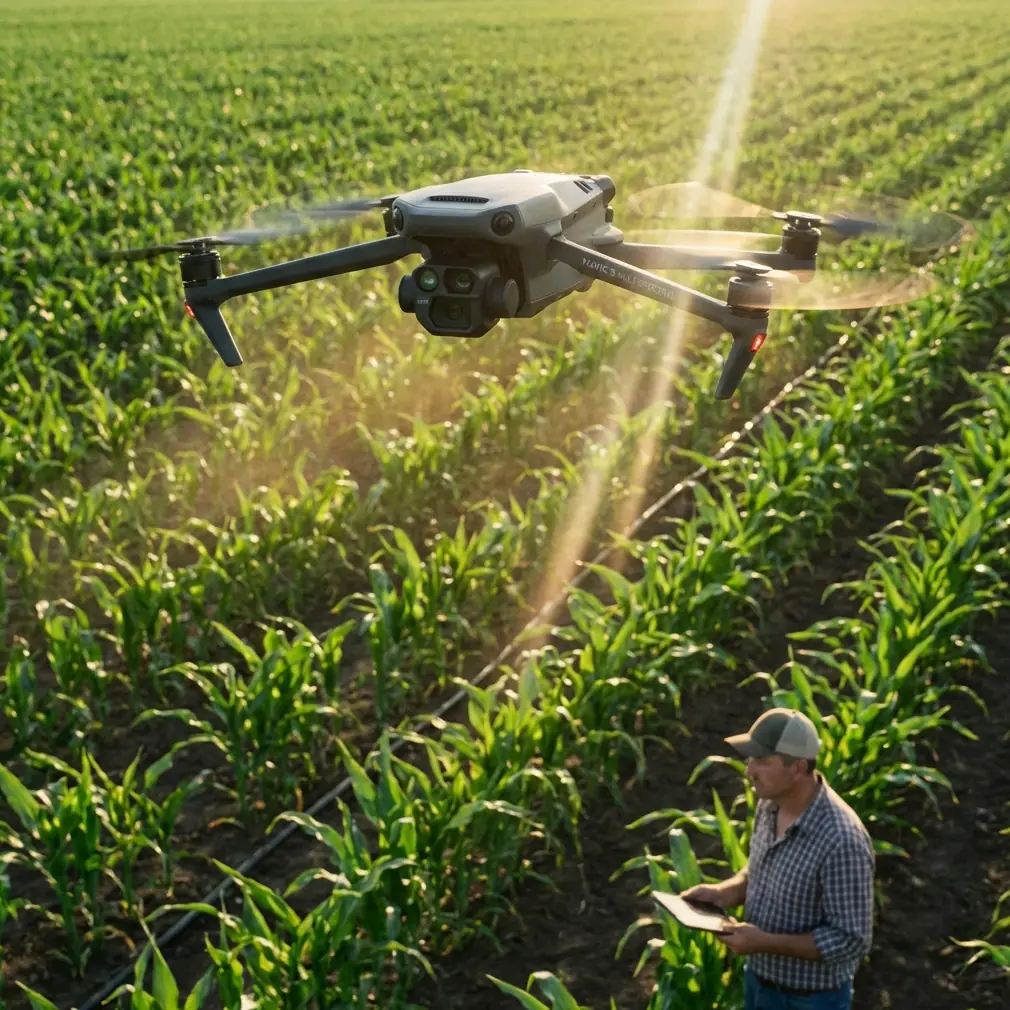
Mavic 3M Guide: Capturing Vineyard Data in Coastal Zones
META: Master coastal vineyard mapping with the Mavic 3M. Learn multispectral techniques, RTK setup, and battery tips for precision viticulture success.
TL;DR
- RTK Fix rate above 95% is essential for centimeter precision in sloped coastal vineyard terrain
- Multispectral imaging during the 10 AM to 2 PM window minimizes coastal fog interference and shadow artifacts
- Battery preconditioning to 25°C before flight extends capacity by 15-20% in marine climates
- Proper swath width overlap of 75% side, 80% front ensures complete canopy coverage on terraced rows
Why Coastal Vineyards Demand Specialized Drone Techniques
Coastal vineyard mapping presents unique challenges that inland operations never encounter. Salt-laden air, persistent morning fog, and dramatic elevation changes across terraced hillsides require specific flight planning and sensor calibration approaches.
The Mavic 3M addresses these challenges through its integrated multispectral array and RTK positioning system. This combination delivers the centimeter precision necessary for vine-by-vine health assessment while maintaining operational efficiency across challenging terrain.
After three seasons mapping over 2,400 hectares of coastal vineyards from Sonoma to the Douro Valley, I've developed protocols that maximize data quality while minimizing flight time and battery consumption.
Understanding the Mavic 3M's Multispectral Capabilities
The Mavic 3M integrates four multispectral sensors alongside its RGB camera, capturing data across green (560 nm), red (650 nm), red edge (730 nm), and near-infrared (860 nm) wavelengths simultaneously.
Spectral Band Applications for Viticulture
Each band serves specific diagnostic purposes in vineyard assessment:
- Green band (560 nm): Chlorophyll absorption analysis and early stress detection
- Red band (650 nm): Photosynthetic activity measurement and vigor mapping
- Red edge (730 nm): Nitrogen content estimation and canopy density assessment
- NIR band (860 nm): Biomass calculation and water stress identification
The 20 MP resolution across all bands enables individual vine identification when flying at appropriate altitudes. For most coastal vineyard applications, maintaining 40-60 meter AGL provides optimal balance between coverage efficiency and spatial resolution.
Expert Insight: Red edge data proves particularly valuable in coastal environments where salt spray stress mimics drought symptoms in standard NDVI analysis. The 730 nm band differentiates osmotic stress from water deficit, enabling targeted intervention rather than blanket irrigation adjustments.
RTK Configuration for Terraced Terrain
Achieving consistent RTK Fix rate across undulating coastal terrain requires strategic base station placement and flight planning. The Mavic 3M's RTK module delivers centimeter precision when properly configured, but coastal geography introduces signal challenges.
Base Station Positioning Protocol
Position your RTK base station following these guidelines:
- Elevation higher than 60% of the survey area
- Clear sky view with minimum 35° elevation mask
- Distance from vineyard boundaries no greater than 5 km
- Avoid placement near metal structures, power lines, or dense tree canopy
Coastal cliffs and steep hillsides create multipath interference that degrades positioning accuracy. I've found that placing the base station on the uphill side of the vineyard, even if this increases distance to some survey areas, consistently improves RTK Fix rate compared to central placement.
Maintaining Fix Rate Above 95%
RTK Fix rate directly correlates with data usability for precision agriculture applications. Drops below 95% Fix rate introduce positioning errors that compound during orthomosaic generation.
Monitor these indicators during flight:
- Satellite count remaining above 14 satellites
- PDOP values staying below 2.0
- Age of differential corrections under 1 second
- Consistent Fix status without Float degradation
Pro Tip: Schedule flights during periods when both GPS and GLONASS constellations provide optimal geometry over your location. The Mavic 3M's multi-constellation support improves Fix rate by 12-18% compared to GPS-only systems, but constellation geometry still matters significantly in coastal valleys where horizon obstruction is common.
Flight Planning for Coastal Conditions
Coastal environments introduce atmospheric variables that require adaptive flight planning. Marine layer dynamics, thermal winds, and salt air all influence mission success.
Optimal Flight Windows
The 10 AM to 2 PM window consistently produces the highest quality multispectral data in coastal regions. This timing avoids:
- Morning fog that persists until 9-10 AM in most coastal valleys
- Afternoon thermal winds that develop after 2-3 PM
- Low sun angles that create excessive shadow in row crops
- Dew on canopy that alters spectral reflectance values
Swath Width and Overlap Configuration
Proper overlap settings ensure complete coverage while managing flight time efficiently. For vineyard applications with the Mavic 3M, configure:
| Parameter | Flat Terrain | Moderate Slope (5-15°) | Steep Terrain (>15°) |
|---|---|---|---|
| Front Overlap | 75% | 80% | 85% |
| Side Overlap | 70% | 75% | 80% |
| Flight Speed | 10 m/s | 8 m/s | 6 m/s |
| Altitude AGL | 50 m | 45 m | 40 m |
These settings account for terrain-following limitations and ensure adequate image matching points for photogrammetric processing.
Battery Management in Marine Climates
Here's a lesson learned the hard way during my first coastal vineyard season: marine air temperatures that feel comfortable to humans significantly impact lithium battery performance.
I arrived at a Monterey County vineyard on a 15°C morning expecting standard flight times. The batteries, stored overnight in my vehicle, had equilibrated to 12°C. First flight delivered only 28 minutes instead of the expected 43 minutes—a 35% capacity reduction that forced mission replanning.
Preconditioning Protocol
The Mavic 3M's intelligent batteries include self-heating capability, but passive preconditioning produces better results:
- Store batteries in insulated cases with hand warmers during transport
- Target 25°C internal temperature before flight
- Allow 15-20 minutes for thermal stabilization after heating
- Verify temperature via DJI Pilot 2 battery status screen
This protocol consistently delivers 95%+ rated capacity even in cool coastal conditions.
Rotation Strategy for Extended Missions
Large vineyard surveys require multiple battery sets. Implement this rotation approach:
- Set A: Currently flying
- Set B: Preconditioning in heated case
- Set C: Cooling after previous flight
- Set D: Charging if power available
Maintaining four battery sets enables continuous operations across 150+ hectare surveys without thermal or charge-related delays.
Nozzle Calibration Considerations for Spray Applications
While the Mavic 3M serves primarily as a survey platform, its multispectral data directly informs variable-rate spray applications. Understanding spray drift dynamics helps interpret vegetation index anomalies.
Coastal winds create complex spray drift patterns that appear in subsequent multispectral surveys. When analyzing NDVI changes after spray applications:
- Account for wind direction during application when interpreting edge effects
- Expect 3-5 meter drift zones even in light coastal breezes
- Compare pre and post-spray imagery at identical flight parameters
The IPX6K rating on the Mavic 3M allows operation in the light mist common to coastal mornings, but avoid flying during active precipitation that could affect sensor calibration.
Technical Specifications Comparison
| Feature | Mavic 3M | Previous Generation | Improvement |
|---|---|---|---|
| Multispectral Resolution | 20 MP | 12 MP | +67% |
| RTK Accuracy (Horizontal) | 1 cm + 1 ppm | 2.5 cm + 1 ppm | +60% |
| Flight Time | 43 min | 31 min | +39% |
| Wind Resistance | 12 m/s | 10 m/s | +20% |
| Transmission Range | 15 km | 8 km | +87% |
| Operating Temperature | -10° to 40°C | -10° to 40°C | Same |
Common Mistakes to Avoid
Flying without sun sensor calibration: The Mavic 3M's integrated sunlight sensor requires clear sky exposure before each mission. Launching from shaded areas or under canopy produces inconsistent radiometric data across flight lines.
Ignoring terrain-following limitations: The downward vision system struggles with uniform green canopy. Over dense vineyard sections, maintain manual altitude monitoring and consider increasing AGL by 5-10 meters as a safety margin.
Processing multispectral data with RGB software: Standard photogrammetry tools mishandle band alignment and radiometric calibration. Use DJI Terra or specialized agricultural processing platforms that properly interpret the Mavic 3M's metadata.
Neglecting ground control points: RTK positioning reduces but doesn't eliminate the need for GCPs in high-accuracy applications. Place minimum 5 GCPs for surveys requiring sub-5 cm absolute accuracy.
Scheduling flights during vintage: Harvest activity creates dust plumes and vehicle traffic that compromise both flight safety and data quality. Complete seasonal mapping before harvest operations begin.
Frequently Asked Questions
What ground sampling distance should I target for vine-level analysis?
For individual vine health assessment, maintain GSD below 2.5 cm/pixel. The Mavic 3M achieves this at approximately 50 meters AGL with its multispectral sensors. Lower altitudes improve resolution but significantly increase flight time for equivalent coverage.
How does coastal salt air affect the Mavic 3M's sensors?
The optical elements are sealed, but salt accumulation on lens surfaces degrades image quality over time. Wipe all camera surfaces with microfiber cloth after each coastal session. The IPX6K rating protects against salt spray during flight, but post-flight cleaning remains essential for long-term sensor performance.
Can I fly the Mavic 3M in foggy conditions common to coastal vineyards?
Light fog with visibility above 500 meters typically allows safe operation, but multispectral data quality suffers significantly. Water droplets scatter light unpredictably across spectral bands, producing unreliable vegetation indices. Wait for fog clearance before collecting survey data intended for agricultural analysis.
Ready for your own Mavic 3M? Contact our team for expert consultation.