
Mavic 3M Field Report: What Utility Drone Inspections Teach
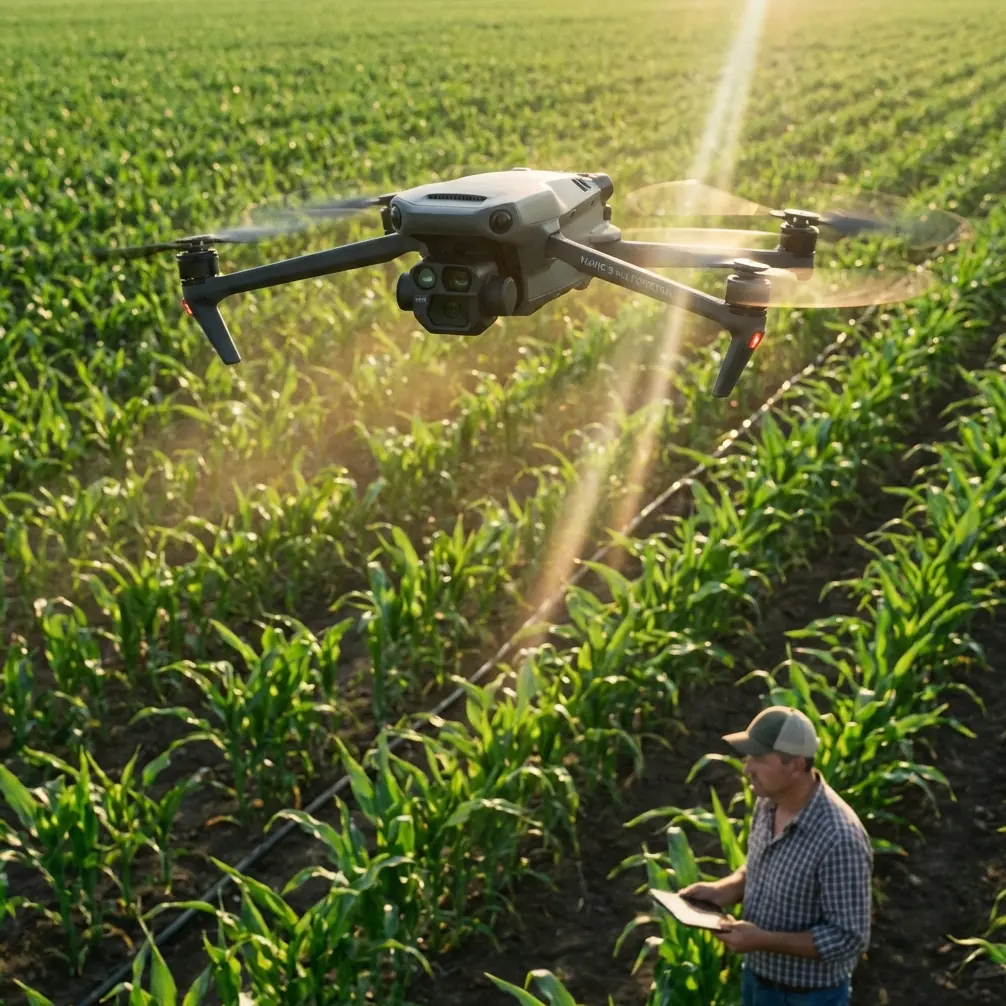
Mavic 3M Field Report: What Utility Drone Inspections Teach Us About Capturing Highways in Extreme Temperatures
META: A field-driven Mavic 3M analysis for highway and utility operators, connecting powerline drone inspection realities, extreme-weather workflows, and the growing value of specialized UAV expertise.
Highway work in extreme heat or biting cold has a way of exposing weak assumptions. Batteries behave differently. Sensors drift. Dust settles where it should not. Tiny surface clues that matter for maintenance can disappear in glare, frost, or dirty optics. That is exactly why the latest drone news matters to anyone evaluating the Mavic 3M for infrastructure capture rather than agriculture alone.
Two recent signals stand out.
First, international defense coverage points to something larger than hardware: drone warfare expertise is now being treated as an exportable capability. Not just aircraft. Not just payloads. Know-how. Operational judgment. Counter-drone understanding. Mission planning under pressure. That trend matters because it confirms a broader market shift already visible across civil operations: the organizations getting the best results from drones are no longer the ones that simply own advanced airframes. They are the ones that have developed repeatable field practices around them.
Second, a utility inspection report from Yingtan, Jiangxi highlights a very practical truth about unmanned inspection. A drone equipped with a high-definition camera can fly close to energized equipment, work through geographic and weather limitations, and pick up faults that are difficult to detect from the ground. The examples are specific and useful: cracked insulators, overheated clamps, and electrical discharge issues that can be missed in conventional visual checks.
For Mavic 3M users focused on highways in extreme temperatures, those two stories connect more directly than they might seem. One is about the rising value of operational expertise. The other is about what a drone can reveal when inspection conditions are difficult and the target defects are subtle. Put them together and you get the real lesson: the value of a platform like the Mavic 3M depends on the rigor of the workflow around it, especially when temperature stress, long linear corridors, and safety exposure enter the picture.
Why this matters for highway capture, not just utility lines
The Mavic 3M is usually discussed through the lens of multispectral work. That is fair, but incomplete. For corridor operations near highways, the more interesting question is how a multisensor workflow can improve defect discovery and documentation when ground teams are limited by traffic, terrain, weather, or line-of-sight constraints.
The Yingtan utility case is a good example of the inspection logic. Flying close to live equipment with a high-definition camera is not just convenient. It changes what can be seen. Ground-based observers may miss a hairline crack on an insulator or a hot line clamp because the angle is wrong, the background is busy, or the operator cannot safely get close enough. The same principle applies to highway assets in extreme conditions. Expansion joints, overhead structures, roadside power feeds, drainage points, retaining features, and sign support elements often show early distress in small, localized ways. You do not need a dramatic failure to justify aerial inspection. You need a repeatable way to see what field crews are likely to miss.
That is where the Mavic 3M earns attention. Not because it is magic, and not because “multispectral” should be sprinkled over every use case, but because a disciplined capture plan can combine visual detail with location integrity and comparative analysis. In practical terms, that means you can revisit the same corridor sections, compare image sets across temperature swings, and document whether a suspicious area is stable, worsening, or simply a false alarm caused by lighting or contamination.
The overlooked pre-flight step that protects safety features
Before any extreme-weather highway mission, there is one simple step that deserves more respect than it usually gets: cleaning.
Not a quick wipe with whatever cloth is nearby. A deliberate pre-flight cleaning of lenses, obstacle sensing windows, airframe vents, and landing gear contact points. If your team is running near salted winter roads, dusty shoulders, or hot asphalt environments, residue accumulates faster than most crews admit. That buildup affects more than image quality. It can interfere with safety-related sensing, distort visual interpretation, and create uncertainty that operators mistakenly blame on software or satellite conditions.
This matters with the Mavic 3M because small defects can resemble contamination artifacts. A dirty lens can soften edge detail. Road grime on forward sensors can reduce confidence when flying low along structures. Fine dust around cooling paths can matter during high-temperature sorties where thermal loading is already elevated. In other words, pre-flight cleaning is not cosmetic maintenance. It is a mission reliability step.
For teams capturing highways in extreme temperatures, I recommend making cleaning part of the launch checklist immediately before battery insertion, not earlier in the day. Windblown grit, condensation, and vehicle transport dust can undo a careful prep job in minutes.
Expertise is becoming the real product
The defense news item uses a blunt phrase: drone warfare expertise is becoming a global export industry. Strip away the military context and the core business lesson still applies to civil operators. Specialized drone knowledge now travels as a service layer above the aircraft itself.
That is highly relevant to Mavic 3M deployment in infrastructure work. Many teams still think procurement solves capability gaps. It does not. The hard part is turning a capable platform into a trustworthy inspection system. That takes defined mission profiles, altitude discipline, consistent overlap rules, RTK procedures, data naming standards, weather thresholds, and escalation criteria for anomalies found in the field.
This is where a consultant or operations lead actually adds value. Not by handing over a spec sheet, but by helping teams develop a field method that survives real conditions. If your corridor mission takes place in freezing dawn temperatures and finishes over heat-soaked pavement by mid-afternoon, you are not dealing with one environment. You are dealing with several micro-environments in a single job. Sensor cleanliness, battery rotation discipline, and RTK fix rate stability become operational issues, not background details.
That is why the “expertise export” trend should get the attention of Mavic 3M buyers. It signals that advanced drone operations are maturing into a knowledge economy. The winning organizations are bottling procedures, not just collecting aircraft.
What the Jiangxi inspection story tells highway operators
The utility report from Jiangxi is short, but the operational implications are strong. The drone’s high-definition camera was highlighted for its ability to approach energized equipment closely and detect hidden hazards that are hard to identify from the ground. Three examples were named: insulator cracks, clamp overheating, and equipment discharge.
Each of those examples points to a broader inspection principle.
Cracks are often geometry problems. You need the right angle, distance, and resolution.
Overheating is a progression problem. Today’s mild anomaly can become tomorrow’s service interruption.
Electrical discharge is a visibility problem. What matters may be intermittent, subtle, and easy to miss in a routine pass.
Translate those into highway operations and the parallels are obvious. Hairline structural issues, thermal stress indicators, and difficult-to-observe localized defects all benefit from aerial perspectives and repeatable capture geometry. Even when the Mavic 3M is not the only aircraft in a fleet, it can still play a strategic role in corridor intelligence by improving consistency, geolocation confidence, and multisensor context.
That last point matters more in extreme temperatures. Heat shimmer, reflected glare, frozen surfaces, and variable wind can all make field judgment less reliable. Repeatable aerial capture helps separate real asset behavior from momentary environmental noise.
A field workflow that actually fits Mavic 3M highway missions
If I were building a Mavic 3M field routine for highway capture in extreme temperatures, I would keep it strict and simple.
Start with the airframe inspection and cleaning sequence. Confirm optical surfaces are clean and dry. Check sensor windows. Inspect propellers for chips or deformation, especially after cold transport. Verify battery temperature readiness before launch. Then confirm RTK status and wait for a solid fix rather than forcing the sortie forward on a shaky positional baseline. Centimeter precision only matters if you actually secure it in the field.
From there, define the corridor in segments. Do not let long linear missions turn into improvised wandering. Segment by structure type, traffic exposure, and thermal behavior. Overpasses, sign gantries, drainage areas, power-adjacent sections, and retaining walls do not fail in the same way, so they should not be captured with the same assumptions.
This is also where the usual agriculture vocabulary starts to shift into infrastructure use. Multispectral data is not just for vegetative analysis along rights-of-way. In a highway context, it can support trend interpretation in embankments, drainage-adjacent vegetation stress, and corridor edge conditions that may hint at underlying maintenance issues. The point is not to force every mission into a crop-science model. The point is to use the Mavic 3M’s sensing stack intelligently where corridor health interacts with terrain, moisture, and surface change.
I would also keep swath width conservative in difficult weather. Bigger coverage sounds efficient until the data loses consistency. In extreme conditions, narrower, repeatable passes often produce more usable output than aggressive coverage plans that look good on paper and disappoint in review.
What extreme temperatures change in the real world
Extreme heat and extreme cold do not just reduce comfort. They distort assumptions.
In high heat, crews face glare, convection shimmer, hot vehicle interiors, and accelerated dust loading from dry shoulders. The drone may still fly well, but your image interpretation and operational margins tighten. Shorter sortie planning and more frequent cleaning checks become sensible, not cautious.
In cold conditions, battery behavior and condensation management become central. A drone pulled from a heated vehicle into freezing air needs a deliberate transition process. Landings on wet, salted surfaces invite contamination. Lens fogging after storage changes can quietly wreck a data set. These are the moments when a disciplined team outperforms a merely experienced one.
That returns us to the bigger story in the news cycle. Drone capability is becoming exportable expertise because field reliability depends on knowing what to do before problems become visible. The airframe matters. The craft of operating it matters more.
Why Mavic 3M fits this moment
The Mavic 3M sits in an interesting position. It is compact enough to deploy quickly, sophisticated enough to support serious data capture, and familiar enough that many teams underestimate how much structure it deserves around mission planning. For highway operators facing extreme temperatures, that combination is useful. It allows rapid deployment without automatically sacrificing data discipline.
But it also raises the standard. A platform this capable should not be flown casually on critical infrastructure jobs. The organizations getting results are treating pre-flight prep, RTK fix validation, corridor segmentation, and post-flight comparison as standard operating procedure.
If your team is building that process now, it helps to borrow lessons from adjacent sectors. Utility inspection has already demonstrated the value of getting close to hard-to-assess assets and finding subtle defects that ground crews miss. Defense reporting, in a very different arena, shows that operational drone knowledge itself is becoming marketable because outcomes depend on method, not just machines.
That is the real takeaway for Mavic 3M users.
The aircraft is not the whole story. The workflow is.
And if your mission profile includes highways under punishing temperature swings, workflow discipline starts with small things that prevent bigger failures later: clean sensors, verified positioning, conservative capture planning, and a team that knows exactly what anomalies matter in the first place.
If you want to compare field workflows for corridor inspection or talk through your own deployment checklist, send a note here: message Marcus directly.
Ready for your own Mavic 3M? Contact our team for expert consultation.