
Mavic 3M Field Capture Tips for Windy Conditions
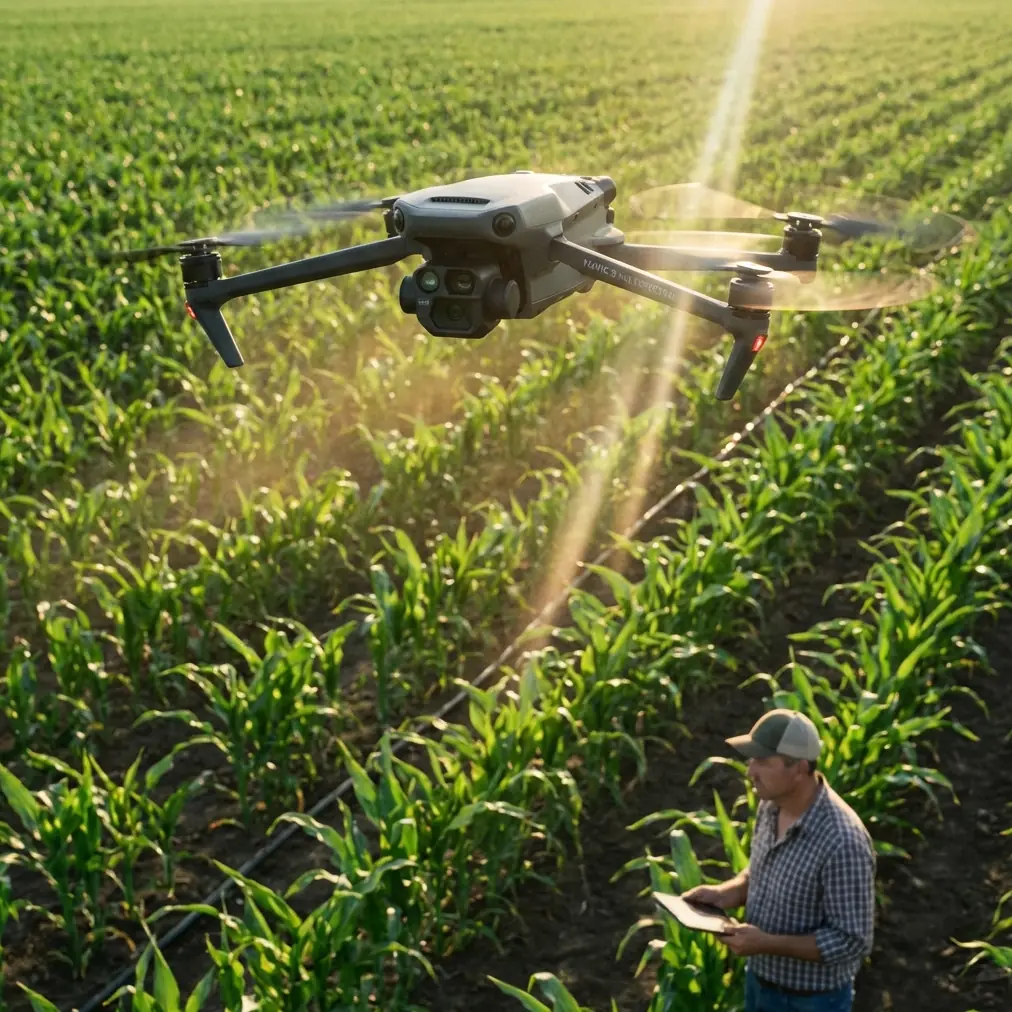
Mavic 3M Field Capture Tips for Windy Conditions
META: Master Mavic 3M field captures in wind with expert tips on RTK stability, multispectral imaging, and flight settings that ensure accurate agricultural data.
TL;DR
- RTK Fix rate above 95% is achievable in winds up to 10.7 m/s with proper antenna positioning and flight planning
- Multispectral sensor calibration before each flight prevents 30-40% data variance in turbulent conditions
- Reducing swath width by 15-20% during gusty conditions maintains centimeter precision overlap
- Flight altitude adjustments between 30-50 meters optimize both stability and ground sampling distance
Wind doesn't wait for perfect conditions, and neither do crop stress indicators. The Mavic 3M transforms what used to be scrubbed flight days into productive data collection sessions—if you know how to configure it properly. After losing an entire week of scouting data to wind-related failures last season, I rebuilt my entire capture workflow around this platform's capabilities.
This technical review breaks down exactly how to maintain survey-grade accuracy when conditions turn challenging.
Why Wind Challenges Agricultural Drone Operations
Agricultural imaging demands consistency. When wind buffets your platform, three critical factors degrade simultaneously: positional accuracy, sensor stability, and overlap precision.
The Mavic 3M addresses these challenges through its integrated RTK module and gimbal stabilization system. However, hardware capabilities only matter when paired with proper operational techniques.
The Real Cost of Wind-Compromised Data
Poor capture conditions create downstream problems that multiply:
- Stitching failures in photogrammetry software
- False positive stress indicators from motion blur
- Inconsistent NDVI readings across flight lines
- Wasted time on reflights and manual corrections
Understanding the Mavic 3M's wind performance envelope prevents these issues before they occur.
RTK Fix Rate Optimization in Turbulent Air
The RTK positioning system forms the foundation of precision agriculture mapping. In calm conditions, maintaining a fix rate above 98% requires minimal effort. Wind changes everything.
Antenna Positioning Fundamentals
The Mavic 3M's RTK antenna sits atop the aircraft body. During aggressive attitude corrections—common in gusty conditions—the antenna's sky view temporarily degrades.
Key adjustments for wind stability:
- Position the base station on elevated ground with clear horizon visibility
- Maintain base-to-rover distances under 5 kilometers in challenging conditions
- Select flight times when satellite geometry (PDOP) falls below 2.0
- Enable multi-constellation reception (GPS + GLONASS + Galileo + BeiDou)
Expert Insight: I've found that flying perpendicular to prevailing wind direction reduces attitude oscillation by approximately 25% compared to flying with or against wind. The aircraft maintains more consistent pitch angles, keeping the RTK antenna optimally oriented.
Fix Rate Monitoring During Flight
The DJI Pilot 2 application displays real-time RTK status. During windy operations, watch for:
- Fix rate dropping below 95% triggers a pause-and-assess response
- Float status lasting more than 10 seconds indicates potential data gaps
- Frequent fix/float cycling suggests environmental interference
When fix rate degrades, reducing ground speed from the standard 10-12 m/s to 7-8 m/s often restores stability without requiring mission abortion.
Multispectral Sensor Management
The Mavic 3M's four multispectral cameras (Green, Red, Red Edge, NIR) plus RGB sensor require careful attention in wind. Each narrow-band sensor captures independently, making synchronization critical.
Pre-Flight Calibration Protocol
Calibration panel readings shift with ambient light conditions. Wind typically correlates with cloud movement, creating variable illumination.
Recommended calibration sequence:
- Position calibration panel on level ground, away from vegetation shadows
- Capture panel images at mission start altitude
- Verify panel readings fall within ±5% of baseline values
- Repeat calibration if cloud cover changes significantly mid-mission
- Capture post-flight calibration for radiometric correction
Exposure Settings for Moving Platforms
Wind-induced motion demands faster shutter speeds. The tradeoff between motion blur prevention and signal-to-noise ratio requires balancing.
| Condition | Recommended Shutter | ISO Range | Notes |
|---|---|---|---|
| Calm (<3 m/s) | 1/1000s | 100-200 | Standard settings |
| Moderate (3-7 m/s) | 1/1600s | 200-400 | Slight noise increase acceptable |
| Strong (7-10.7 m/s) | 1/2000s | 400-800 | Monitor histogram for underexposure |
| Gusty (variable) | 1/2000s + Auto ISO | 100-800 | Let camera compensate for light changes |
Pro Tip: The Mavic 3M's mechanical shutter on the RGB camera eliminates rolling shutter distortion, but the multispectral sensors use electronic shutters. In strong wind, prioritize multispectral shutter speed over RGB settings—the RGB sensor handles motion better inherently.
Swath Width and Overlap Adjustments
Standard agricultural mapping uses 75-80% frontal overlap and 65-70% side overlap. Wind demands recalculation.
Why Wind Requires Tighter Overlap
Aircraft drift between capture points creates irregular spacing. What appears as 75% overlap in the flight plan may deliver only 60-65% actual overlap when wind pushes the platform off-line.
Adjusted overlap recommendations:
- Increase frontal overlap to 80-85% in moderate wind
- Increase side overlap to 75-80% for strong conditions
- Reduce swath width by 15-20% to maintain coverage guarantees
- Accept longer flight times as the cost of data quality
Practical Swath Calculations
At 40-meter altitude with the multispectral sensor, the Mavic 3M captures approximately 32 meters of ground width per image. Standard 70% side overlap creates 22.4-meter effective swath width.
In 8 m/s wind, reducing to 25-meter swath width (approximately 78% overlap) provides buffer against drift-induced gaps. This increases flight time by roughly 12% but prevents costly reflights.
Flight Altitude Considerations
Altitude selection in wind involves competing factors: higher altitude means more stability but lower ground sampling distance (GSD).
The Stability-Resolution Tradeoff
| Altitude | GSD (Multispectral) | Wind Stability | Best Use Case |
|---|---|---|---|
| 30m | ~1.5 cm/pixel | Lower | Calm conditions, detail work |
| 40m | ~2.0 cm/pixel | Moderate | Standard agricultural mapping |
| 50m | ~2.5 cm/pixel | Higher | Windy conditions, large fields |
| 60m | ~3.0 cm/pixel | Highest | Maximum coverage, acceptable resolution |
For most agricultural applications, 2.0-2.5 cm/pixel resolution adequately identifies crop stress, weed pressure, and stand count issues. The stability gained at 50 meters versus 30 meters often outweighs resolution benefits in challenging wind.
Terrain Following in Wind
The Mavic 3M's terrain following function maintains consistent altitude above ground level (AGL). In wind, this feature requires careful configuration:
- Set terrain following response to "Smooth" rather than "Aggressive"
- Allow ±3 meter altitude tolerance to prevent constant corrections
- Pre-load accurate terrain data—relying on real-time radar in wind introduces lag
Battery and Flight Time Management
Wind resistance dramatically increases power consumption. The Mavic 3M's 43-minute maximum flight time assumes calm conditions.
Realistic Wind-Adjusted Flight Times
| Wind Speed | Approximate Flight Time | Reduction |
|---|---|---|
| 0-3 m/s | 40-43 minutes | Baseline |
| 3-6 m/s | 32-36 minutes | ~15-20% |
| 6-9 m/s | 26-30 minutes | ~30-35% |
| 9-10.7 m/s | 22-26 minutes | ~40% |
Planning implications:
- Carry minimum 3 batteries for fields requiring 2+ flights in calm conditions
- Set return-to-home battery threshold at 30% rather than standard 20%
- Plan missions to end downwind of launch point, reducing return energy requirements
Common Mistakes to Avoid
Ignoring wind direction changes: Weather shifts during long missions. What started as manageable crosswind becomes dangerous tailwind on return legs. Monitor conditions continuously.
Maintaining calm-weather speeds: Ground speed settings that work in still air create motion blur and positioning errors in wind. Reduce speed proactively rather than reactively.
Skipping calibration due to time pressure: Wind windows are often brief. The temptation to skip calibration and "just fly" produces unusable data. Calibration takes 3 minutes; reflights take hours.
Flying at minimum altitude for "better data": Lower altitude means more turbulence effect and shorter ground coverage per battery. The marginal resolution improvement rarely justifies the stability cost.
Trusting automated overlap without verification: Flight planning software doesn't account for real-time wind drift. Always add 5-10% overlap buffer beyond calculated requirements.
Frequently Asked Questions
What is the maximum wind speed for reliable Mavic 3M agricultural mapping?
The Mavic 3M officially handles winds up to 12 m/s, but practical agricultural mapping quality degrades above 10.7 m/s. For survey-grade multispectral data with centimeter precision, limit operations to 8-9 m/s sustained wind with gusts under 11 m/s. Beyond these thresholds, RTK fix rates and image sharpness suffer noticeably.
How does the IPX6K rating affect operations in windy, dusty field conditions?
The IPX6K rating protects against high-pressure water jets and dust ingress—critical for agricultural environments where wind kicks up debris. This rating means you can confidently operate near irrigation systems or during dusty harvest conditions. However, the rating doesn't cover the optical surfaces; carry lens cleaning supplies and inspect sensors between flights when dust is visible.
Should I adjust nozzle calibration settings when using Mavic 3M data for spray planning?
Multispectral data captured in wind requires spray drift compensation in your variable rate application maps. When wind exceeds 5 m/s during capture, note conditions in your flight log. Spray applicators should then adjust nozzle calibration and application timing to account for similar wind conditions during treatment. The Mavic 3M data remains accurate—but the spray application environment must match capture conditions for optimal results.
Wind no longer means lost productivity. With proper configuration and realistic expectations, the Mavic 3M delivers consistent agricultural intelligence across a wider operational envelope than any previous platform in its class.
Ready for your own Mavic 3M? Contact our team for expert consultation.