
Mavic 3M on Coastal Construction Sites: A Practical Case
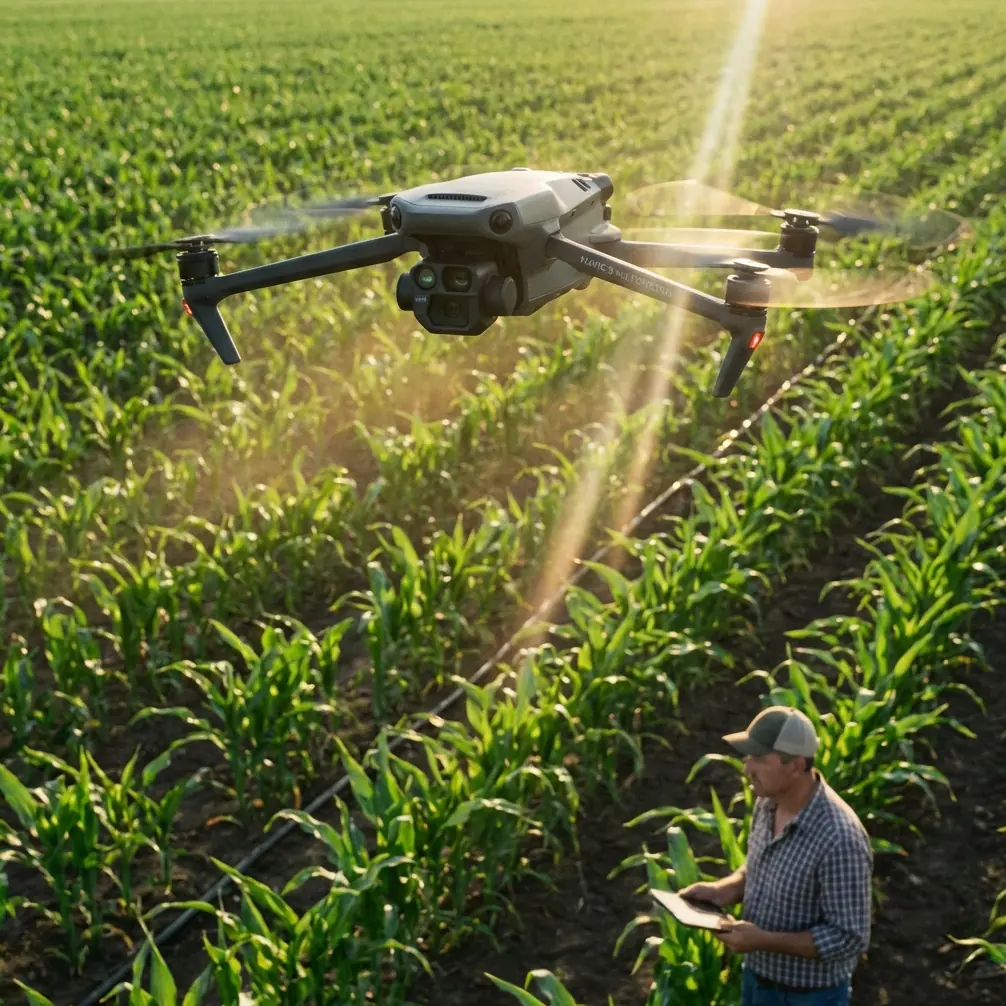
Mavic 3M on Coastal Construction Sites: A Practical Case Study in Smarter Capture
META: A field-based Mavic 3M case study for coastal construction work, covering multispectral value, RTK-dependent accuracy, framing discipline, and why low-altitude service networks matter in 2025.
When people talk about better image capture, they often jump straight to hardware. Bigger sensor. Better lens. More automation. In practice, that is only half the story.
A recent photography piece from chinahpsy made a point that feels almost too simple until you see it play out in the field: great results do not begin with exotic gear. They begin with technique. The article argued that ordinary users can stop producing careless “snapshots” and create more textured, deliberate images just by mastering a few basic habits, including grid-based composition and the classic rule of thirds. That idea was framed around phone photography, but it lands surprisingly well in a very different environment: coastal construction mapping with the DJI Mavic 3M.
At the same time, another recent report from caacnews described how Hubei’s low-altitude ecosystem is accelerating in 2025, with the province’s airspace being shaped into a functional “three-dimensional corridor” for logistics, inspection, emergency response, and tourism. That may sound far removed from one aircraft mission over a shoreline jobsite. It is not. For operators working with the Mavic 3M, it signals a deeper shift: drone data collection is moving from isolated pilot skill toward a service-backed operational system. That matters when the assignment is not just to make nice images, but to produce dependable site intelligence in a windy, reflective, fast-changing coastal environment.
I was reminded of this on a project that still sticks with me. We were documenting progress on a coastal construction site where sand fill, temporary drainage, and material staging changed almost daily. The client did not simply want photos for reporting. They needed a consistent way to read conditions across large areas, verify work zones, and compare vegetation stress near disturbed boundaries. In earlier years, this kind of task usually turned into a messy hybrid workflow: handheld photos for visual storytelling, a separate survey pass for orthomosaics, and too much time spent explaining why one week’s images did not line up cleanly with the next.
The Mavic 3M changed that equation, but not in the simplistic “new drone solves everything” sense. What made the difference was the combination of disciplined capture technique and the aircraft’s multispectral, RTK-supported workflow.
The photography lesson comes first because it is easy to underestimate. On coastal sites, pilots often get distracted by scale. The beach edge, cranes, sea walls, stockpiles, access roads, runoff channels. Everything looks dramatic from the air. That encourages rushed flying and cluttered framing. Yet the chinahpsy piece was right to emphasize composition as the foundational step. Even when the final deliverable includes multispectral products and stitched maps, individual frames still matter. They shape inspection reports, stakeholder updates, and annotation clarity.
Using the camera grid and treating the site like a composed scene rather than a random sweep immediately improves field capture. Positioning a revetment line, drainage trench, or equipment cluster along a third rather than dead center gives context without wasting the frame. On a coastline, where the horizon, surf line, and retaining structures create strong linear elements, this simple habit reduces visual confusion. It also shortens briefing time later because project managers can read the image faster. That sounds small, but on real projects, readability is operational value.
The number that stands out from the phone photography article is 9: the screen grid split into nine equal sections. In casual photography, that is a beginner-friendly aid. In a construction capture workflow, it becomes a repeatability tool. Repeatability is everything when you are revisiting the same site through different tides, light conditions, and work phases. If your framing discipline is loose, your comparisons degrade. If it is systematic, your images become a usable sequence rather than a pile of pretty views.
Now layer in what makes the Mavic 3M different. On a coastal construction site, visual RGB imagery tells only part of the story. Bare soil movement, standing water, stressed vegetation around drainage channels, and disturbed sediment margins can all develop subtle signatures before they become obvious in ordinary images. This is where multispectral capture stops being a niche feature and starts becoming a practical advantage. The aircraft can support a richer reading of the site, especially around boundary conditions that traditional progress photos flatten into a single tone.
I have seen this matter most where site teams are trying to distinguish between temporary discoloration and meaningful environmental change. Along a coastal perimeter, a supervisor may look at an RGB frame and see wet soil, shadow, salt spray residue, or simply a difference in compaction. A multispectral dataset can add another layer of interpretation. It does not replace engineering judgment, but it reduces ambiguity. For compliance-sensitive sites, that is not a luxury.
Accuracy matters just as much as spectral value. Coastal jobs are hard on positional consistency. Open sky is helpful, but reflective surfaces, repetitive terrain, and the pressure to move quickly can still introduce weak habits. If your RTK fix rate is unstable, the downstream pain shows up later: misaligned comparisons, uncertain measurements, and more office-side correction than anyone budgeted for. With the Mavic 3M, centimeter precision is not a marketing phrase to impress procurement teams. It is what makes week-over-week site intelligence believable.
That credibility is especially important when construction managers ask a deceptively simple question: “Has this area actually changed, or does it just look different?” Without strong positional consistency, you end up debating imagery rather than using it. With a solid RTK-supported workflow, you can compare surfaces and boundaries with far more confidence. For coastal work, where edges migrate and the visual scene can shift with moisture, tide, and windblown sand, that distinction is critical.
There is another layer here that the Hubei report helps explain. The caacnews article described 2025 as a year in which Hubei’s low-altitude environment is taking on multiple roles, including inspection and emergency response, and doing so through an organized service framework rather than isolated pilots improvising mission by mission. That matters for Mavic 3M operators because complex site capture is increasingly shaped by airspace services, flight coordination, and the maturity of regional support systems.
In other words, the drone is only one part of the stack. A well-run provincial or regional low-altitude network improves mission planning, access, safety coordination, and enterprise confidence. When a report describes a “three-dimensional corridor” supporting inspection among other use cases, it signals that drone operations are becoming infrastructure. For construction stakeholders, that reduces friction. For pilots, it means less time navigating uncertainty and more time delivering usable data.
I wish that ecosystem had been as mature on some earlier coastal projects. One particular challenge still comes to mind. We had to document a narrow strip between active machinery, temporary fencing, and a waterlogged edge zone. Wind gusts were inconsistent, and the site wanted both clean executive visuals and technical evidence of changing ground conditions. At that time, the team treated these as separate missions with separate priorities. The result was predictable: one set of images looked polished but lacked measurable consistency, while the technical outputs were correct but hard for non-specialists to read.
With the Mavic 3M, the workflow is easier to unify. You can plan for visual clarity and analytical usefulness together. Framing discipline from the “simple technique” school of photography helps the outputs communicate. RTK-backed repeatability helps them stand up to scrutiny. Multispectral capture adds diagnostic depth where RGB alone can mislead. And when regional low-altitude services are improving, as the Hubei story suggests, the practical barriers around repeated site operations begin to fall.
For coastal construction readers specifically, a few operational implications stand out.
First, do not dismiss basic image craft just because you are flying a survey-capable platform. The idea from the mobile photography article is correct: skill barriers are lower than many people assume, and a few repeatable habits can transform results. In drone work, that translates into preplanned viewpoints, consistent horizon handling, thoughtful subject placement, and resisting the urge to capture everything from one altitude. A site manager rarely needs more images. They need clearer images.
Second, multispectral data becomes more valuable when the site contains transition zones: wet and dry boundaries, disturbed vegetation, drainage influence, material spread, or restoration areas. Coastal jobs have these everywhere. That is exactly why the Mavic 3M deserves attention in this niche. It can do more than document progress. It can help teams observe condition shifts that matter to construction sequencing and environmental oversight.
Third, your RTK workflow needs active discipline, not passive trust. Check fix reliability. Watch your mission consistency. Do not assume a clean-looking map equals a defensible one. Centimeter precision only matters if the field process preserves it. If your team is troubleshooting low fix quality or mission setup for difficult shoreline jobs, a field-oriented discussion often saves more time than another round of office edits; one useful starting point is to compare notes with an experienced operator here.
Fourth, do not ignore the broader policy and infrastructure context. The Hubei report is nominally about one province’s low-altitude development in 2025, but the significance is larger. When public and enterprise systems begin treating drones as part of a working aerial services layer, inspection missions become easier to normalize inside mainstream project management. That benefits aircraft like the Mavic 3M because their strongest value appears in repeat operations, not one-off demonstrations.
There is also a subtle cultural shift happening. The phone photography story strips away the old excuse that great capture is reserved for specialists with mysterious skills. The Hubei low-altitude story strips away the idea that drone operations must remain fragmented or experimental. Put those together, and the Mavic 3M sits in an interesting place: a professional platform that rewards method more than theatrics.
That is exactly what coastal construction teams need.
These sites punish sloppy workflows. Salt haze softens contrast. Water reflections distort perception. Wind changes your pacing. Ground conditions evolve fast. Yet the answer is not to overcomplicate the mission. It is to tighten the fundamentals and use the aircraft’s strengths where they genuinely matter. Strong composition. Reliable geospatial control. Multispectral context where the eye alone is not enough. And, increasingly, support from a low-altitude operating environment that recognizes inspection as a serious, recurring function.
The most useful lesson from the recent news is not that phones can take better pictures or that one province is expanding low-altitude services. It is that aerial imaging is becoming more accessible at the exact moment it is becoming more operationally significant. That combination creates an opening for the Mavic 3M in construction work, especially in demanding coastal scenarios where clarity and consistency are hard won.
If you approach the aircraft as a flying sensor only, you leave value on the table. If you approach it as a disciplined capture platform inside a maturing low-altitude service ecosystem, the results are different. Reports become easier to trust. Changes become easier to verify. Conversations with clients become shorter because the data explains itself better.
That is the real upgrade.
Ready for your own Mavic 3M? Contact our team for expert consultation.