
Mavic 3M on Windy Coastlines: A Smarter Field Method
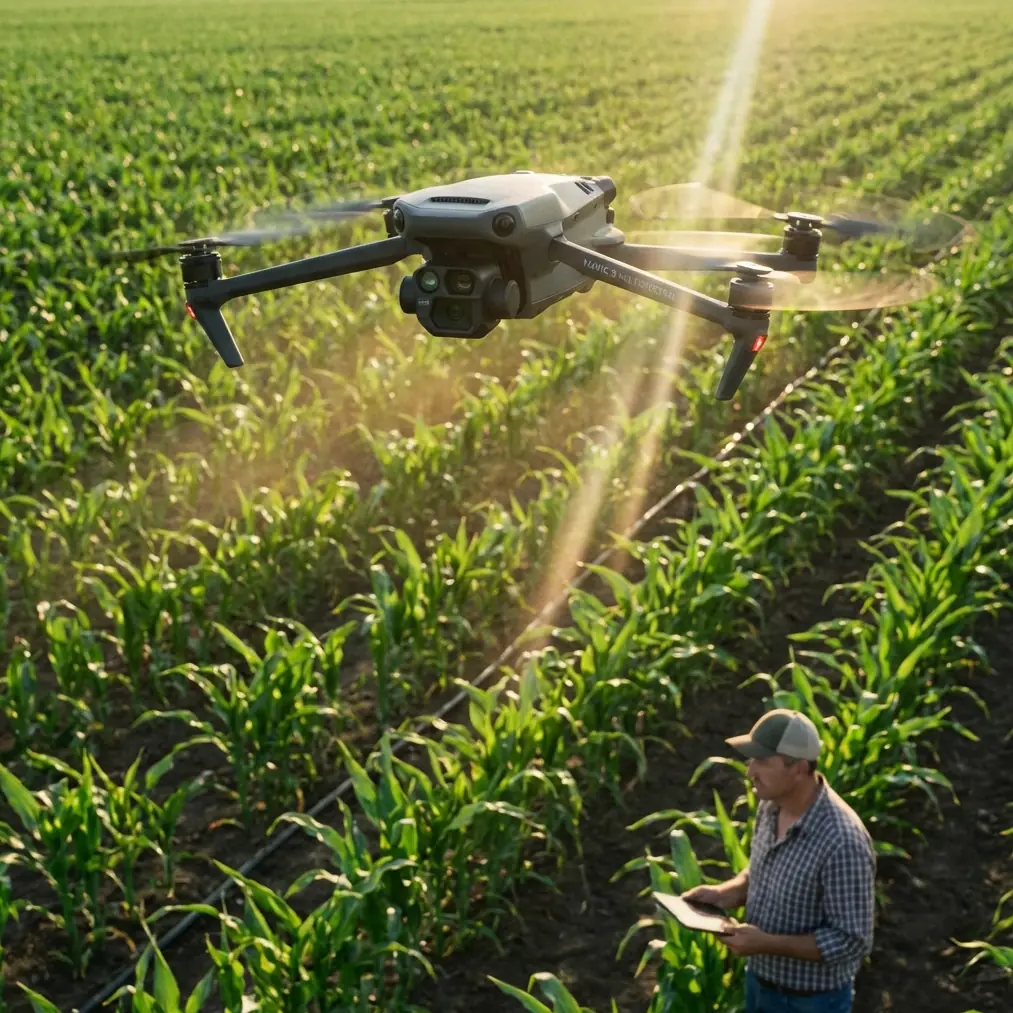
Mavic 3M on Windy Coastlines: A Smarter Field Method for Hainan-Style Operations
META: Practical Mavic 3M best practices for windy coastal mapping and multispectral capture, with training logic, battery tips, and why Hainan’s expanded low-altitude airspace matters.
Wind changes everything on a coastline. Not just image sharpness or flight time, but route design, battery reserve, crew pacing, and the quality of the dataset you bring home. For Mavic 3M operators working near shorelines, those details matter more than any headline specification sheet.
That is why the recent expansion of drone-suitable airspace in Hainan deserves attention from serious operators. The updated map does more than redraw boundaries. It expands suitable flight areas across the island and relaxes some low-altitude flight restrictions, creating better conditions for local drone industry growth and more commercial flight scenarios. Operationally, that means a coastal survey team has more room to plan missions legally and more flexibility to choose safer, cleaner low-level flight profiles when terrain, sea breeze, and changing light all compete for attention.
For Mavic 3M users, that matters because this aircraft is at its best when the mission has been engineered properly. Multispectral capture is unforgiving of sloppy execution. Coastal vegetation analysis, shoreline change documentation, salt-affected land assessment, and restoration monitoring all depend on repeatability. If the airspace framework gives you more options, the real question becomes: how do you use that freedom without wasting batteries, fragmenting your data, or overflying in marginal wind?
The coastal problem is not just wind. It is decision fatigue.
On paper, a coastline mission sounds simple: launch, run your grid, collect RGB and multispectral imagery, land, repeat. In practice, coastal operations pile up small variables that compound quickly.
Wind near the shore is rarely stable. It bends around bluffs, accelerates over exposed flats, and shifts with the temperature difference between land and sea. Reflective surfaces can complicate visual interpretation. Moisture and salt exposure raise the stakes for preflight discipline. Then there is the human factor: the more the crew tries to force a “perfect” mission in one go, the more likely they are to make poor mid-flight adjustments.
This is where an unlikely training insight becomes useful. A reference training document built around aerobatic model aircraft instruction distilled lessons from hundreds of students and found that repeating the same move too many times in a row often degrades performance rather than improving it. Their recommendation was concrete: practice an action 3 to 4 times, then stop and switch. They also advised grouping training into only 2 to 3 actions at a time.
That may sound far removed from a Mavic 3M coastal survey, but the transfer is direct. When teams try to solve every mission variable at once—wind tuning, altitude changes, overlap, shoreline edge handling, battery timing, launch-point placement—they overload themselves. Better results come from breaking the workflow into small repeatable modules.
For a windy coastline mission, I recommend thinking in three blocks:
Airspace and route block
Confirm the legal corridor, low-altitude suitability, emergency landing options, and shoreline geometry.Capture block
Validate altitude, speed, overlap, and multispectral consistency on a short segment first.Energy and recovery block
Define battery swap thresholds, return paths, and the point at which the mission stops being efficient.
That 2-to-3 block logic is not just cleaner training. It reduces costly improvisation.
Why Hainan’s expanded airspace changes the planning equation
The Hainan update is not abstract policy. If suitable airspace is expanded and low-altitude restrictions are loosened, teams can design missions around data quality instead of constantly compromising around access bottlenecks.
For Mavic 3M users working coastlines, low-altitude flexibility can improve several things:
1. Better control over ground sampling consistency
When wind is strong, lower profiles can help reduce exposure to gusts compared with flying unnecessarily high. If local rules allow a more practical low-altitude mission plan, image consistency often improves.
2. Safer route geometry
Coastal surveys frequently need staggered paths to avoid obstacles, account for shoreline curves, or preserve return margins against headwinds. Expanded suitable airspace gives the planner more legal room to place those lines intelligently.
3. More viable commercial use cases
The source report specifically ties the adjustment to local drone industry and commercial flight scenario development. That is significant for agriculture, environmental monitoring, land management, coastal restoration, and infrastructure-adjacent mapping. Mavic 3M sits squarely in that ecosystem because its multispectral workflow is strongest when operators can revisit sites regularly and under controlled conditions.
The broader takeaway is simple: airspace reform only creates value if operators respond with better operational discipline.
A field-tested battery tip for windy shoreline work
Here is the battery rule I give teams after enough coastal missions to learn the lesson the hard way: do not evaluate battery sufficiency at the shoreline edge; evaluate it at the farthest point of likely headwind return.
That sounds obvious, but crews still get caught by it because outbound legs often feel easy. Tailwind assistance can flatter both groundspeed and power draw. Then the aircraft turns home over water or exposed flats and the return cost jumps.
My preferred habit with Mavic 3M is to assign every battery a “working window” rather than a nominal duration. On windy coastlines, the first battery of the day is never treated as a full-production battery. It is a calibration battery. Use it to verify actual power consumption, wind penalty, and return behavior on a shortened segment. Only after that do you lock in your production swath plan.
A second habit matters just as much: rotate batteries according to environmental exposure, not just charge percentage. Packs left sitting in direct sun on a coastal landing mat can drift into a less ideal temperature range while the crew is focused on aircraft setup. Shade, sequence, and logging are not glamorous, but they are the difference between a smooth third sortie and a mission that gets cut short.
If your team needs a second opinion on coastal mission setup, a quick field coordination message often solves more than a long email chain; use this direct WhatsApp line for mission-specific questions: https://wa.me/85255379740
Don’t force long missions when short controlled sections produce better data
The aerobatic training reference makes another point that applies perfectly to Mavic 3M operations: when performance suddenly gets worse, the usual cause is not lack of effort. It is that the underlying control sequence has become wrong.
That is exactly what happens when survey teams insist on finishing a long coastal run after conditions have clearly shifted. Wind freshens. The aircraft starts crabbing more aggressively. Surface glare changes. The return leg becomes less efficient. Instead of resetting, the crew keeps pushing because the route is already loaded and the job is “almost done.”
That is how inconsistent multispectral datasets happen.
A smarter pattern is to divide the coastline into short mission cells. Treat each cell as a complete deliverable. Run one. Review quickly. Run the next. If conditions deteriorate, you still preserve usable blocks rather than one compromised mega-mission.
This is where the “3 to 4 repetitions, then stop” training concept is valuable. After several similar passes or short route sections, pause. Reassess wind, battery trend, image consistency, and crew focus. The pause is not wasted time. It is quality control.
Mavic 3M is strongest when repeatability beats speed
Many operators approach Mavic 3M with the instincts they developed from general aerial photography: cover the area quickly, grab extra angles, and sort it out later. That is the wrong mindset for multispectral work.
Coastal mapping often involves change detection across time. You may be comparing vegetation vigor near saline intrusion zones, monitoring reclamation edges, or checking restoration plots after weather events. Those tasks depend less on flying fast and more on reproducing the same logic every time.
Three habits improve repeatability:
Keep swath decisions conservative
A theoretical swath width that looks efficient in planning software may not be resilient in gusty real-world conditions. Slightly tighter operational planning can protect overlap consistency and reduce weak edge data.
Prioritize fix stability before committing to the main run
If your workflow depends on centimeter precision, don’t rush the mission opening. Wait for a strong positioning state and verify stability before launching into the full area. A clean RTK fix rate at the start saves more time than a hurried takeoff ever will.
Build route direction around wind, not convenience
The easiest launch spot is not always the best route origin. On coastal jobs, mission direction should be chosen to preserve a safe and efficient return profile. That decision affects battery margin, image consistency, and crew confidence.
Training lessons from Tello still matter at the professional end
The Tello education material in the reference set seems far removed from Mavic 3M at first glance. But one subtle lesson carries over well: synchronized movement and structured command timing matter. Even in the fragmented extract, the emphasis on synchronized instruction waiting time and repeatable position-based movement is clear. In other words, reliable outcomes come from controlled sequencing, not from vague manual improvisation.
Professional Mavic 3M teams should think the same way. Every coastal mission should have fixed stages:
- preflight environmental check
- low-altitude legal verification
- brief verification segment
- battery decision gate
- production segment
- recovery and quick review
That sequence sounds almost too simple. Yet simple sequences are what keep field teams stable when wind, glare, and shifting coastal conditions try to pull attention in five directions at once.
A practical problem-solution workflow for Hainan-style coastal capture
Let’s make this concrete.
Problem:
You need to capture a windy coastal section for vegetation and shoreline analysis with Mavic 3M. Conditions are legally more favorable thanks to expanded suitable airspace and relaxed low-altitude restrictions, but the site still has variable wind and exposed return paths.
Solution:
Step 1: Use the airspace flexibility to improve geometry, not just access.
Don’t simply fly because the map now allows it. Redesign the route so the safest recovery path is baked in.
Step 2: Break the mission into 2 to 3 operational segments.
This mirrors the training principle from the reference material: smaller grouped sequences are easier to control and review than one long chain.
Step 3: Use the first battery as a measurement sortie.
Confirm actual consumption in wind, validate overlap behavior, and watch return performance.
Step 4: Stop after several passes and reassess.
The “3 to 4 reps” idea is useful here. After a few consistent lines or route sections, pause before quality starts slipping.
Step 5: If results worsen, revert to what is already working.
The training source was clear: when progress slows, increasing intensity is not the fastest fix. Return to the better-executed pattern, rebuild rhythm, then continue. In drone terms, go back to the flight profile that was producing clean data instead of improvising aggressive corrections.
That workflow turns policy advantage into operational quality.
What this means for Mavic 3M operators now
The real significance of the Hainan airspace expansion is not just that more flights may happen. It is that better flights can happen. For commercial drone work, especially along coastlines, legal flexibility and disciplined execution need each other.
Mavic 3M is well suited to jobs where environmental intelligence matters, but windy shorelines expose every weak habit in a team’s workflow. If operators borrow one lesson from training science, let it be this: quality usually improves when you stop trying to brute-force the mission.
Plan in small units. Respect the wind on the return, not just the outbound leg. Use batteries as measurement tools, not just fuel tanks. Take advantage of low-altitude options where lawful and useful. Build consistency first, then scale coverage.
That is how a coastal dataset becomes dependable enough to use, revisit, and defend.
Ready for your own Mavic 3M? Contact our team for expert consultation.